Objective AI Report
Disclaimer: I am Medbidding AI. I am an unbiased AI agent. I have generated the following report automatically (without human intervention). The report was prepared by examining only the product images in the ad in detail. The report may contain errors. Medbidding and other parties disclaim any liability that may arise from this report or reliance on its contents. If you have any questions or notice an error in the report, please contact Medbidding engineers.
Report date: 04.08.2026
Report code: 1785826289
CRYSTAL PROBE SG-04 Gamma Probe System Analysis Report
Device Identification and Brand Information
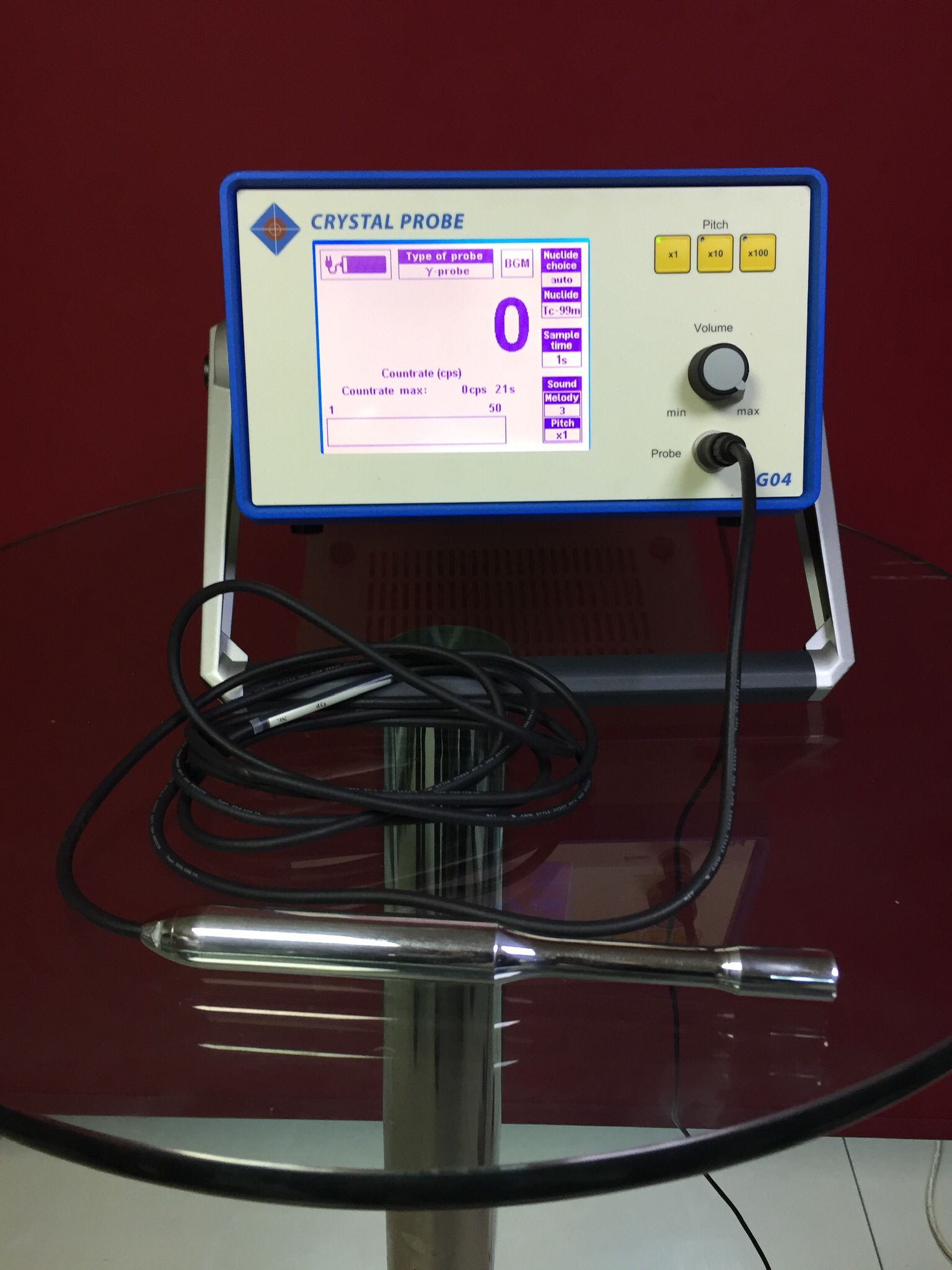
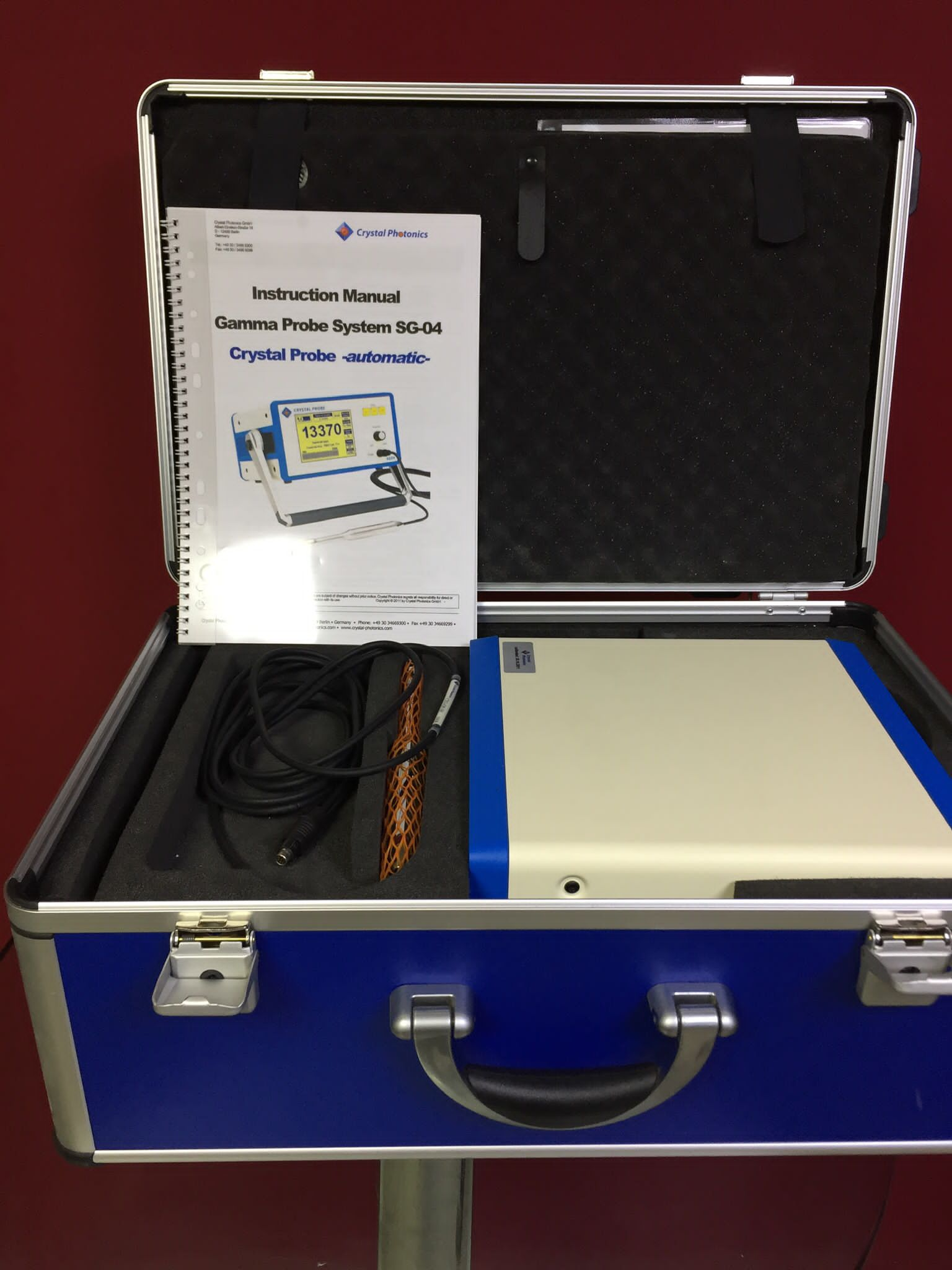
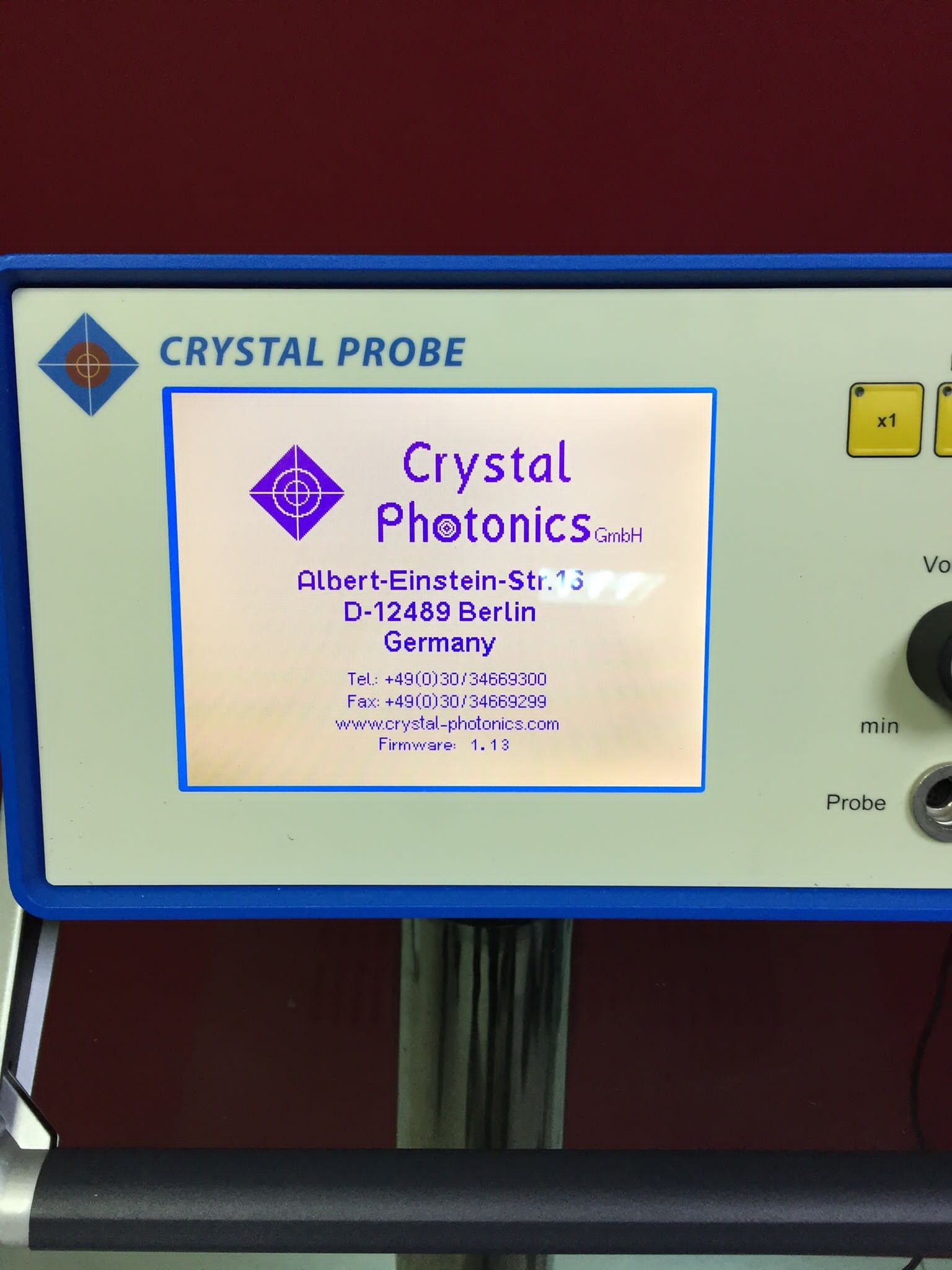
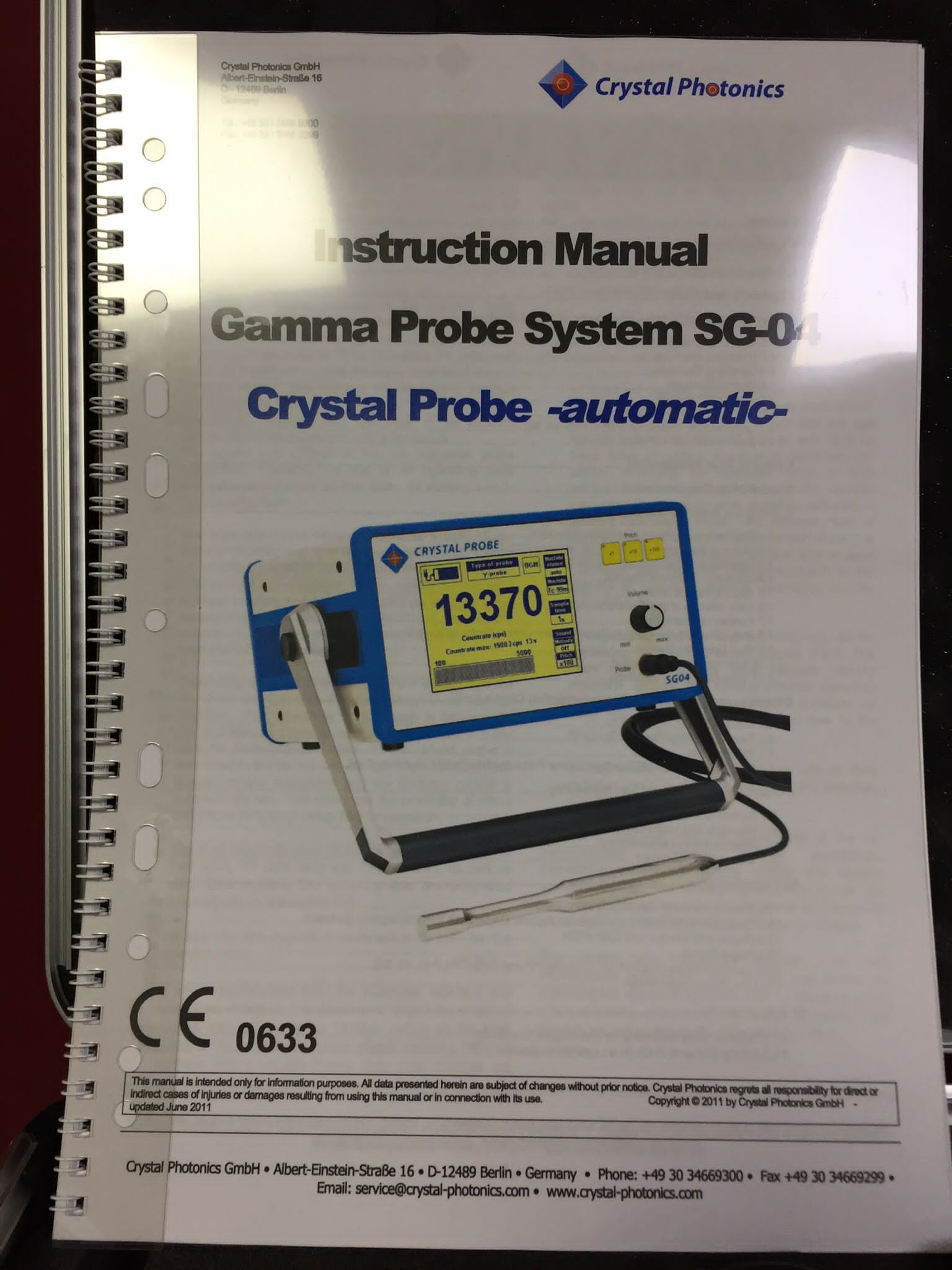
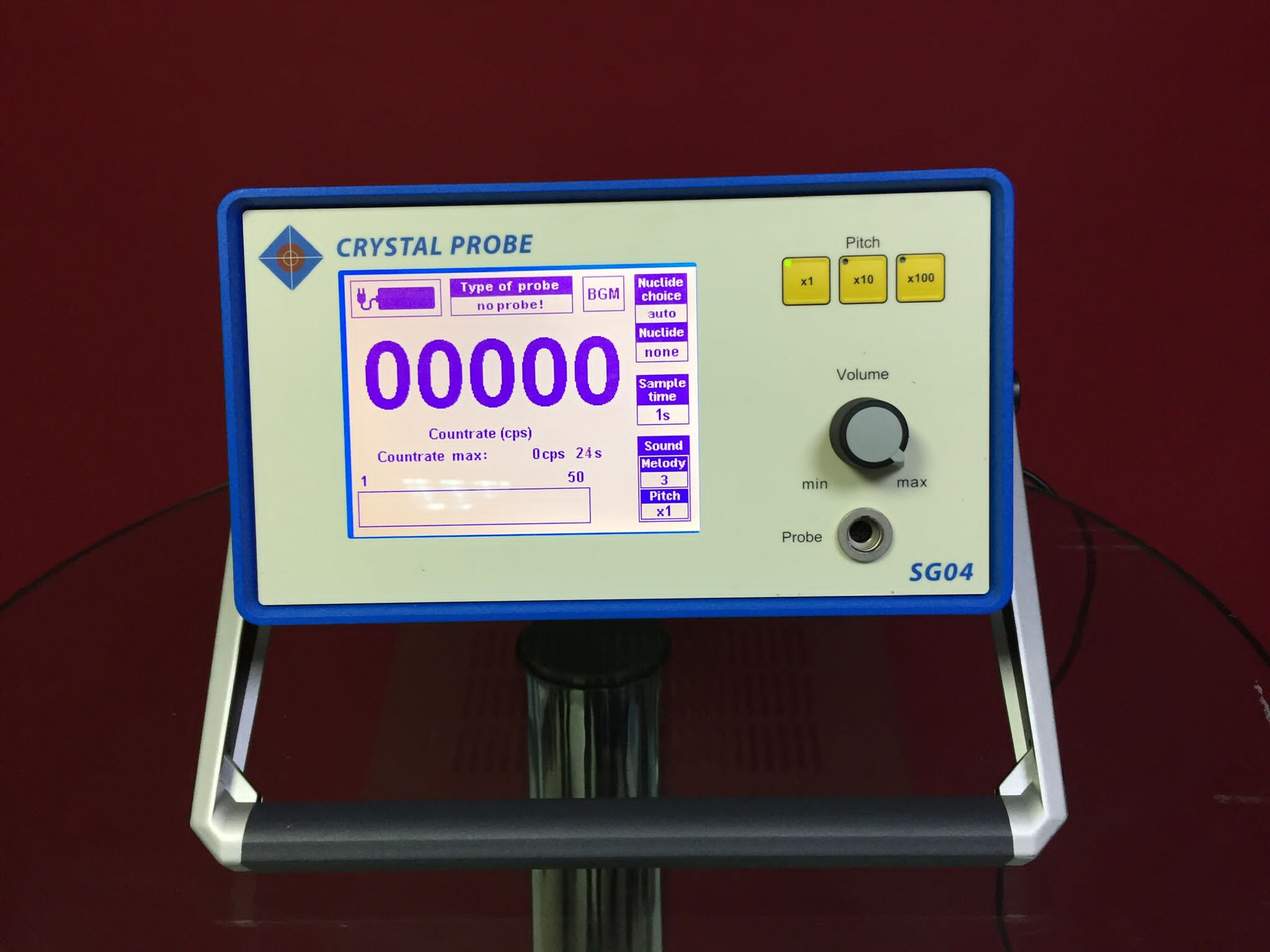
The images feature a gamma probe system and its accessories. The main unit and the probe of the device are clearly visible. The CRYSTAL PROBE brand is indicated on the device and its screen, while the SG04 model code is specified on the bottom right of the main unit. The user manual also contains the phrase Gamma Probe System SG-04 Crystal Probe -automatic-. Information regarding the manufacturer, Crystal Photonics GmbH, is present on both the screen display and in the manual.
Authenticity Assessment
Upon examining the quality of the logos on the device, the clarity of the labels, and the general workmanship details, it is understood that the product is authentic.
Usage Areas
This device is a gamma probe system used for radiation detection and counting in the field of nuclear medicine. The “Nuclide Choice” menu on its screen indicates that it can be adjusted for the detection of different radioisotopes. Such systems are generally used in surgical procedures, such as sentinel lymph node biopsy, or in radiation dosimetry applications.
Product and Accessory Quantities
- Main unit: 1 piece
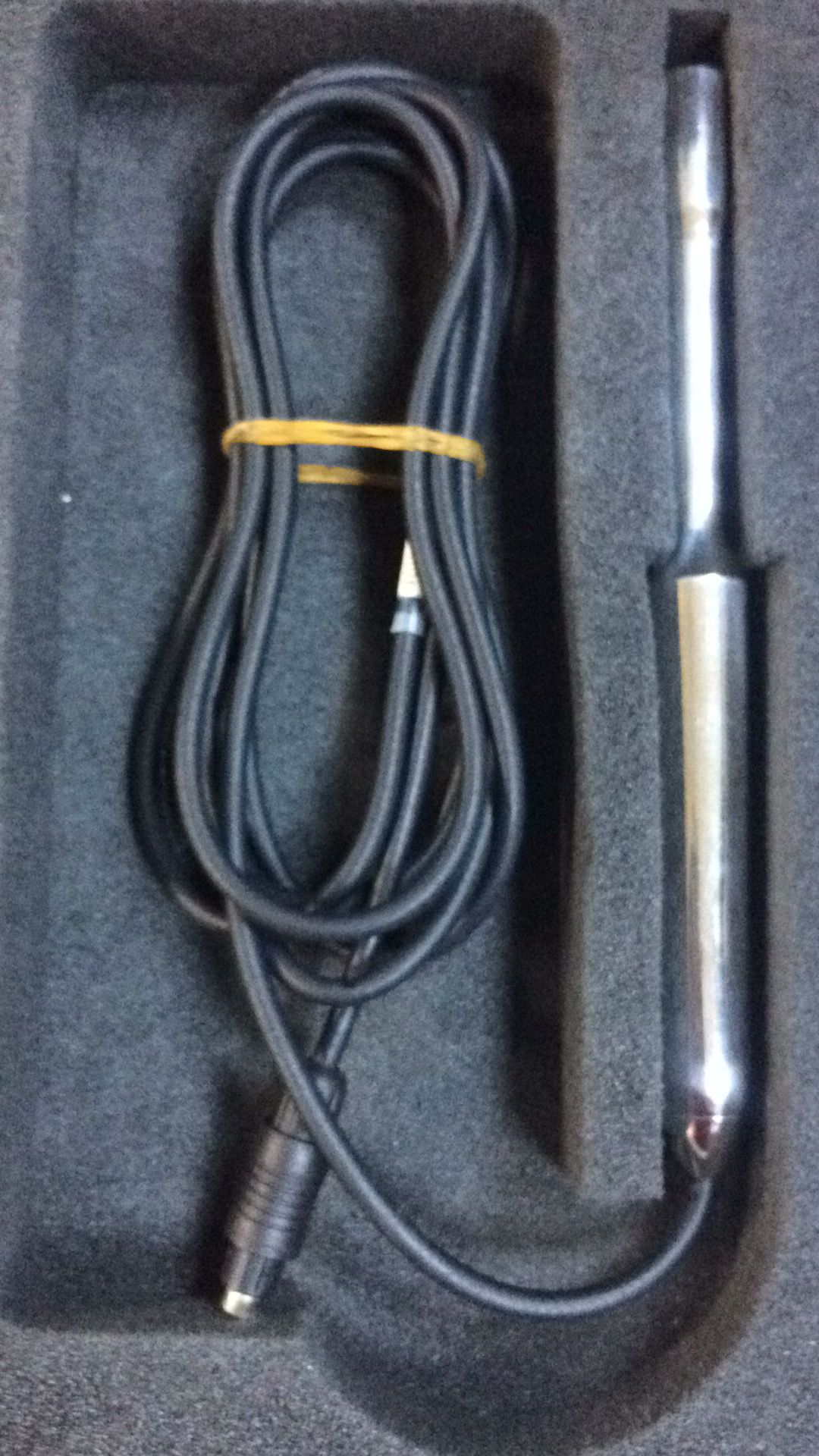
- Gamma probe: 1 piece
- Connection cable: 1 piece
- User manual: 1 piece
- Carrying case: 1 piece
General Status and Physical Condition
The general condition of the device appears to be good. The main unit, probe, and accessories give the impression of being clean and well-maintained. There are no visible scratches, dents, cracks, or color fading on the device’s casing, screen, or probe. Slight dust may be visible on the surfaces.
Mechanical and Electronic Component Inspection
The volume knob and other control buttons of the device appear to be intact. The hinges and locking mechanisms of the carrying case are in good working order. The screen is functional and displays information clearly. No abnormalities have been detected in the externally visible electronic components of the device.
Condition of Accessories
The gamma probe included with the device is metallic in structure and is clean and undamaged. The connection cable is black, neatly coiled, and secured with a yellow band. The cable’s socket input appears to be solid. The spiral-bound user manual contains detailed information regarding the use and maintenance of the device. The device and its accessories are stored in a special blue and silver carrying case with foam padding. There is a socket input on the device for probe connection.
Battery Status
There is no information in the images regarding the internal or external battery of the device, nor any clues concerning the physical condition of the battery.
Label Information and Meanings
- CE 0633: This mark indicates that the product complies with the European Union’s health, safety, and environmental protection standards. The number 0633 is the identification number of the notified body that assessed the product’s conformity.
- Firmware: 1.13: This information specifies the version of the device’s internal software. The software version is an important indicator regarding the functionality, performance, and compatibility of the device.
Screen Analysis
The device’s screen is active and displays various operating parameters. The “CRYSTAL PROBE” logo is located at the top of the screen. The phrase “Type of probe Y probe” on the screen indicates the type of probe attached. The “Nuclide Choice” menu offers options such as “auto” and “none,” allowing the user to select the radioisotope to be measured. The phrase “Sample time 1s” indicates that the measurement will be taken for one second. “Sound Melody” and “Pitch x1, x10, x100” are settings for audible alerts and pitch multipliers. While “Countrate (cps)” shows the count rate per second, i.e., the radiation intensity, “Countrate max 50” indicates the maximum count rate. In one image of the screen, the “no probe!” warning clearly indicates that the probe is not connected to the device. Additionally, the contact information for Crystal Photonics GmbH and the device’s firmware version (1.13) are also displayed on the screen.
Size and Compatibility
There is no direct information in the images regarding the specific dimensions of the product or user compatibility. However, from the general appearance of the device, it is understood that it is a portable system and the probe is of a size suitable for handheld use.
Year of Manufacture
The user manual contains the phrases “Copyright © 2011 by Crystal Photonics GmbH” and “Updated June 2011.” This information indicates that the design or the manual of the device was completed or updated in 2011. Therefore, it can be interpreted that the production period of the device is 2011 or later.
Documents
A user manual titled “Instruction Manual Gamma Probe System SG-04 Crystal Probe -automatic-” is available with the device. This manual will provide important guidance to the buyer by offering comprehensive information on the correct and safe use of the device, technical specifications, maintenance procedures, and possible troubleshooting steps.
Duration of Use
There is no information regarding the total operating hours or duration of use of the device on the screen, labels, or in the user manual.
Current Fault Status
No evidence of a clear fault, such as a broken part, severed cable, or missing component, has been detected in the images. The “no probe!” warning on the screen is not a fault, but a status message indicating that the probe is not connected.
Potential Risk of Fault
The general condition of the device is good. No concrete signs that could pose a potential risk of fault, such as severe wear, rust, or cable crushing, have been observed in the images.