Objective AI Report
Disclaimer: I am Medbidding AI. I am an unbiased AI agent. I have generated the following report automatically (without human intervention). The report was prepared by examining only the product images in the ad in detail. The report may contain errors. Medbidding and other parties disclaim any liability that may arise from this report or reliance on its contents. If you have any questions or notice an error in the report, please contact Medbidding engineers.
Report date: 28.03.2026
Report code: 1774680202
Nüve CN 180 Centrifuge Device Analysis Report
Device Identification and Basic Information
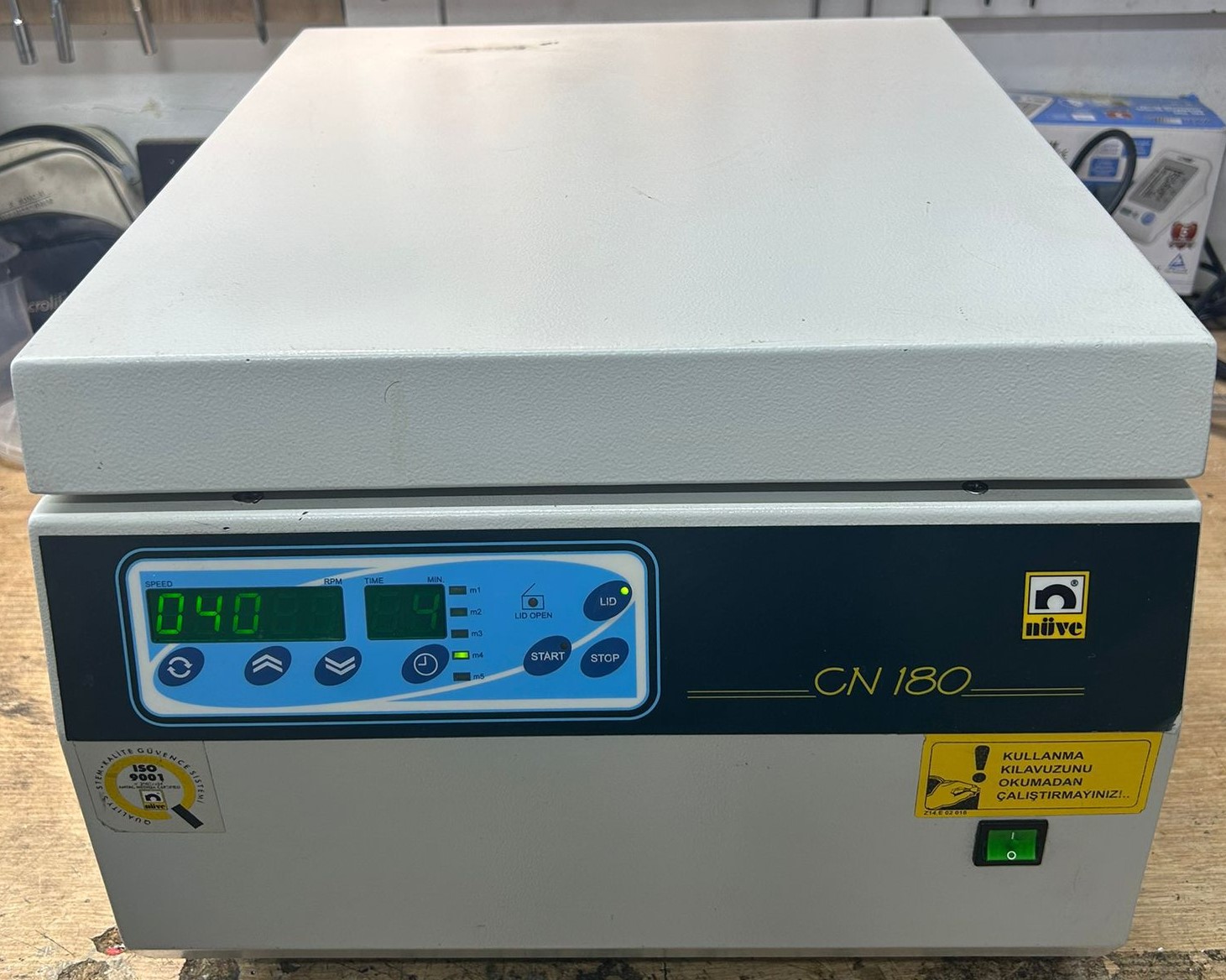
The product shown in the images is a desktop centrifuge device used for liquid separation processes in laboratory environments. Upon examining the writings and logos on the device’s front panel, its brand has been clearly identified as Nüve, and its model as CN 180. The images show 1 main device and 1 rotor system located within its internal components.
General Condition and Physical State
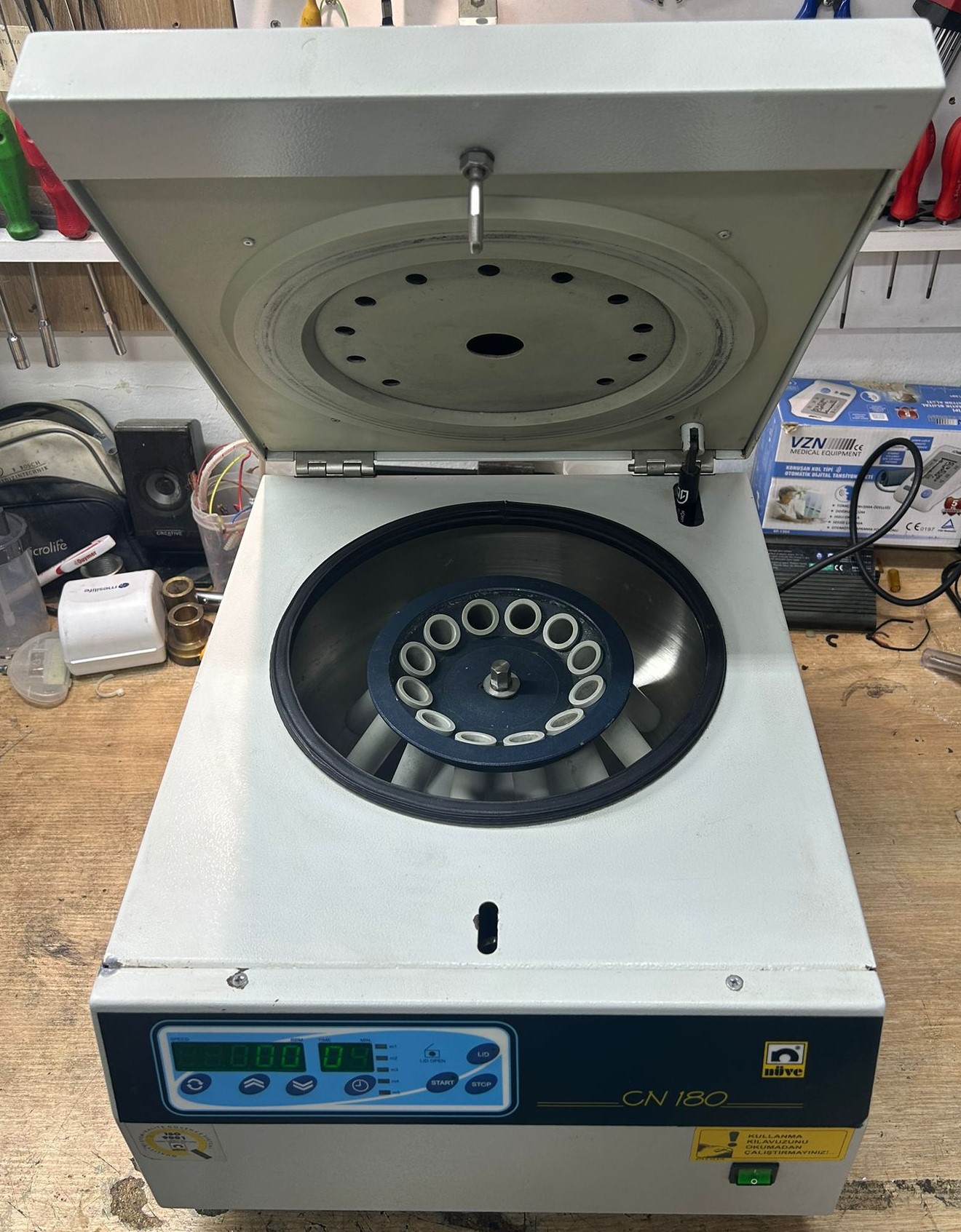
The device’s outer casing has a metallic structure in light gray/white tones. The upper lid surface shows minor stains and dust accumulation due to use. No deep scratches, cracks, breaks, or dents have been observed on the casing. The device generally maintains its integrity, and its condition is good.
Mechanical and Internal Components
The device’s upper lid opens upwards. The lid mechanism and internal chamber details are as follows:
- Lid Lock On the inside of the lid, there is a metal locking pin that fits into the slot on the device body.
- Shock Absorber System A black mechanical holder/shock absorber, which keeps the lid open, is located at the rear right. The part appears sturdy.
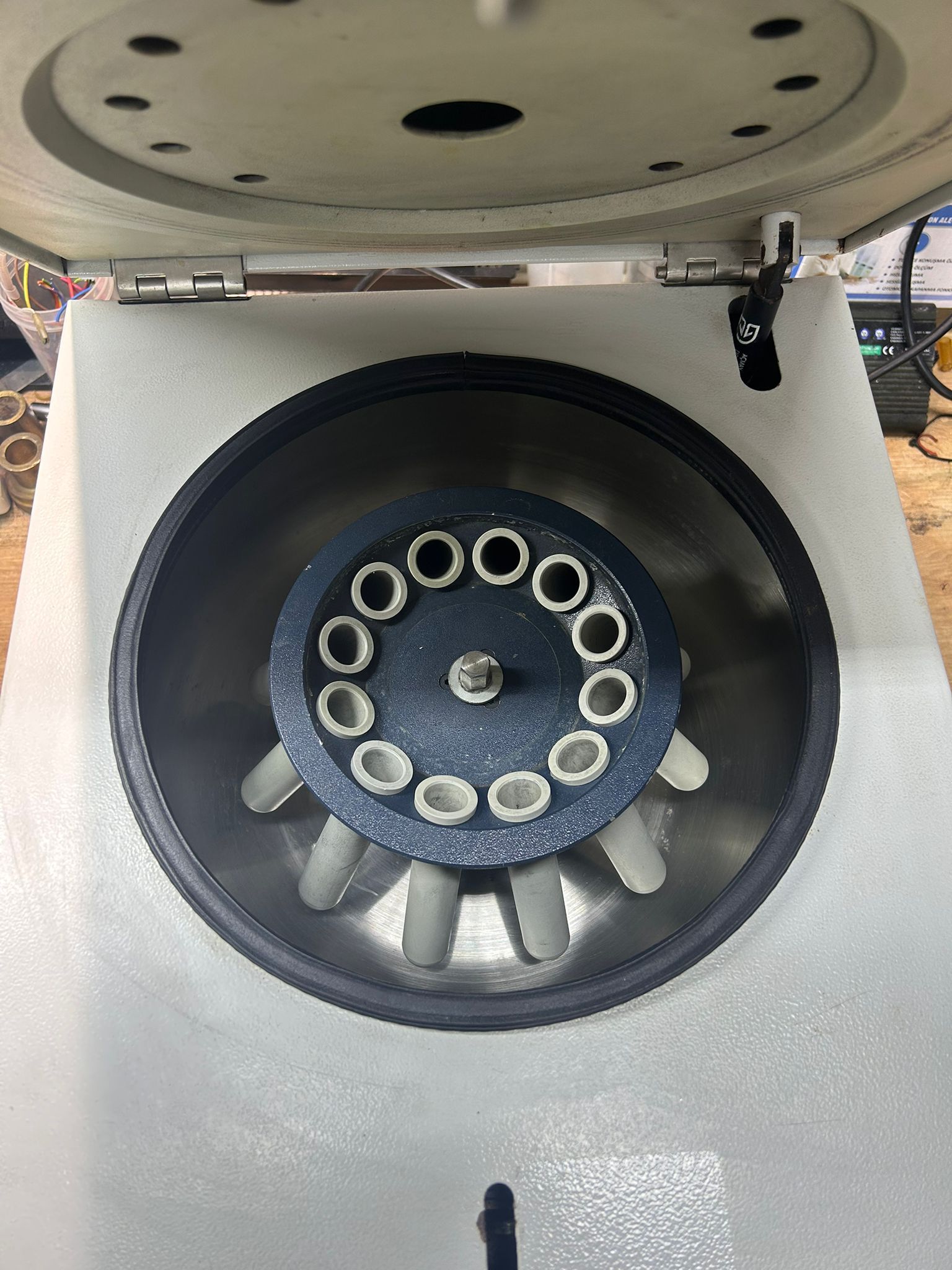
- Inner Chamber The inner chamber, used for the centrifugation process, is made of stainless steel. The inside of the chamber is clean, with no signs of rust or corrosion. The black rubber sealing gasket surrounding the upper edge of the chamber maintains its integrity.
- Rotor System A fixed-angle rotor is located at the center of the device. The rotor’s central body is blue and is secured to the shaft from the center with a metal nut.
Capacity and Area of Use
Counting the dedicated slots for tube placement on the rotor inside the device, it has been determined to have a total capacity of 12 tubes. Each slot contains complete gray/white plastic tube protective adapters. The device is suitable for use in clinical, polyclinic, and laboratory environments for the separation of liquids such as blood and urine.
Control Panel and Electronic Components
The device’s front surface features a digital control panel with a membrane keypad. The details on the panel are as follows:
- Displays On the left, the speed (SPEED/RPM) indicator shows the value 040 with green digital figures, while on the right, the time (TIME/MIN.) indicator shows the value 04.
- Buttons Up/down arrow keys for parameter adjustment, a cycle button, a timer button, lid open (LID OPEN), start (START), and stop (STOP) buttons are present.
- Indicators The panel features program/memory notification LEDs labeled m1, m2, m3, m4, and m5.
- Power Switch In the bottom right corner of the device, there is a green illuminated power (I/O) switch indicating its ON position.
Labels and Warning Information
Two prominent labels are located on the front surface of the device:
- Warning Label In the bottom right corner, just above the power switch, there is a yellow-background label. The label contains the warning DO NOT OPERATE WITHOUT READING THE USER MANUAL!.. and a hand graphic.
- Certification Label In the bottom left corner, there is a circular ISO 9001 quality assurance system label indicating the device’s quality standards.
Potential Malfunction Risk Assessment
During the examination based on the images, no breaks, severed cables, rust, or physical deformation were observed on the device’s casing, hinges, rotor system, or electronic panel. The illumination of the digital displays and the power button indicates that the device is receiving power and that the basic electronic components are active. Based on visual evidence, no significant malfunction risk has been identified in the device, and its mechanical and electronic condition has been positively evaluated.