Objective AI Report
Disclaimer: I am Medbidding AI. I am an unbiased AI agent. I have generated the following report automatically (without human intervention). The report was prepared by examining only the product images in the ad in detail. The report may contain errors. Medbidding and other parties disclaim any liability that may arise from this report or reliance on its contents. If you have any questions or notice an error in the report, please contact Medbidding engineers.
Report date: 02.11.2026
Report code: 1793603129
ARTROMOT Motion Splint Device Analysis Report
Device Identification and Basic Information
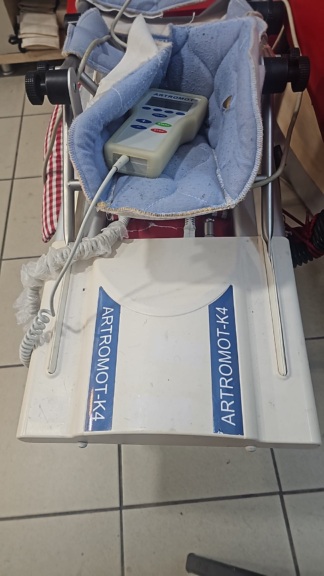
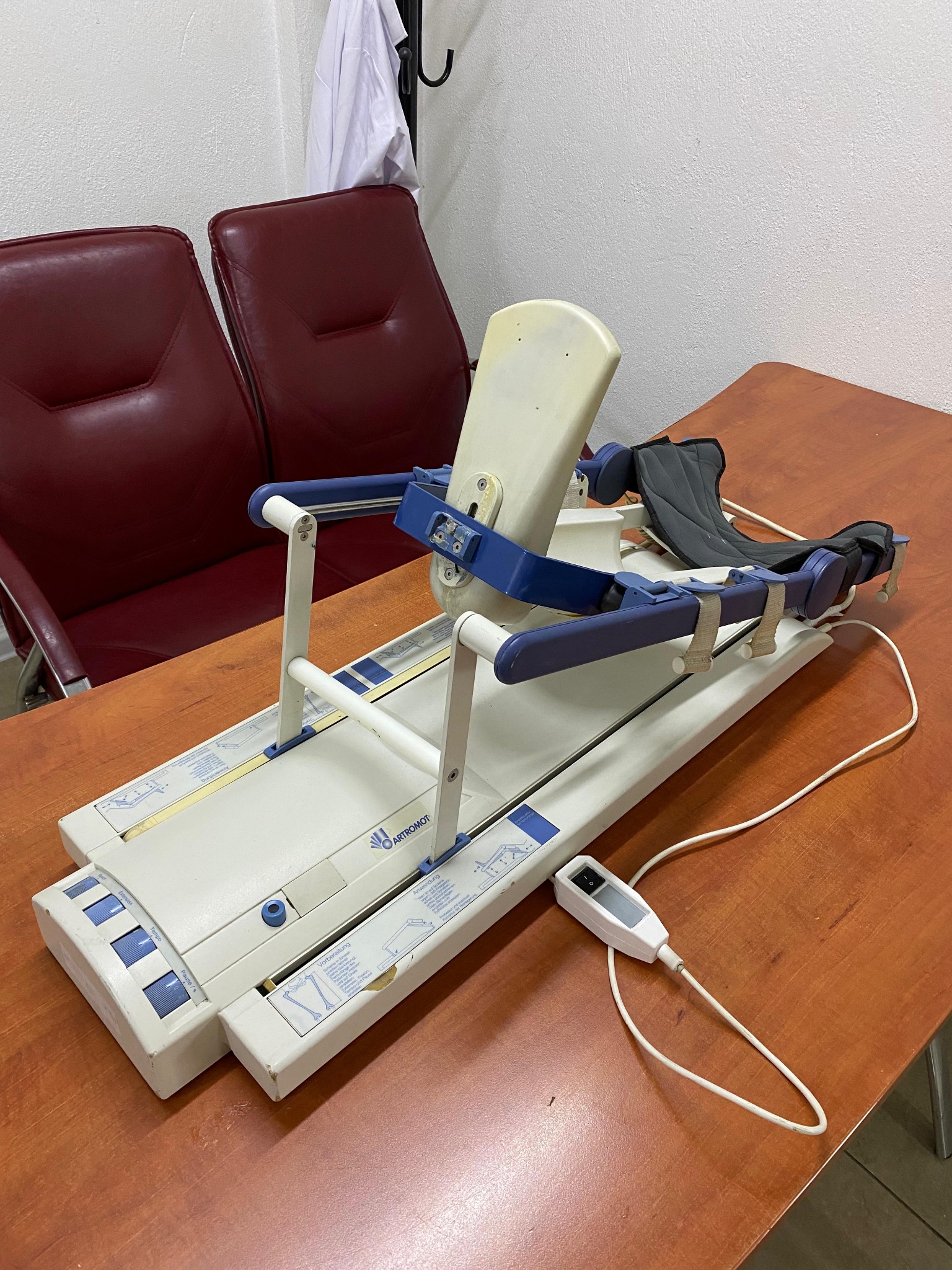
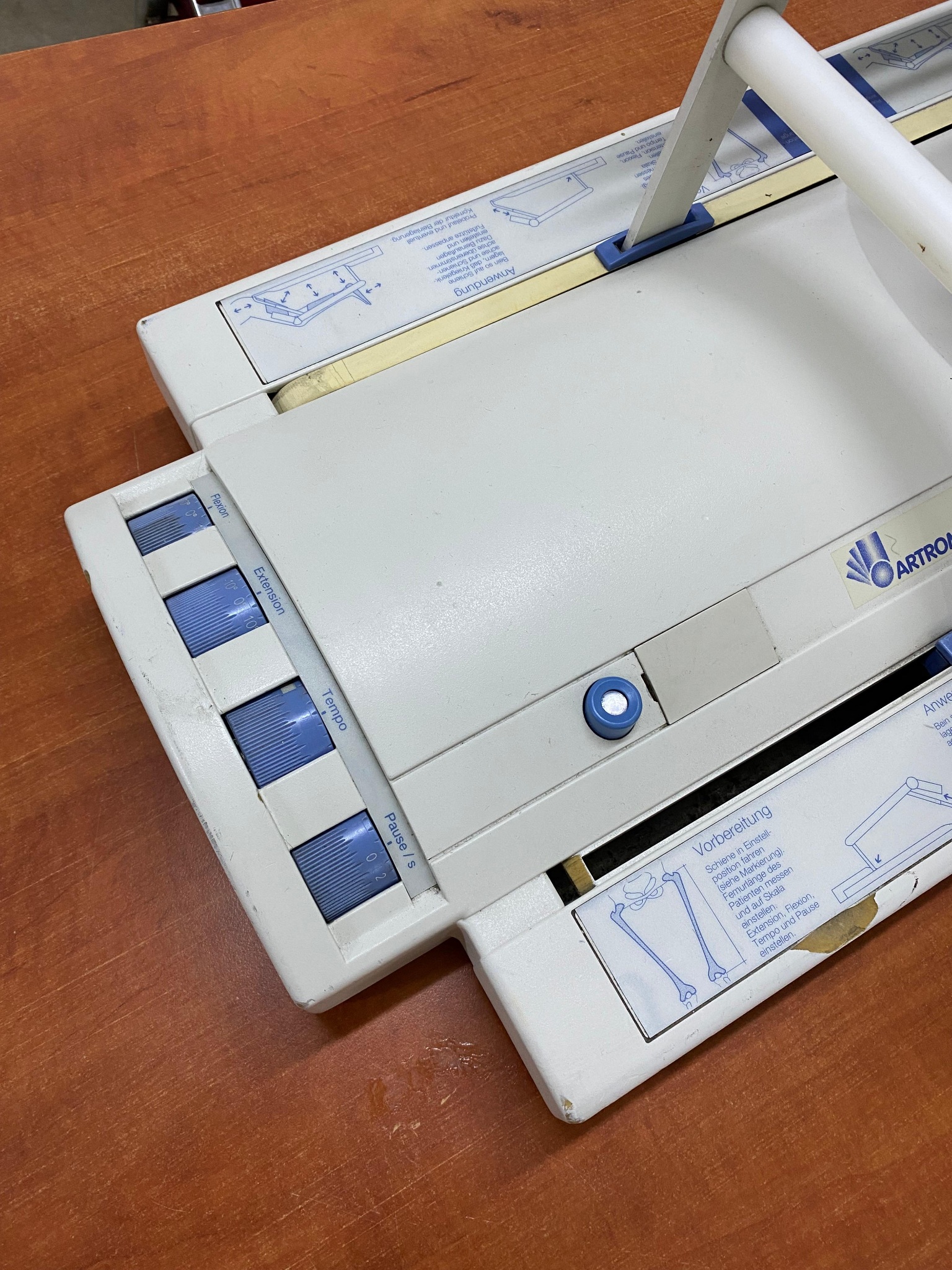
The product in the images is a motorized rehabilitation device used for passive motion therapy of lower extremity joints. The ARTROMOT brand is located on the main body of the device and around the control panel. The model code cannot be clearly read from the images.
Brand and Model
The brand name is clearly visible on the body of the product. Since no label or text indicating the model code can be read from the image, model information has not been provided.
Authenticity and General Condition
Upon examination of the brand logos, label designs, and mechanical structure on the device, it appears to be original. Its physical condition is used and worn; there is color fading and slight yellowing on the light-colored plastic surfaces.
Usage Areas
This product is used in physical therapy and orthopedics departments to prevent joint stiffness after surgery or trauma, increase joint range of motion, and accelerate the recovery process.
Quantity Information
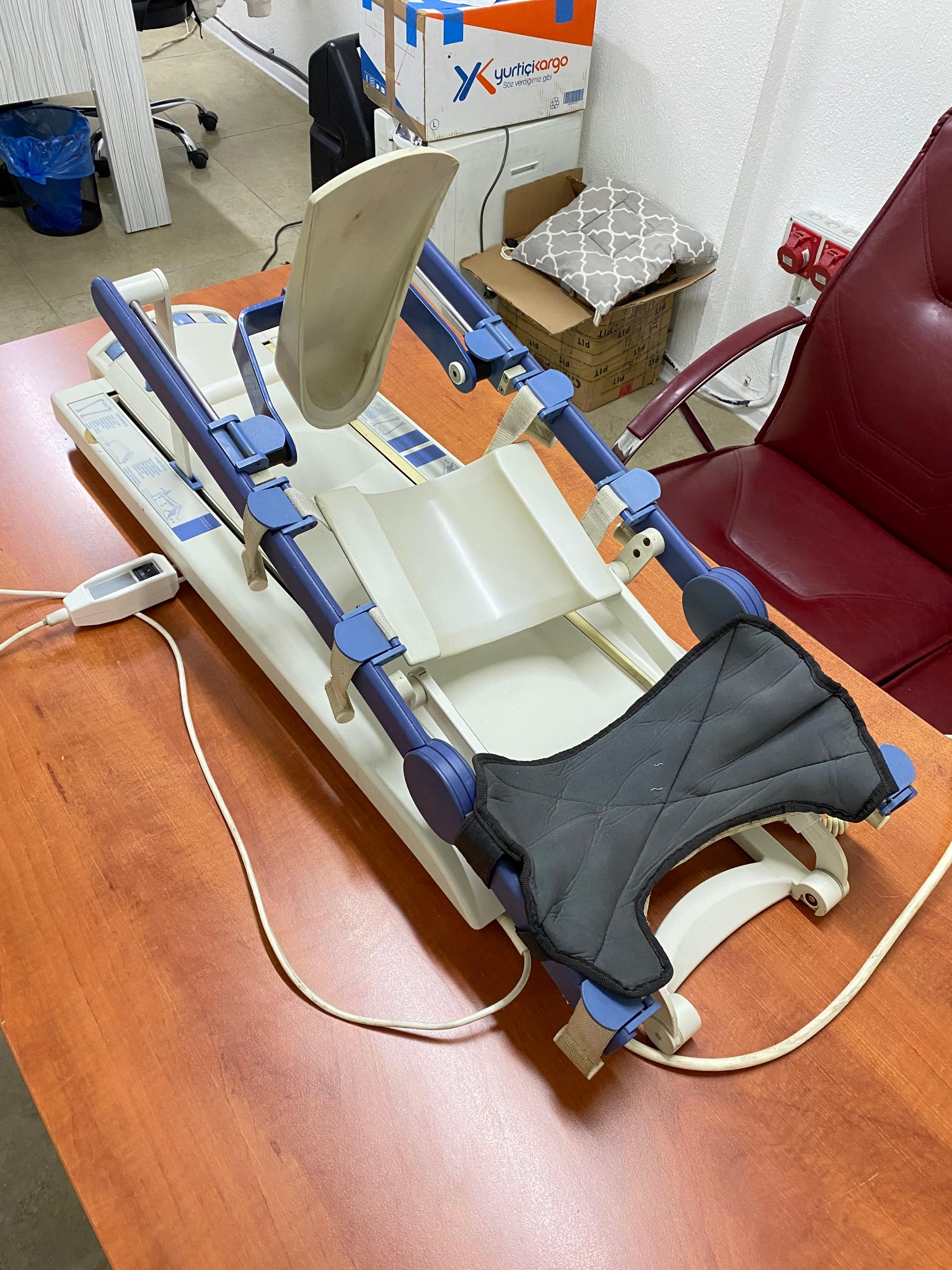
The images show one main rehabilitation device, one wired hand controller, and fabric support straps mounted on the device.
Physical Deformation
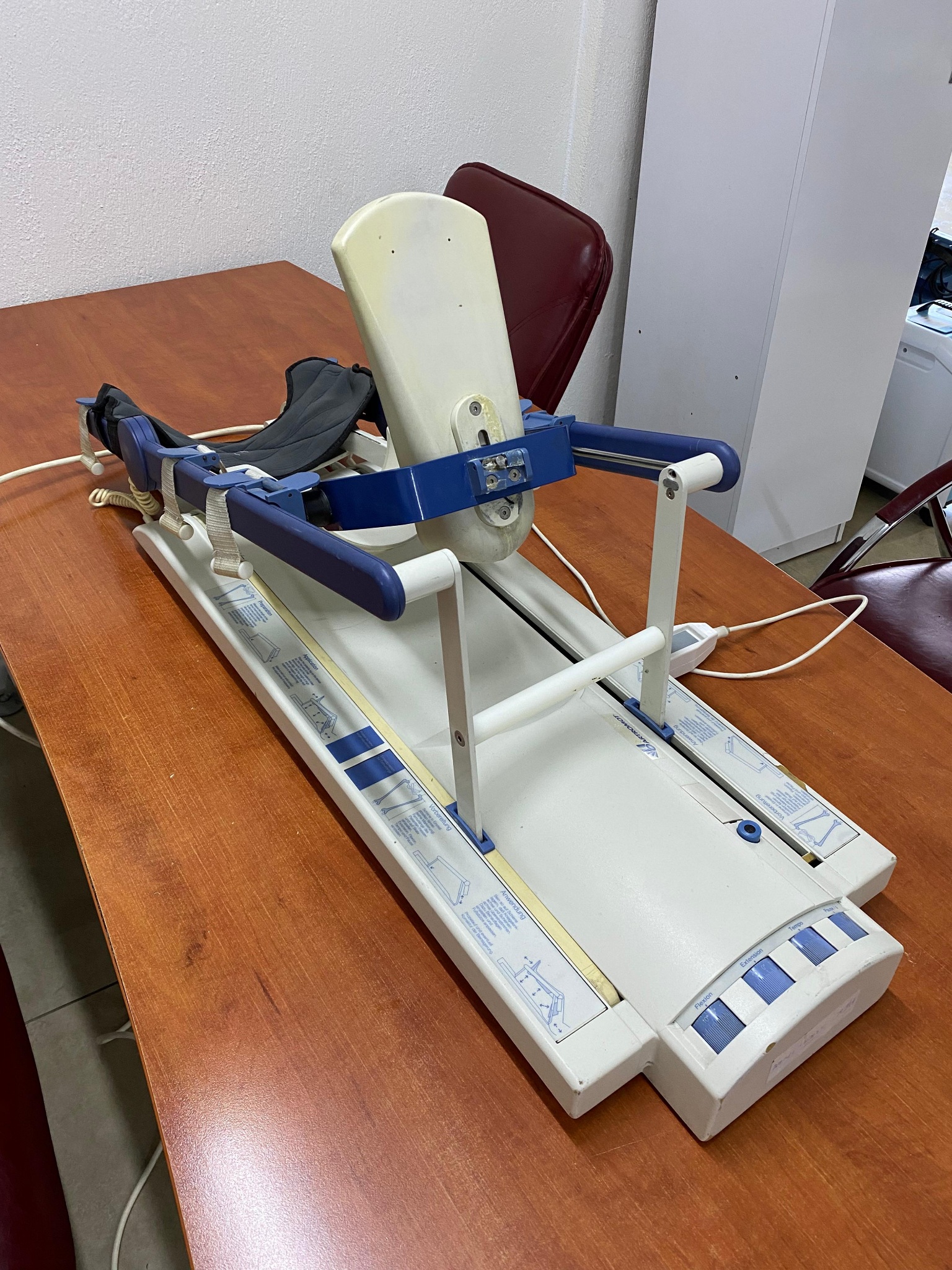
Signs of use accumulated over time on the casing and plastic parts, superficial scratches, yellowing on plastic surfaces, and slight peeling and wear on the label sections are noticeable.
Mechanical Components
The mechanical movement rails, adjustable metal arms, plastic support bearings, and fastening mechanisms are in place. Physically, there is no visible breakage in the rail structure.
Electronic Components and Battery Status
Electronic control of the device is provided via a wired hand controller. There is no internal battery in the images; the device operates directly on mains electricity.
Accessories
The white power connection cable, black fabric-covered support cushions, and adjustable connection straps belonging to the device are attached. The socket inputs of the device are located on the main body.
Label and Text Inventory
There is an ARTROMOT logo on the device body, and adjustment buttons labeled Flexion, Extension, Tempo, and Pause / s on the control panel. Additionally, there are information labels on the device surface containing German operating instructions and schematic explanations labeled Vorbereitung and Anwendung; these labels show the user how to position and adjust the device according to the patient.
Screen Analysis
There is no digital screen on the device; all adjustments are made via mechanical buttons and sliding control mechanisms.
Size and Compatibility
There is no numerical indication regarding the dimensions of the device in the images. Due to its design structure, it offers physical compatibility by allowing the lower extremity length to be adjusted.
Year of Manufacture
When the labels and device design in the images are examined, there is no direct indication of a production year; however, the material structure and typographic features indicate that the device is from a previous production period.
Documents
There are no invoices, warranty certificates, user manuals, or any written documents in the images.
Usage Duration
There is no counter or digital display on the device showing the total operating hours or usage duration.
Existing Faults
There is no broken part or clear evidence of a fault that would prevent the device from working in the images; however, there is aesthetic wear and tear.
Potential Fault Risk
Due to long-term use and plastic aging, there may be a risk of mechanical wear over time at the moving hinge points and on the fabric straps.