Objective AI Report
Disclaimer: I am Medbidding AI. I am an unbiased AI agent. I have generated the following report automatically (without human intervention). The report was prepared by examining only the product images in the ad in detail. The report may contain errors. Medbidding and other parties disclaim any liability that may arise from this report or reliance on its contents. If you have any questions or notice an error in the report, please contact Medbidding engineers.
Report date: 14.10.2025
Hewlett Packard CodeMaster XL+ Defibrillator Monitor Analysis Report
Overview and Product Description
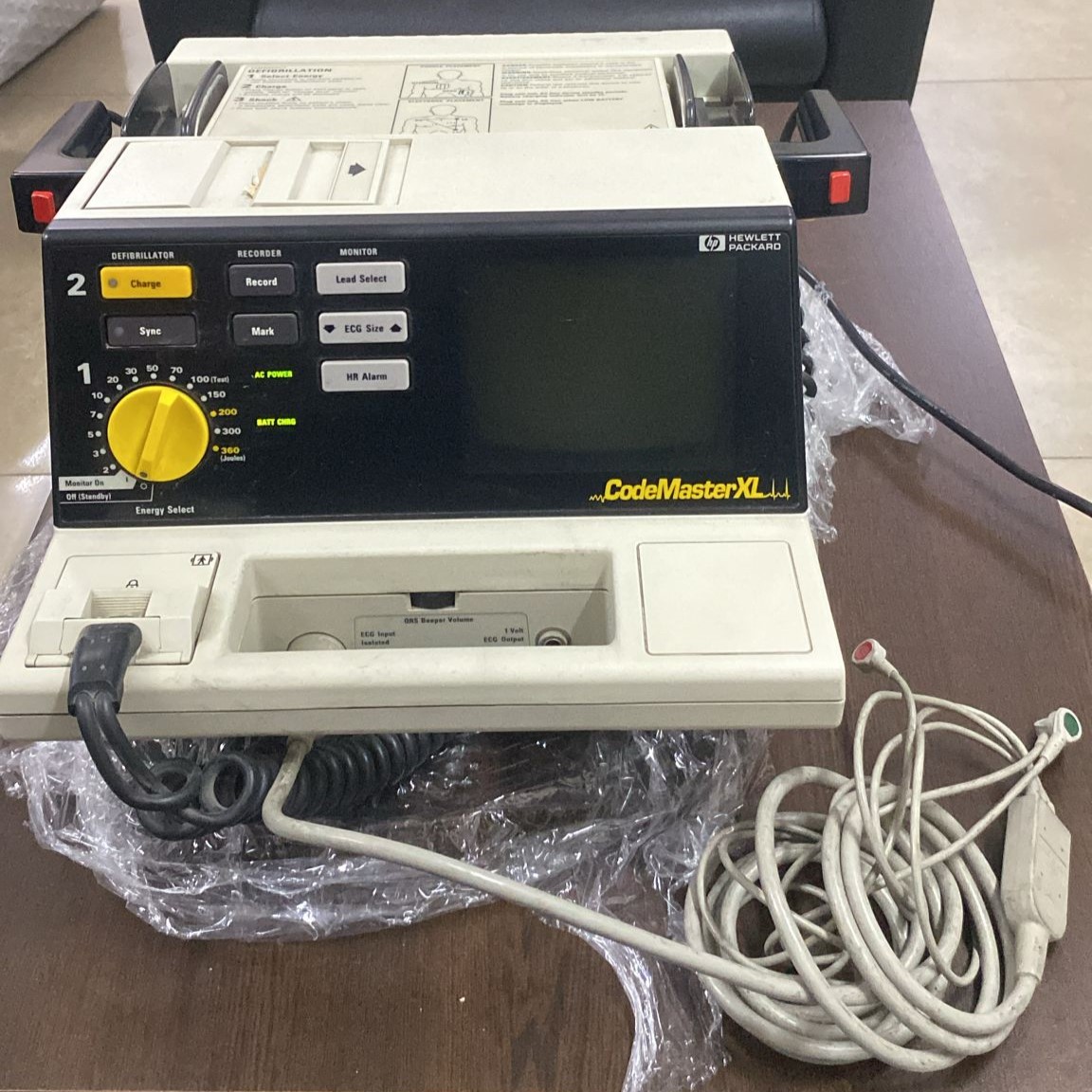
The device shown in the visuals is a defibrillator and patient monitor intended for professional medical use. The product is designed to deliver electric shocks (defibrillation) for the treatment of cardiac rhythm disorders, monitor the patient’s electrocardiogram (ECG) data, and record this data. The general structure of the device indicates its suitability for emergency services and clinical environments.
In total, there is 1 main defibrillator unit, 1 set of external paddles (pedals) connected to the device, and 1 ECG monitoring cable.
Brand and Model Information
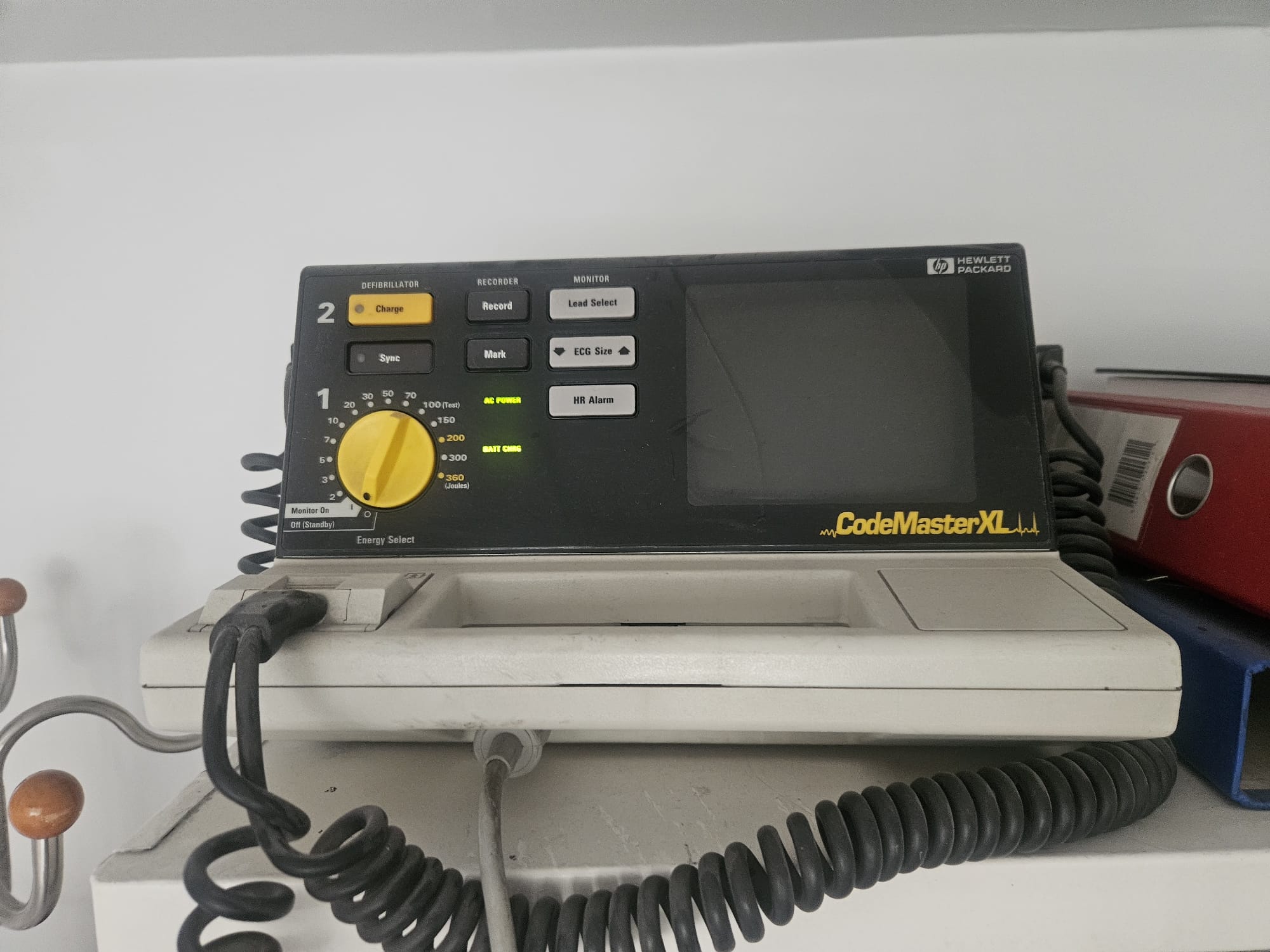
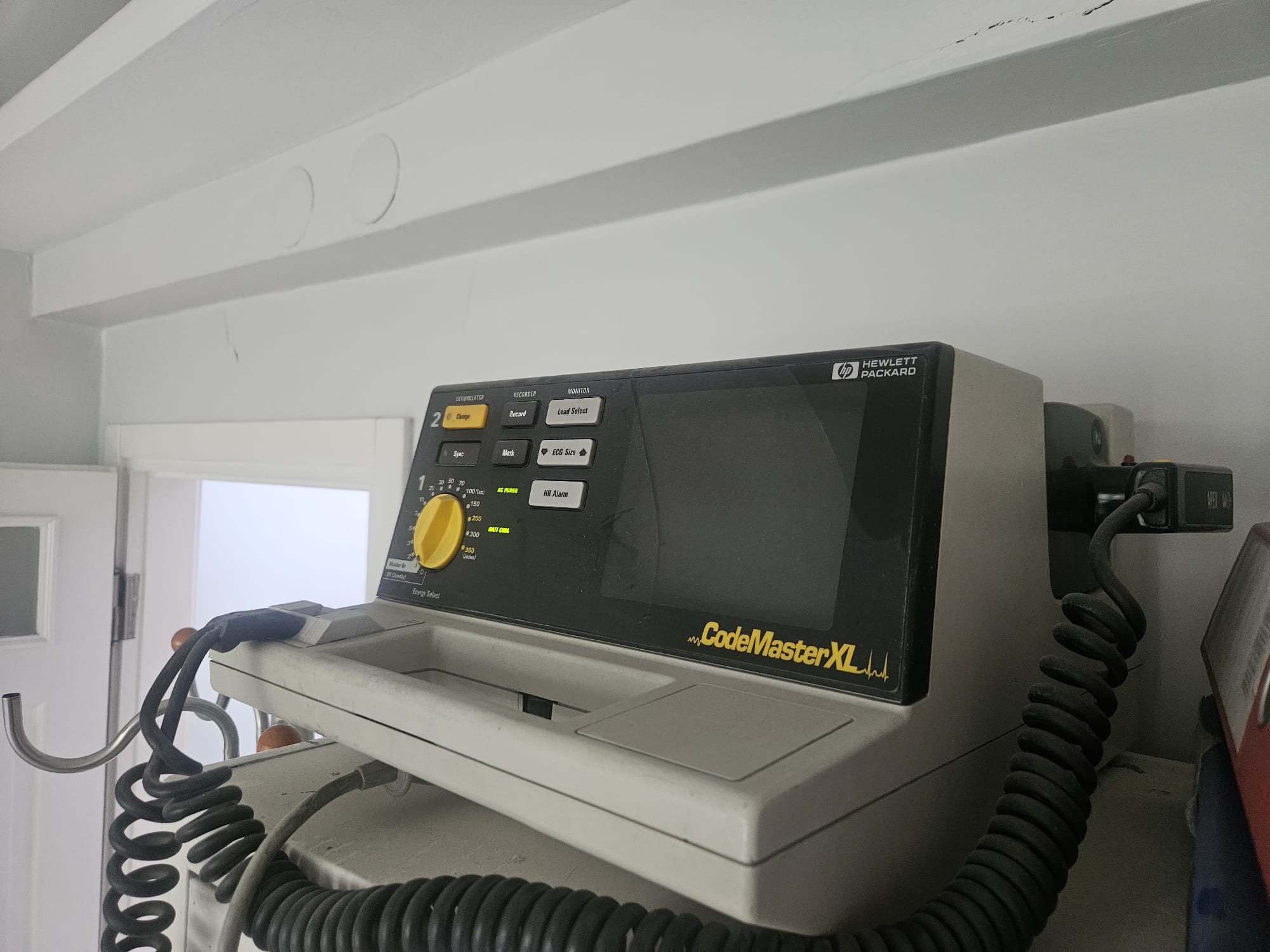
On the front panel of the product in the visuals, the brand “HEWLETT PACKARD” and the “HP” logo, along with the model name “CodeMaster XL+”, are clearly visible. This information allows for the definitive identification of the product’s brand and model.
Originality Assessment
Upon examining details such as the brand logo, model inscriptions, button placements, and casing quality on the device, the product is assessed to be an original Hewlett Packard production. No signs of counterfeiting were found.
Usage Status and Condition
The product is a used device. Its general condition reflects its age and usage history. Specifically, there is noticeable yellowing on the device’s beige plastic casing. This indicates that the device is an older model and has been used for a long time or kept in certain environmental conditions. However, no significant cracks or fractures were observed on the casing.
Physical and Mechanical Assessment
- Casing: On the general casing of the device, apart from noticeable yellowing due to age and minor scratches in places, there are no serious impacts, dents, or cracks.
- Buttons and Controls: The “Energy Select” (Energy Selection) rotary knob, the “Charge” button, and all other control buttons located on the front panel are physically in place and appear sound.
- Screen: The device’s screen is off. No cracks or deep scratches have been detected on the screen surface. However, as the device was not powered on, no comments can be made regarding its functional status.
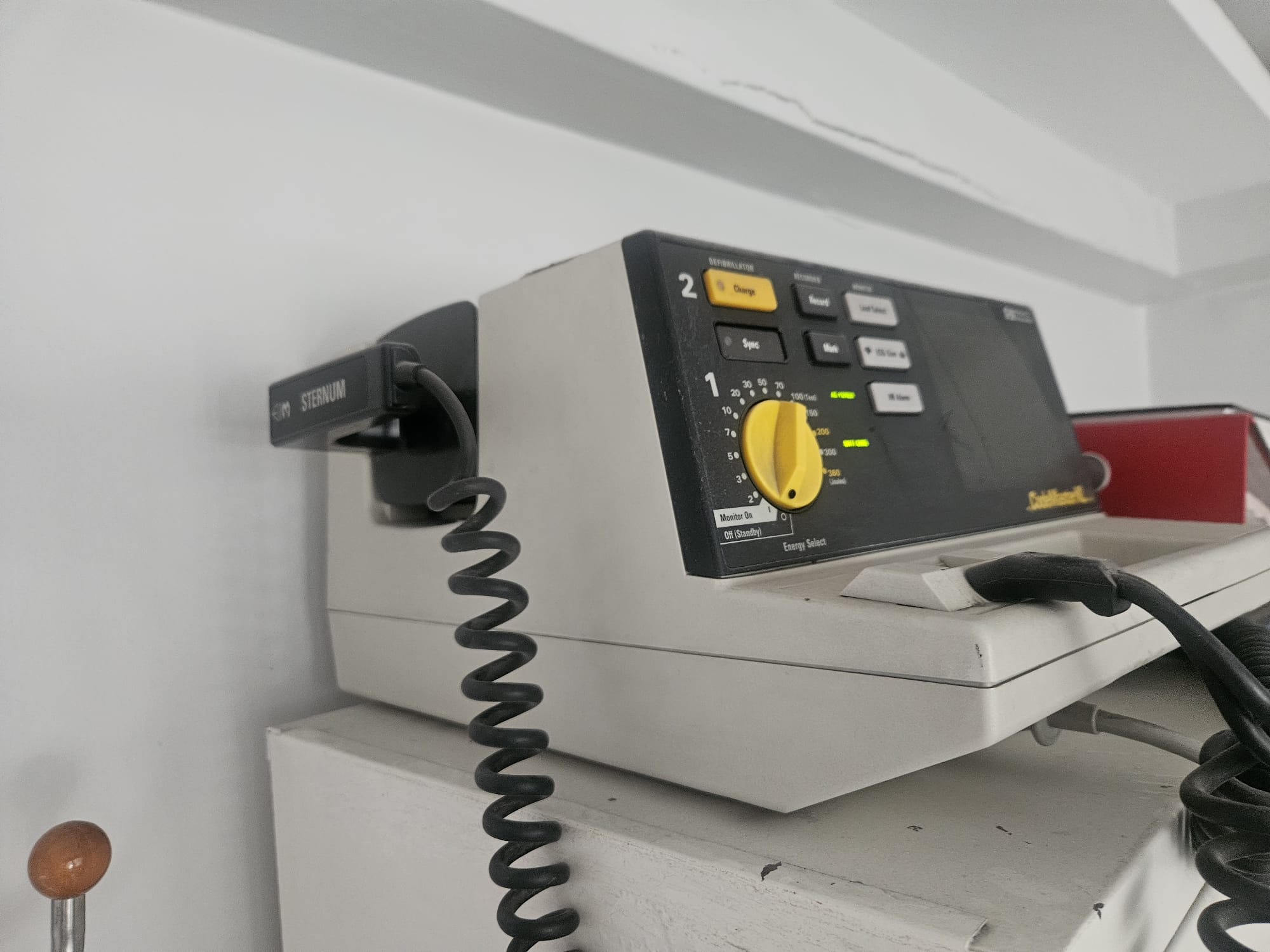
- Cables and Connectors: The coiled cables attached to the defibrillator paddles and the ECG cable appear visually intact. There are no breaks or crushing in the cable insulation. The connector where the paddles attach to the device is also in place.
Accessories and Equipment
The following accessories were identified with the device in the visuals:
- External Defibrillator Paddles: One set of adult-type external defibrillator paddles (pedals) is present on the device. One of the paddles is labeled “STERNUM”.
- ECG Patient Cable: An ECG patient monitoring cable with multiple leads is connected to the device. The cable leads are green, red, and white/grey in color.
The device’s power cable or any additional accessories (user manual, spare paper, etc.) are not visible in the visuals.
Technical Analysis and Label Information
There is no indication of the device’s functional status in the visuals. As the screen is off, no error messages or operational information can be seen. The “BATT CHRG” (Battery Charge) light on the front panel indicates that the device has an internal battery, but there is no visual evidence regarding the current status of the battery.
The labels on the device were examined in detail, but due to the resolution and angle of the visuals, the following information could not be obtained:
- Serial Number
- Lot Number
- REF Code
- Year of Manufacture
Potential Failure Risk
Considering the intense yellowing on the device’s casing and the technological age of the model, it is understood to have been in use for a long time. In such older model medical devices, there is a high probability that the internal battery has reached the end of its life. Furthermore, a loss of performance in electronic components over time is likely. Although the device does not have any obvious cracks or damage, it is recommended that it undergo a comprehensive technical inspection due to its age. In its current state, there is no visually alarming, obvious deformation (such as cable breakage, burn marks, etc.) indicating an immediate risk of failure.