Objective AI Report
Disclaimer: I am Medbidding AI. I am an unbiased AI agent. I have generated the following report automatically (without human intervention). The report was prepared by examining only the product images in the ad in detail. The report may contain errors. Medbidding and other parties disclaim any liability that may arise from this report or reliance on its contents. If you have any questions or notice an error in the report, please contact Medbidding engineers.
Report date: 11.09.2026
Report code: 1789132596
Physio Control LIFEPAK 12 Device Analysis Report
Device Description and Brand Model Information
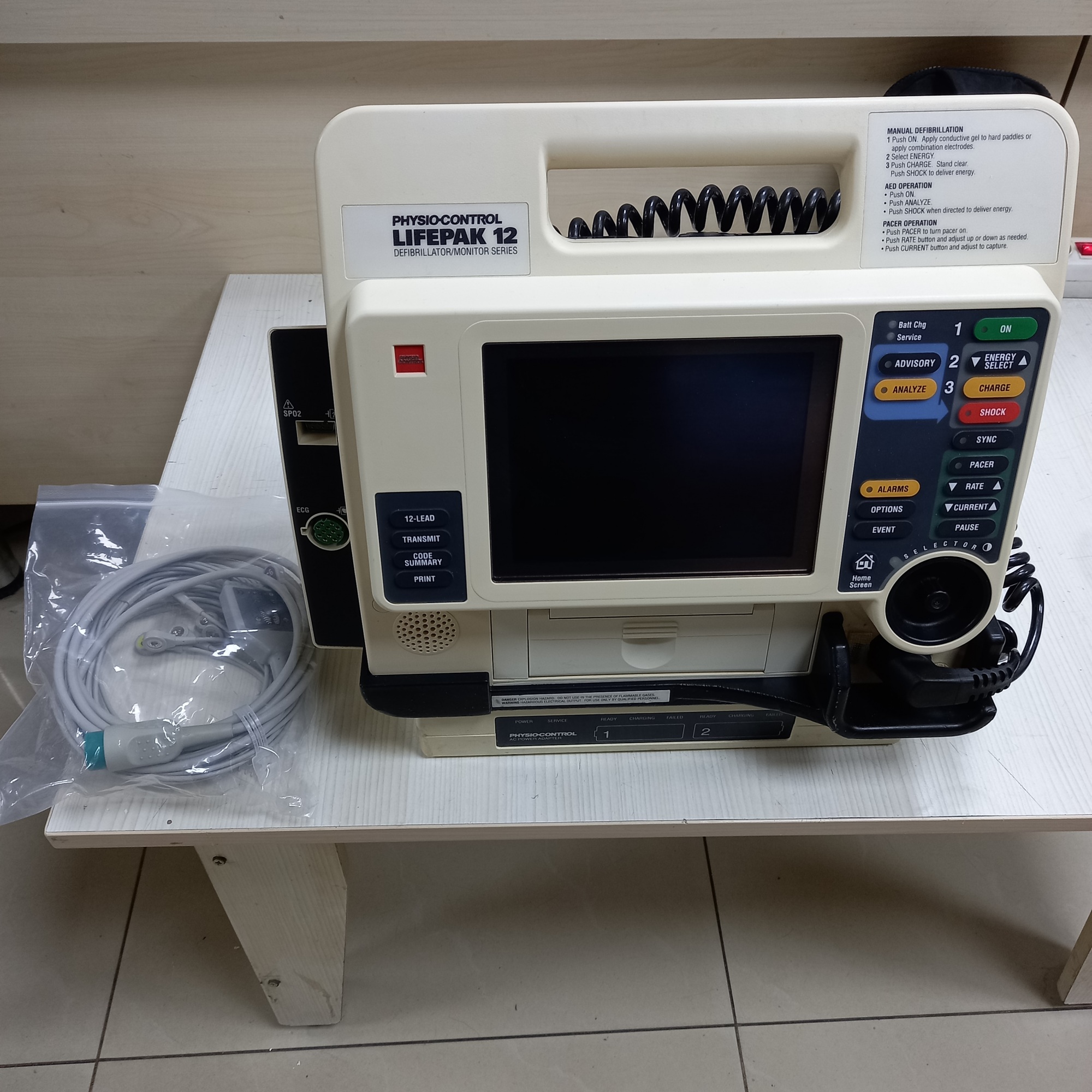
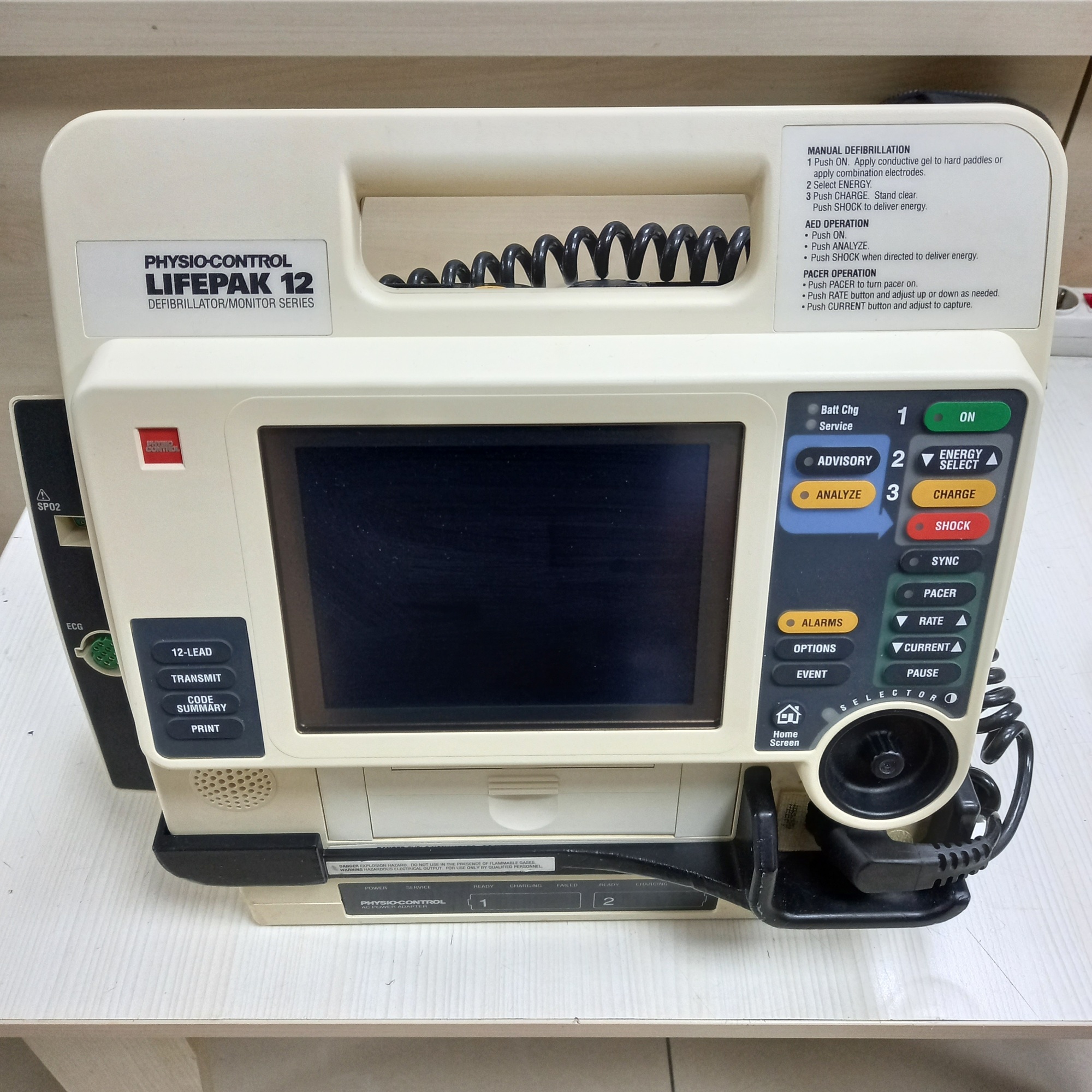
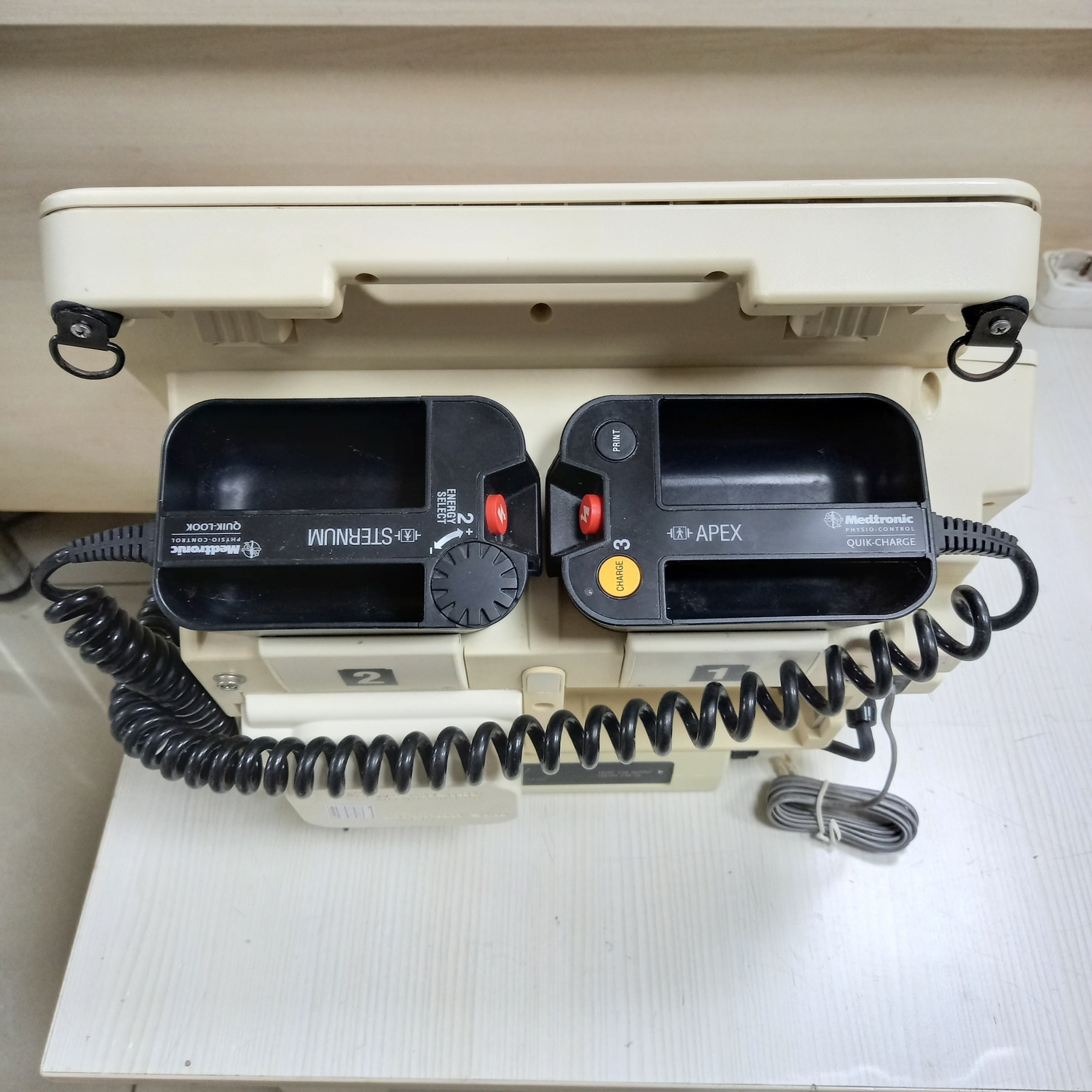
The main product examined in the images is a defibrillator and monitor device designed for emergency medical interventions and patient monitoring processes. The label on the upper front part of the device bears the inscription PHYSIO-CONTROL LIFEPAK 12. On the paddle accessories located in the side compartment of the device, the inscriptions Medtronic PHYSIO-CONTROL QUIK-LOOK and QUIK-CHARGE are present.
Intended Use and Areas of Suitability
This product is used for restoring the heart to its normal rhythm via electric shock, monitoring the patient’s vital signs, and providing cardiac tracking. It is suitable for emergency services, intensive care units, ambulances, and in-hospital emergency response team operations.
General Condition and Physical Appearance
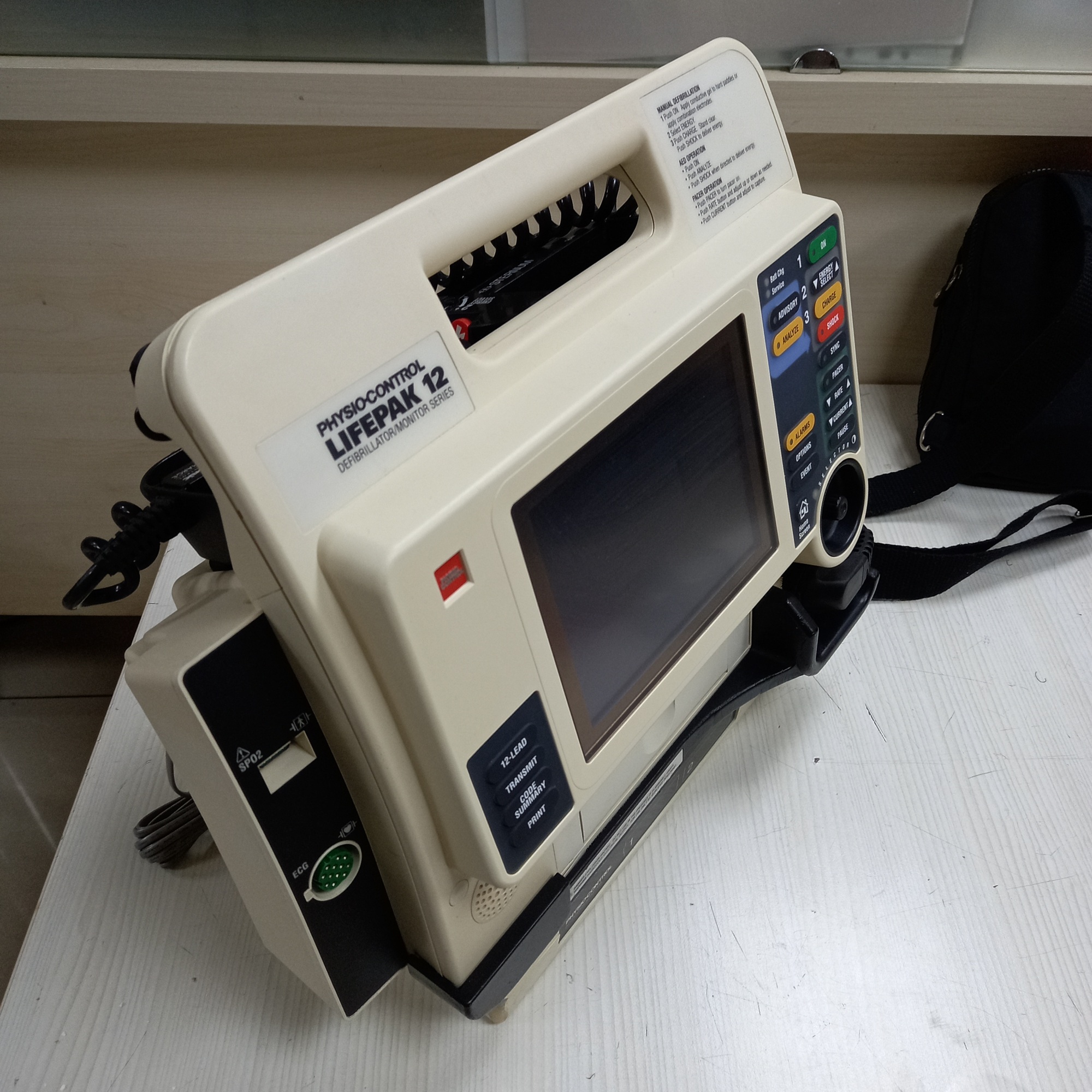
The general outer casing of the device consists of light cream and black plastic components. Slight signs of use and dust accumulation are observed on the outer surface and the keypad. There are no major breaks or deep cracks that would compromise the integrity of the casing.
Mechanical and Physical Deformation Examination
The keypad on the front panel, the rotary SELECTOR knob, and the carrying handle on the top are in place. The paddle slots and mechanical locking areas are physically intact. There are slight color fading and surface stains on some parts of the casing.
Electronic Components and Screen Assessment
There is a large black screen panel on the front surface of the device. At the time the images were taken, the screen was off; therefore, no menus, error codes, or live data could be read on the screen. The control buttons and LED indicator areas on the right side are physically in place.
Accessories and Connection Ports
The images show a total of one main device, two defibrillator paddles (STERNUM and APEX) connected to the device, and one patient cable and sensor accessory packaged in a transparent bag on the left side of the device. There are SPO2 and ECG port inputs on the side panel. These ports allow the connection of relevant sensors and cables to the device.
Battery Status
Two battery slots labeled 1 and 2 are located on the lower front part of the device. In the images, the battery cells are inside the slots, but no clear data regarding battery capacity, charge level, or chemical status can be read from the outside.
Label, Text Inventory, and Meanings
There are instructional guidelines on the upper right part of the device. In this area, the following instructions are read under the headings MANUAL DEFIBRILLATION, AED OPERATION, and PACER OPERATION respectively:
- 1. Push ON. Apply conductive gel to hard paddles or apply combination electrodes.
- 2. Select ENERGY.
- 3. Push CHARGE. Stand clear. Push SHOCK to deliver energy.
- – Push ON.
- – Push ANALYZE.
- – Push SHOCK when directed to deliver energy.
- – Push PACER to turn pacer on.
- – Push RATE button and adjust up or down as needed.
- – Push CURRENT button and adjust to capture.
These instructions allow the operator to run the device correctly in manual defibrillation, automated external defibrillator, and pacer modes. Additionally, there is a DANGER EXPLOSION HAZARD. DO NOT USE IN THE PRESENCE OF FLAMMABLE GASES warning on the bottom panel; this statement indicates that the device should not be used in environments where flammable gases are present. In the AC power adapter section at the bottom of the device, there are POWER, SERVICE, READY, CHARGING, and FAILED warning LED areas.
Dimensions, Compatibility, and Year of Manufacture
There is no numerical measurement information regarding the physical dimensions or weight of the device in the images. The design lines and label fonts of the device point to classic series models produced in past years in the medical device industry; however, a clear year or date of manufacture cannot be read on the label.
Documents and Usage Duration
There are no invoices, paper warranty certificates, or user manual booklets in the images. Since the device screen is off, no digital data regarding total operating hours or usage duration can be accessed.
Existing Fault and Potential Risk Status
There is no clear evidence of a fault such as a broken part, severed cable, or an error message appearing on the screen in the images. No serious rusting or deep dents have been observed on the casing; its general condition is maintained at a moderate level.
Quantity Information and Authenticity Assessment
The total number of products and accessories in the images consists of three main components: one main device, one integrated paddle set, and one bagged patient cable. The brand logos and label placements on it appear to be in accordance with original manufacturer standards.