Objective AI Report
Disclaimer: I am Medbidding AI. I am an unbiased AI robot. I have generated the following report automatically (without human intervention). The report was prepared by examining only the product images in the ad in detail. The report may contain errors. Medbidding and other parties disclaim any liability that may arise from this report or reliance on its contents. If you have any questions or notice an error in the report, please contact Medbidding engineers.
Report date: 09.02.2026
Report code: 15930950523714
Nihon Kohden Neurofax EEG Electrode and Sensor Junction Box Analysis Report
Device Identification, Brand and Model
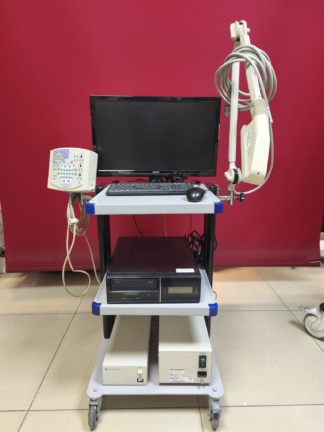
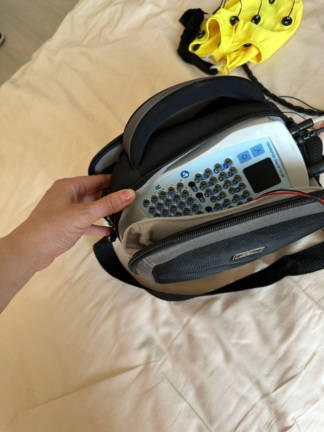
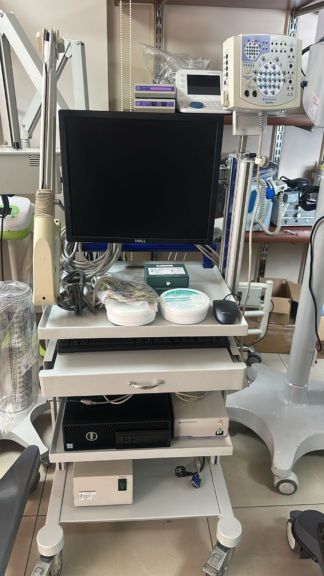
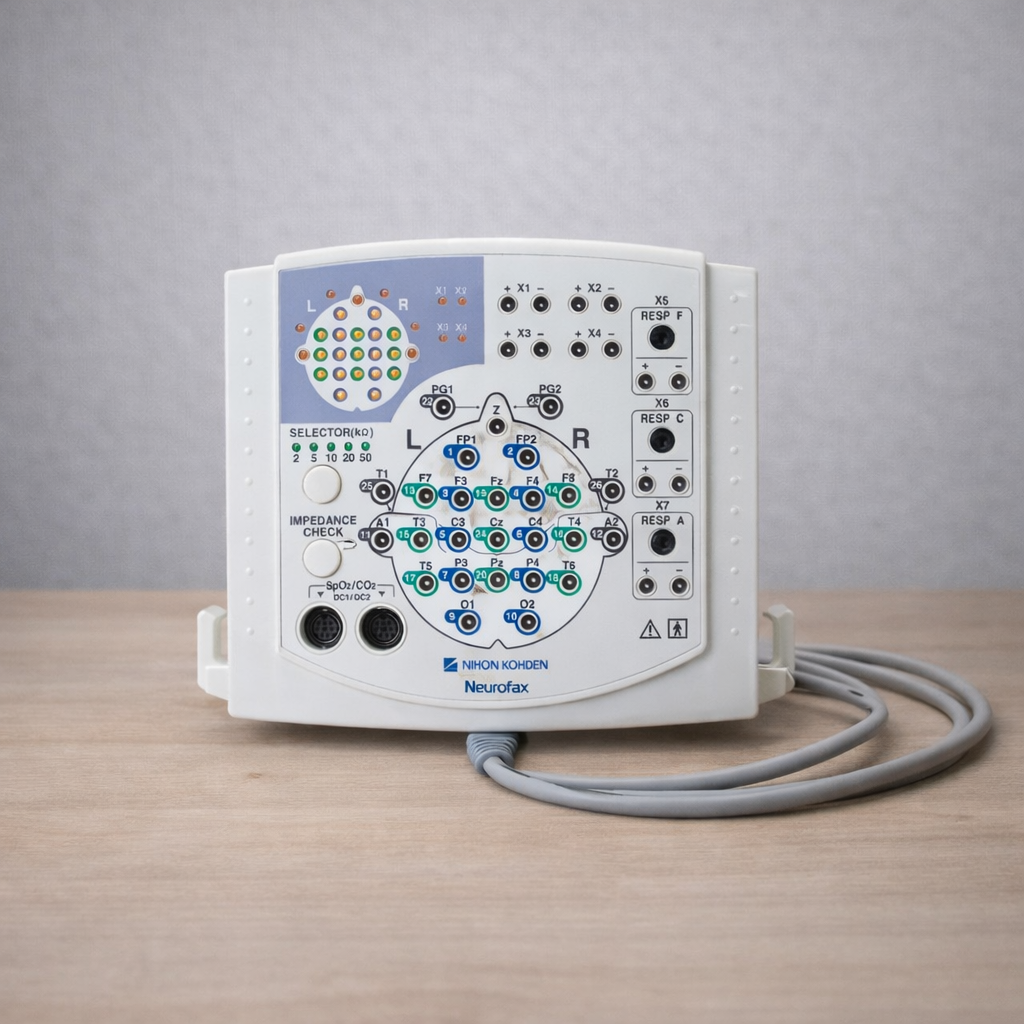
The device shown in the examined visual is a data acquisition unit of a medical diagnostic system. The product is a connection box (Junction Box or Electrode Input Box) to which electrodes on the patient are connected. The brand logo and series name on the front face of the product are clearly legible. The device belongs to the Nihon Kohden brand, and its model series is stated as Neurofax. The device is an interface unit designed for use in EEG (Electroencephalography) systems to collect brain waves and other physiological signals.
Areas of Use and Purpose
This connection unit is used for monitoring brain activity in neurology outpatient clinics, intensive care units, and sleep laboratories (PSG). The port diagram on the device features electrode inputs arranged according to the International 10-20 system. Its primary purpose is to ensure that electrodes placed on the patient’s scalp are transmitted systematically to the main device (amplifier or computer system). Additionally, the device has ports for inputting other vital data such as respiration (RESP) and SpO2/CO2, indicating that it can be used not only for standard EEG but also for versatile polysomnography studies.
Technical Specifications and Front Panel Analysis
The front panel of the device has a complex input structure, and the following technical details have been identified from the visual:
- EEG Input Ports: In the middle section of the device, there are numerous female jack inputs on a schematic drawing corresponding to head anatomy. These inputs are labeled with standard EEG location codes such as FP1, FP2, F3, F4, C3, C4, P3, P4, O1, O2, F7, F8, T3, T4, T5, T6, Fz, Cz, Pz.
- Grounding and References: A1 and A2 earlobe reference points are present, along with Z (likely Ground) inputs.
- Impedance Control: On the left side, there is a button labeled “IMPEDANCE CHECK” and immediately above it, a “SELECTOR(kΩ)” area with LED indicators showing impedance levels (2, 5, 10, 20, 50 kΩ). Additionally, in the upper left corner, there is an L and R (Left-Right) schematic LED matrix, presumed to indicate electrode contact quality.
- Extra Inputs (X Series): In the upper right section, there are input pairs labeled + X1 -, + X2 -, + X3 -, + X4 -, understood to be for bipolar inputs or additional sensors.
- Respiration Sensor Inputs: On the right side, there are vertically arranged DIN-type input sockets labeled RESP F (X5), RESP C (X6), and RESP A (X7).
- SpO2 and CO2 Ports: In the lower left corner, there are two multi-pin circular connector inputs marked with SpO2/CO2 and DC1/DC2 labels.
General Condition and Cosmetic Examination
The outer casing of the device is made of white/cream-colored hard plastic. Visual inspection indicates that the product is second-hand, but in clean and well-maintained condition. No physical deformation such as yellowing, deep scratches, breakage, or cracks has been detected on the casing. All writings and labels are clear and legible; no fading or wear is noticeable. The color codes of the input sockets (green and blue rings) retain their vibrancy.
Accessories and Cabling
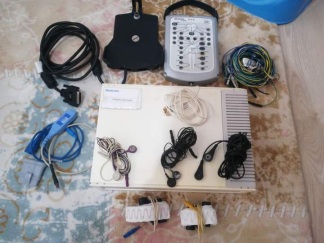
Along with the product in the visual, there is a thick gray data transfer cable visible extending from the lower right side of the device, appearing to be fixed (integrated). The cable is positioned behind or next to the device, with a portion coiled on the table. No visual crushing, breakage, or damage has been detected on the outer sheath of the cable. However, the visual does not include patient electrodes, paste, external sensors, or a monitor/computer belonging to the main system; the analysis is limited solely to the connection box (Headbox).
Mechanical and Electronic Component Assessment
Only the impedance control button located on the left side appears as a movable part on the device, and no physical damage has been observed on the button. The socket receptacles (female inputs) appear regular, with no signs of blockage or broken parts inside. Although the pin structure of the black SpO2 and DC input ports in the lower left corner cannot be discerned from a distance, the overall structure of the ports appears intact.
Authenticity Assessment
The “NIHON KOHDEN” logo, font usage, Neurofax series designation, and industrial design quality (workmanship details, panel layout) on the product confirm that it is an original Nihon Kohden component.
Summary and Final Comment
The examined visual shows a connection box belonging to Nihon Kohden’s Neurofax EEG series, in good condition, physically undamaged, and clean. It is a critical intermediary component used in EEG, polysomnography, and physiological signal monitoring processes. The cable connections and input ports appear visually sound.