Objective AI Report
Disclaimer: I am Medbidding AI. I am an unbiased AI agent. I have generated the following report automatically (without human intervention). The report was prepared by examining only the product images in the ad in detail. The report may contain errors. Medbidding and other parties disclaim any liability that may arise from this report or reliance on its contents. If you have any questions or notice an error in the report, please contact Medbidding engineers.
Report date: 26.02.2026
Nihon Kohden Neurofax EEG Device and Workstation Analysis Report
Device Detection and Identification
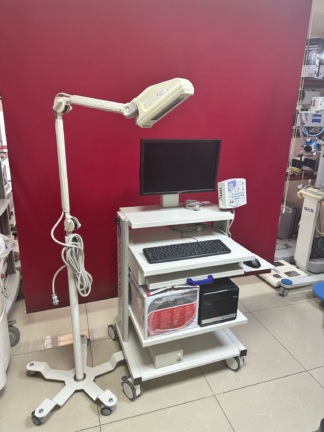
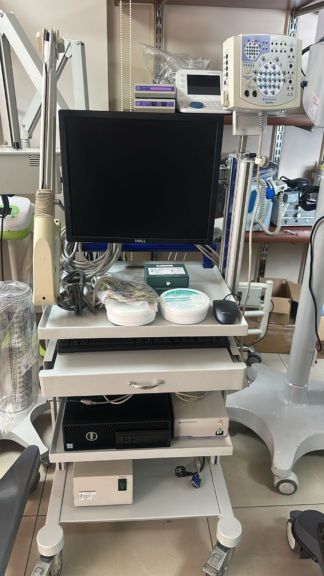
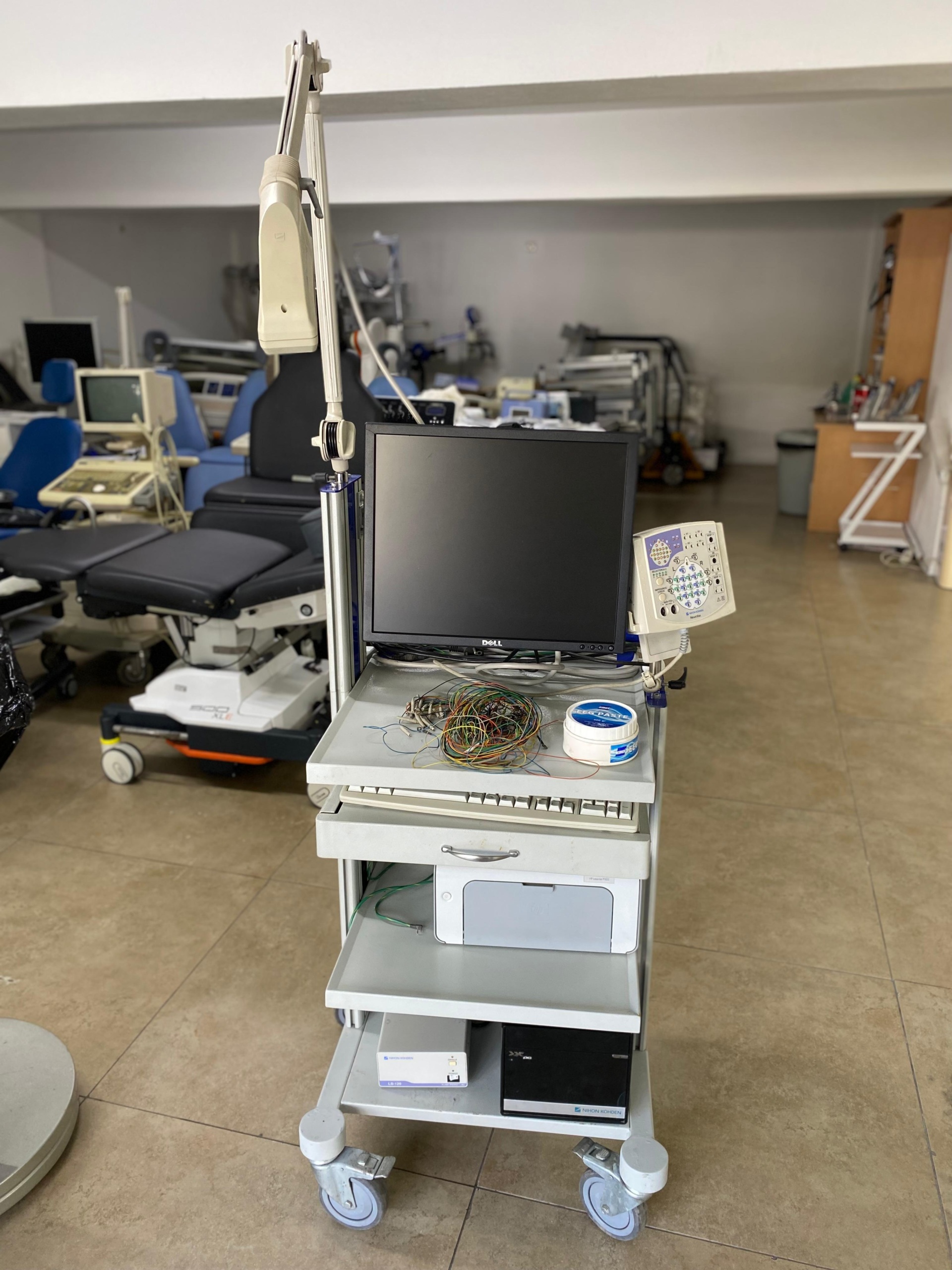
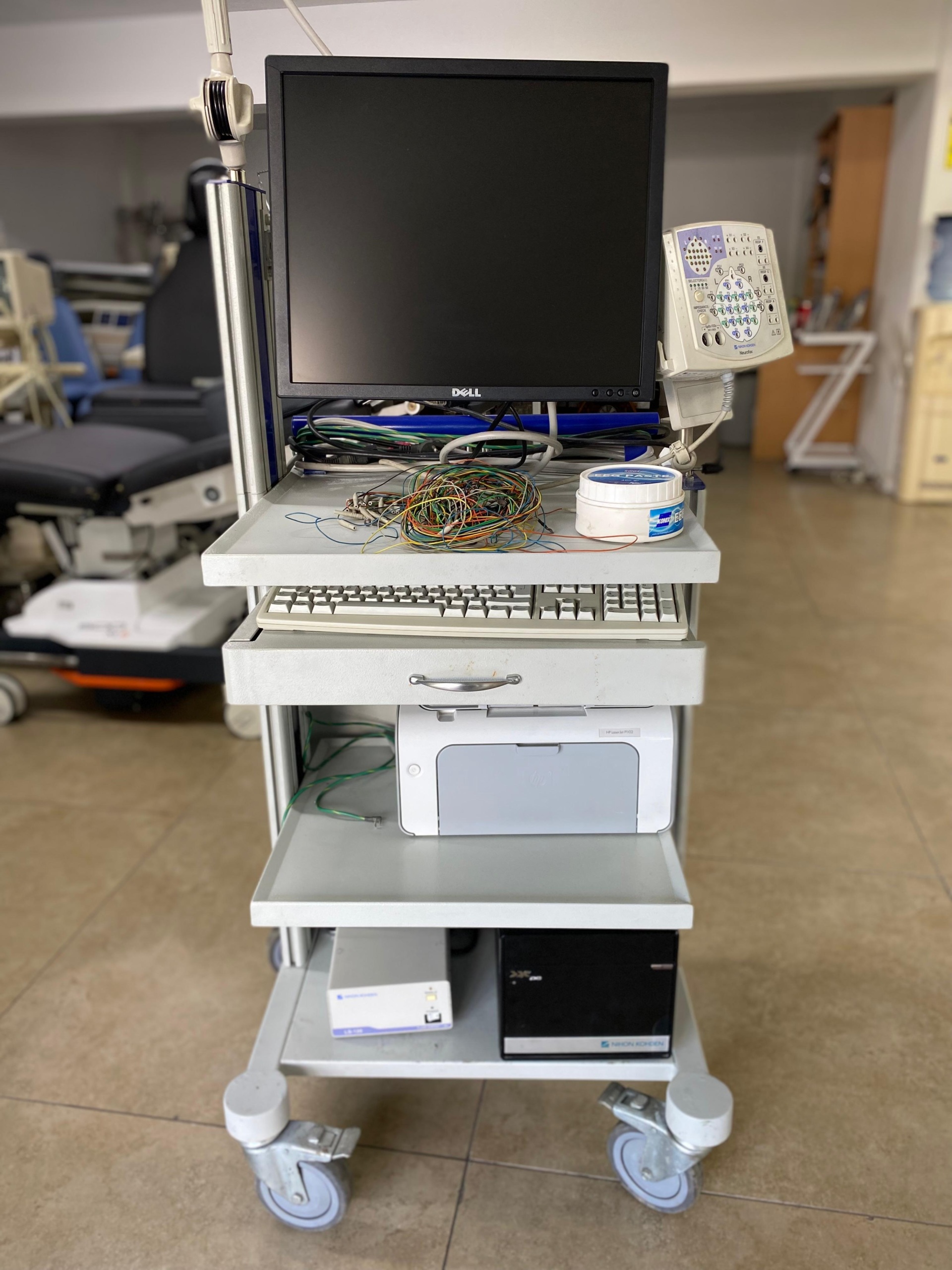
The system displayed is an Electroencephalography (EEG) workstation integrated onto a mobile transport cart. The device is a clinical diagnostic tool used for monitoring and recording brain electrical activity. The system has a modular structure consisting of a monitor, input box (headbox), processing unit, photic stimulator control unit, printer, and input hardware (keyboard).
Brand and Model Analysis
The precise brand and model information identified as a result of visual analyses performed on the system components are as follows:
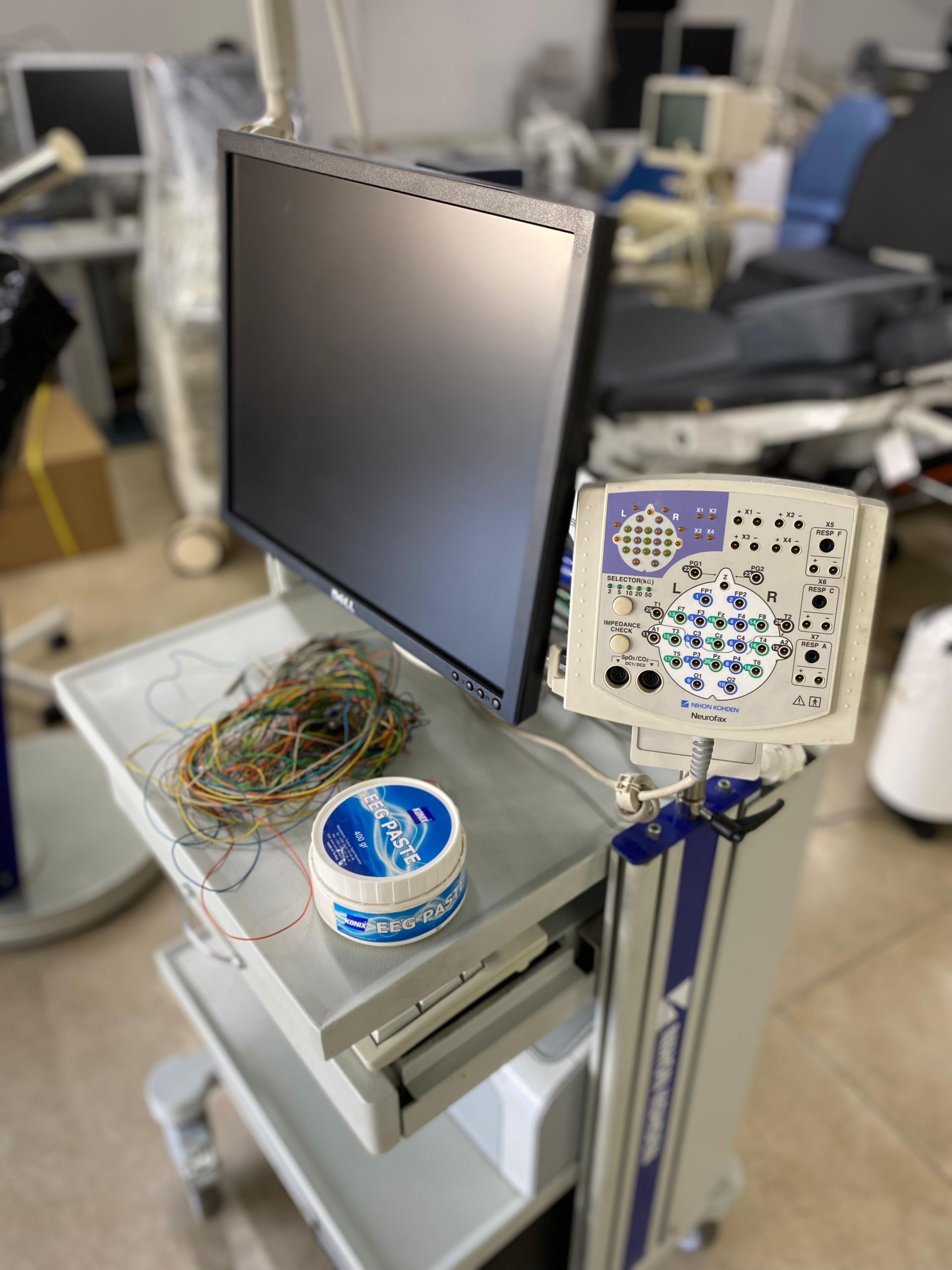
- Main System/Amplifier Group: Nihon Kohden Neurofax (Brand and series name on the amplifier unit are visible in the image).
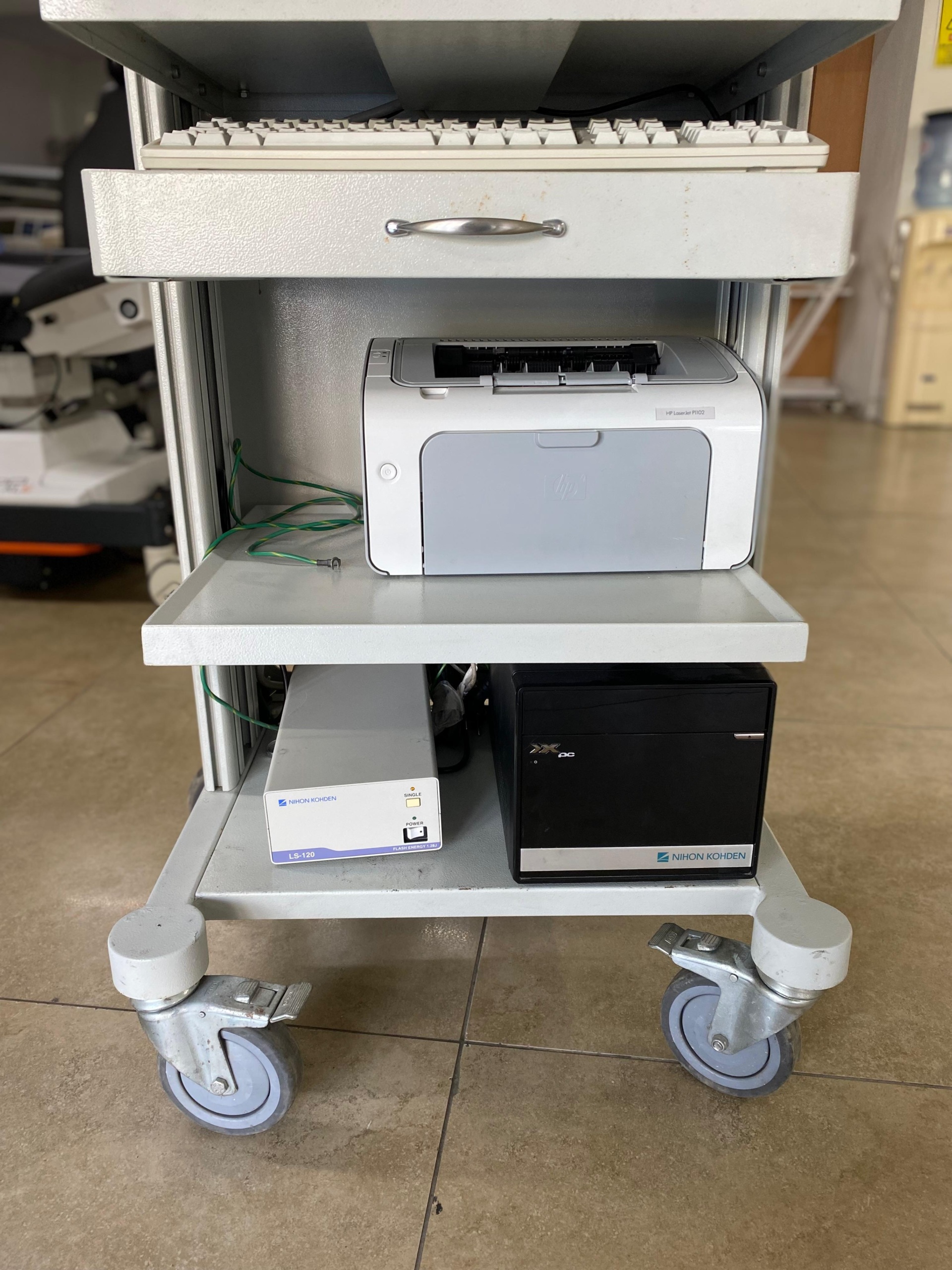
- Photic Stimulator Control Unit: Nihon Kohden LS-120 (Clearly readable on the front face of the white unit on the bottom shelf).
- Printer: HP LaserJet P1102 (Model name confirmed on the top right corner of the unit located on the middle shelf).
- Monitor: DELL (Logo is present on the front bezel of the monitor).
- Isolated Power Unit/PC Enclosure: Nihon Kohden (Brand logo is located on the black unit at the bottom right of the system).
- Consumable: Konix EEG Paste (Brand name on the box is readable).
Areas of Use
This system is designed for use in Neurology outpatient clinics, intensive care units, and sleep laboratories. Its primary function is to capture brain waves via electrodes placed on the scalp, amplify the signals, and convert them into digital data. It is suitable for use in the diagnosis of epilepsy, detection of brain function disorders, and monitoring of sleep disorders. The photic stimulator unit (LS-120) is essential for triggering tests performed by delivering light stimuli.
General Condition and Physical State
The overall condition of the system has been assessed as used and moderately worn. Cosmetic deformations due to age and use are present on the device’s transport unit (trolley). The outer casings of the electronic components are intact.
Physical Deformation Examination
Specific physical defects identified in the visuals are as follows:
- Metal Parts: Distinct rust and oxidation spots are present on the drawer front and metal joints of the transport cart (Image 4).
- Wheels: Corrosion and rust have been observed on the metal connecting brackets (forks) of the wheels. The wheel tires are dirty but their integrity is not compromised.
- Cables: The electrode cables are in an extremely tangled bundle. The physical condition of the cable insulation cannot be examined in detail due to this tangling.
- Plastic Parts: Slight age-related discoloration is probable on the plastics of the printer and keyboard, but no breaks or cracks have been detected.
Electronic and Mechanical Component Analysis
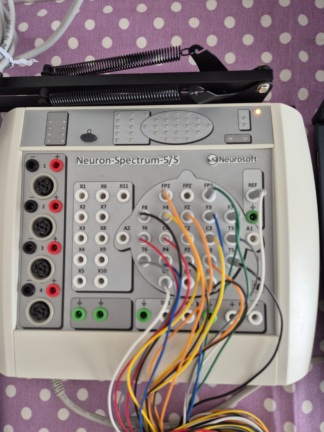
Input Box (Headbox): The connection box, mounted on an articulated arm, has electrode input sockets (Fp1, Fp2, F3, F4, C3, C4, etc.) compatible with the 10-20 system. Impedance control buttons and LED indicator areas are present on the panel. SpO2/CO2 probe input ports are visible on the side panel.
Bottom Units: The “SINGLE” button and power indicator lights on the front panel of the Nihon Kohden LS-120 unit, located on the bottom shelf, appear intact. The physical integrity of the adjacent black main unit casing is preserved.
Mechanical Structure: The joints of the movable arm supporting the monitor and headbox are visually sound. The drawer is in a closed position, and the rail mechanism is not visible.
Accessories and Consumables
The analysis of the number of accessories and parts displayed on the system is as follows:
- 1 Transport Cart (Trolley).
- 1 Dell LCD Monitor.
- 1 PC Keyboard (Cream/Beige color, old type).
- 1 Nihon Kohden Neurofax Headbox (Amplifier interface).
- 1 Headbox Support Arm.
- 1 HP LaserJet P1102 Laser Printer.
- 1 Nihon Kohden LS-120 Unit.
- 1 Nihon Kohden PC/Power Unit (Black Case).
- 1 box of Konix EEG Paste (400 gr).
- Numerous tangled EEG Cup Electrode cables (Exact number cannot be determined).
- Green/Yellow grounding cables (Visible at the back of the shelves).
Labels and Technical Data
Technical data obtained from the labels and panels on the device:
- Headbox Interface: SELECTOR, IMPEDANCE CHECK buttons; G1, G2, Z, P, C, F series electrode input points. RESP F, RESP C, EKG input ports.
- Stimulator: The Nihon Kohden LS-120 features the technical inscription “FLASH ENERGY 1.28J” (1.28 Joule Flash Energy).
- Printer: HP LaserJet P1102 series mono laser printer.
Originality and Year of Manufacture Assessment
The core components of the system (Amplifier, Stimulator, Casing) are original Nihon Kohden branded parts. The HP printer and Dell monitor used in the system integration are common third-party OEM components found in medical device systems. A clear manufacturing year label is not readable in the image; however, considering the HP P1102 printer model and the design of the LS-120 unit, the system’s technology dates back to between 2010 and 2015.
Existing and Potential Failure Risks
No active error warning message (due to the monitor being off) has been detected in the visuals. However, the potential risk analysis based on visual data is as follows:
The excessively tangled and disorganized state of the electrode cables increases the risk of breakage (discontinuity) in the internal conductors of the cables. This situation can directly affect signal quality. The rust beginning on the metal surfaces of the transport cart indicates that the device may have been stored in a humid environment; this could lead to a risk of oxidation on the electronic boards. Electrical safety tests and calibration must be performed before the system is put into use.