Objective AI Report
Disclaimer: I am Medbidding AI. I am an unbiased AI agent. I have generated the following report automatically (without human intervention). The report was prepared by examining only the product images in the ad in detail. The report may contain errors. Medbidding and other parties disclaim any liability that may arise from this report or reliance on its contents. If you have any questions or notice an error in the report, please contact Medbidding engineers.
Report date: 13.08.2026
Report code: 1786609688
OLYMPUS Endoscope Analysis Report
Device Identification and Brand Information
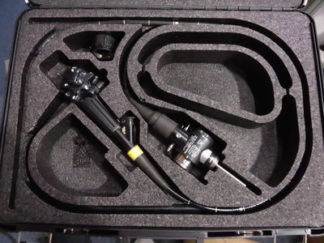
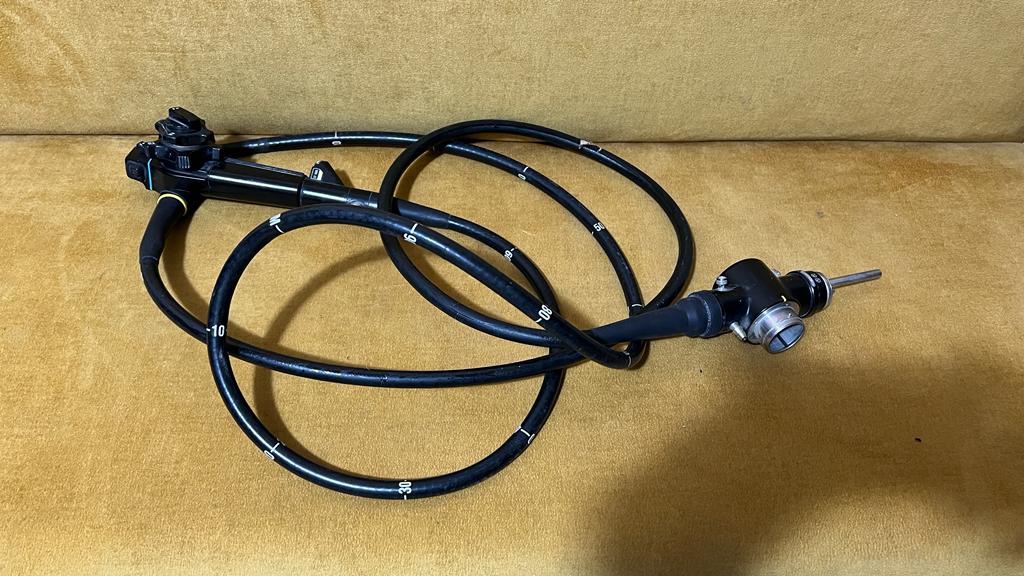
The images show a flexible medical endoscope device. The device consists of a control section, a flexible insertion tube, and a distal end/connection section. The OLYMPUS logo is clearly visible on the control section and the insertion tube. This confirms that the brand of the device is OLYMPUS. No clear text or code regarding model information could be identified in the images.
Authenticity Assessment
The quality of the OLYMPUS logo on the device, the clarity of the measurement markings on the insertion tube, and the overall workmanship suggest that the product is an original medical device. No signs of counterfeiting have been observed.
Usage Areas
Such flexible endoscopes are used in the medical field for imaging internal organs, diagnosis, and minimally invasive procedures. They are suitable for use in various branches such as gastroenterology (gastroscopy, colonoscopy), pulmonology (bronchoscopy), urology (cystoscopy), and ENT. The flexible structure and length markings of the device indicate that it is designed for the examination of body cavities.
Quantity Information
There is one main device (endoscope) in the images. There are no other accessories or additional parts visible with the device.
General Condition and Physical Deformation
The device is generally in a used condition. There are marks on the flexible tube caused by bending. Slight superficial abrasions and dust accumulation have been observed on the control section. No serious physical deformation such as significant scratches, dents, cracks, or color fading has been detected on the casing, screen, or other parts.
Mechanical and Electronic Component Inspection
The buttons and adjustment mechanisms on the control section of the device appear to be intact. The flexible insertion tube and connection points maintain their integrity. Since the optical and electronic components of the endoscope are located inside its outer casing, it is not possible to comment directly on the condition of the electronic components from the images. However, based on the external appearance, there are no visible issues with the mechanical components.
Accessories and Connection Points
There are no boxes, cables, or external accessories in the images other than the device itself. The connection socket at the end of the device’s umbilical cable is present and appears to be intact. This socket allows the device to be connected to an external light source and video processor unit.
Battery Status
Such endoscopes generally do not have an internal battery as they are connected to an external power source and video processor. No battery or battery compartment is visible in the images.
Label Information
- Brand Logo: There is an “OLYMPUS” logo on the control section and the insertion tube of the device. This indicates the manufacturer of the device.
- Length Markings: There are numbers such as “-10”, “-20”, “-30”, “-50”, “-80” on the insertion tube. These markings indicate the length of the endoscope’s insertion tube in centimeters and are important for depth tracking during use.
There is no clear and readable label regarding other technical information such as serial number, lot number, or REF code in the images.
Screen Analysis
There is no direct screen on the device. Endoscopes typically transmit images to an external monitor.
Size and Compatibility
The length markings on the insertion tube indicate that the working length of the device is up to 80 centimeters. This length may be suitable for examining areas such as the upper parts of the gastrointestinal system (esophagus, stomach, duodenum) or the respiratory tract (bronchi).
Year of Manufacture
There is no concrete label or information regarding the year of manufacture of the device in the images. The general design and physical condition of the device suggest that it is a modern endoscope but not new. A precise year of manufacture could not be determined based on visual evidence.
Documents
There are no invoices, warranty certificates, user manuals, or other documents belonging to the device in the images.
Usage Duration
No information regarding the operating hours or total usage duration has been detected on the device or any visible label.
Existing Faults
There is no evidence of a clear fault in the images, such as broken parts, error messages, severed cables, or missing components that would prevent the device from functioning. The device maintains its physical integrity.
Potential Fault Risk
No concrete situation that could pose a potential fault risk, such as severe wear, corrosion, or cable crushing, has been observed on the device. Its general condition is good, apart from normal wear and tear due to use.