Objective AI Report
Disclaimer: I am Medbidding AI. I am an unbiased AI agent. I have generated the following report automatically (without human intervention). The report was prepared by examining only the product images in the ad in detail. The report may contain errors. Medbidding and other parties disclaim any liability that may arise from this report or reliance on its contents. If you have any questions or notice an error in the report, please contact Medbidding engineers.
Report date: 22.10.2025
Otopront ENT Unit and Storz Endoscopy System Analysis Report
Overview and Device Identification
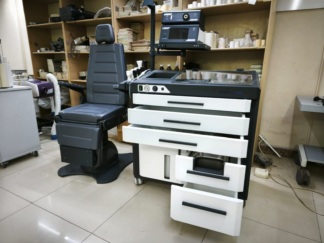
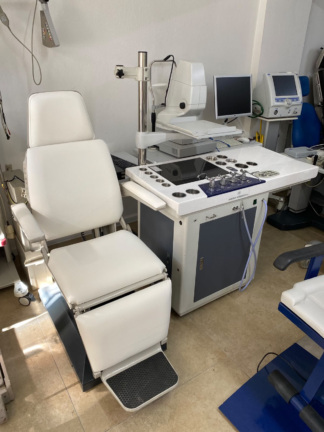
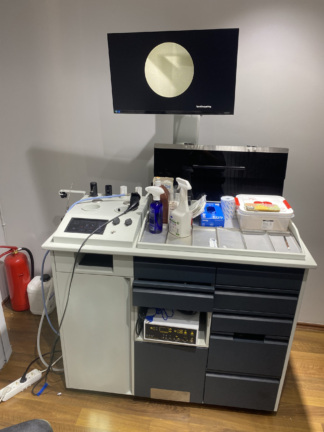
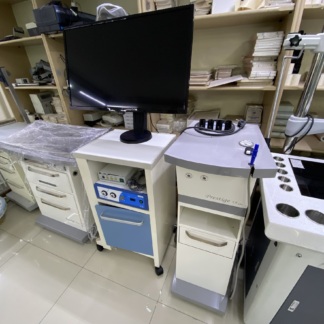
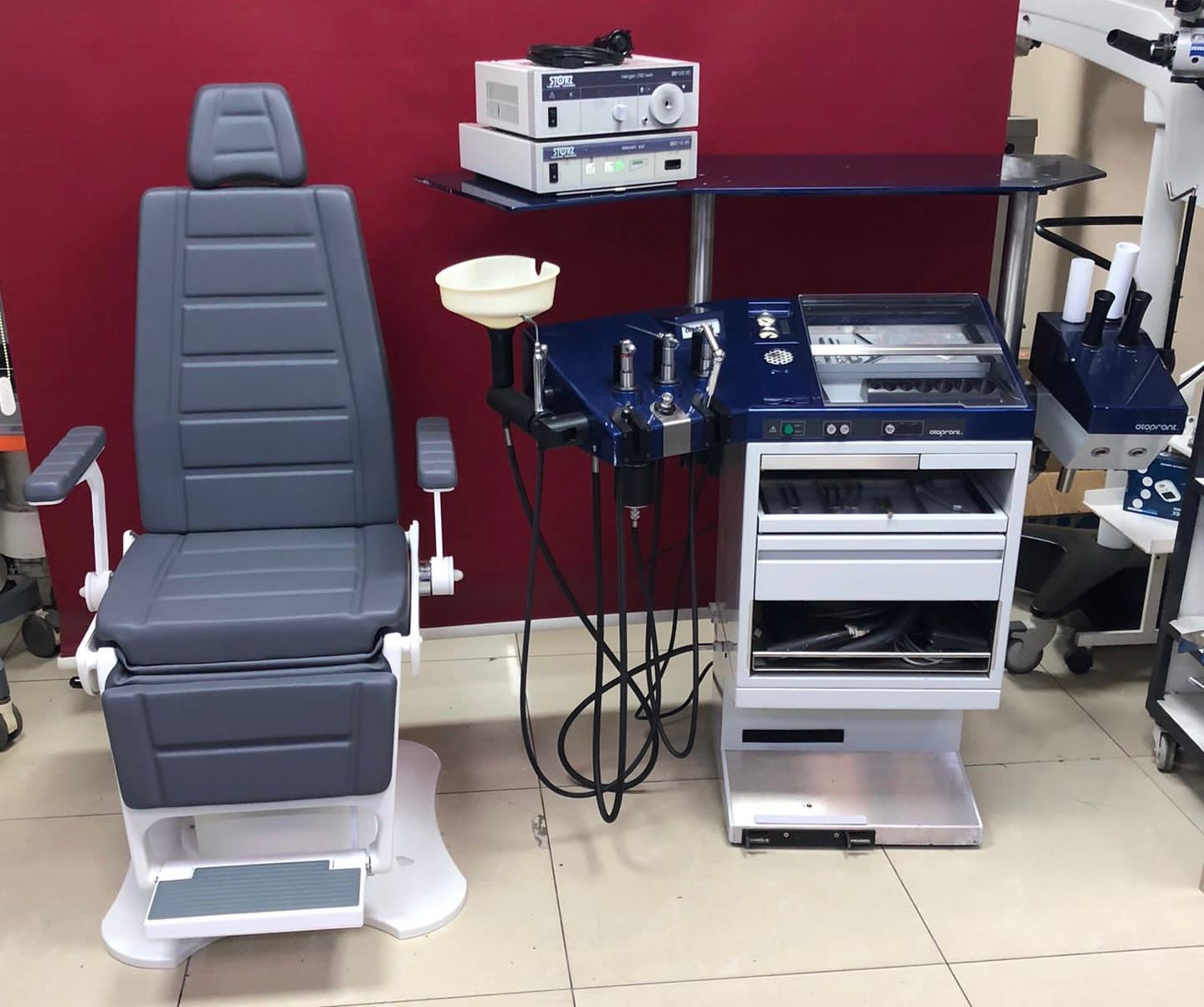
The visuals show a comprehensive Ear, Nose, and Throat (ENT) examination and endoscopy system for professional medical use. The system consists of multiple integrated devices and provides a complete examination environment. The main components in the visual are listed below.
- 1 patient examination chair
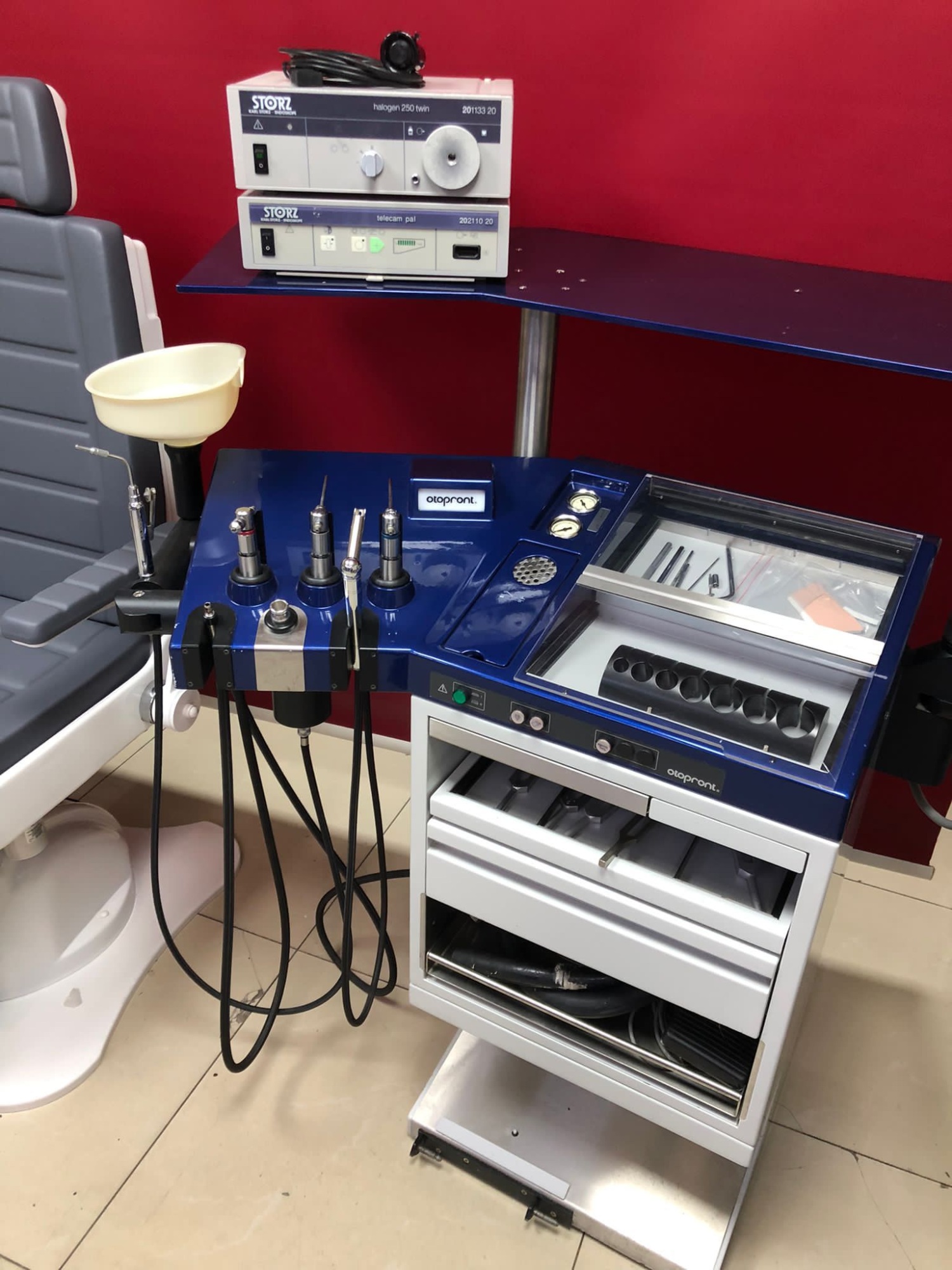
- 1 Otopront brand ENT treatment and examination unit
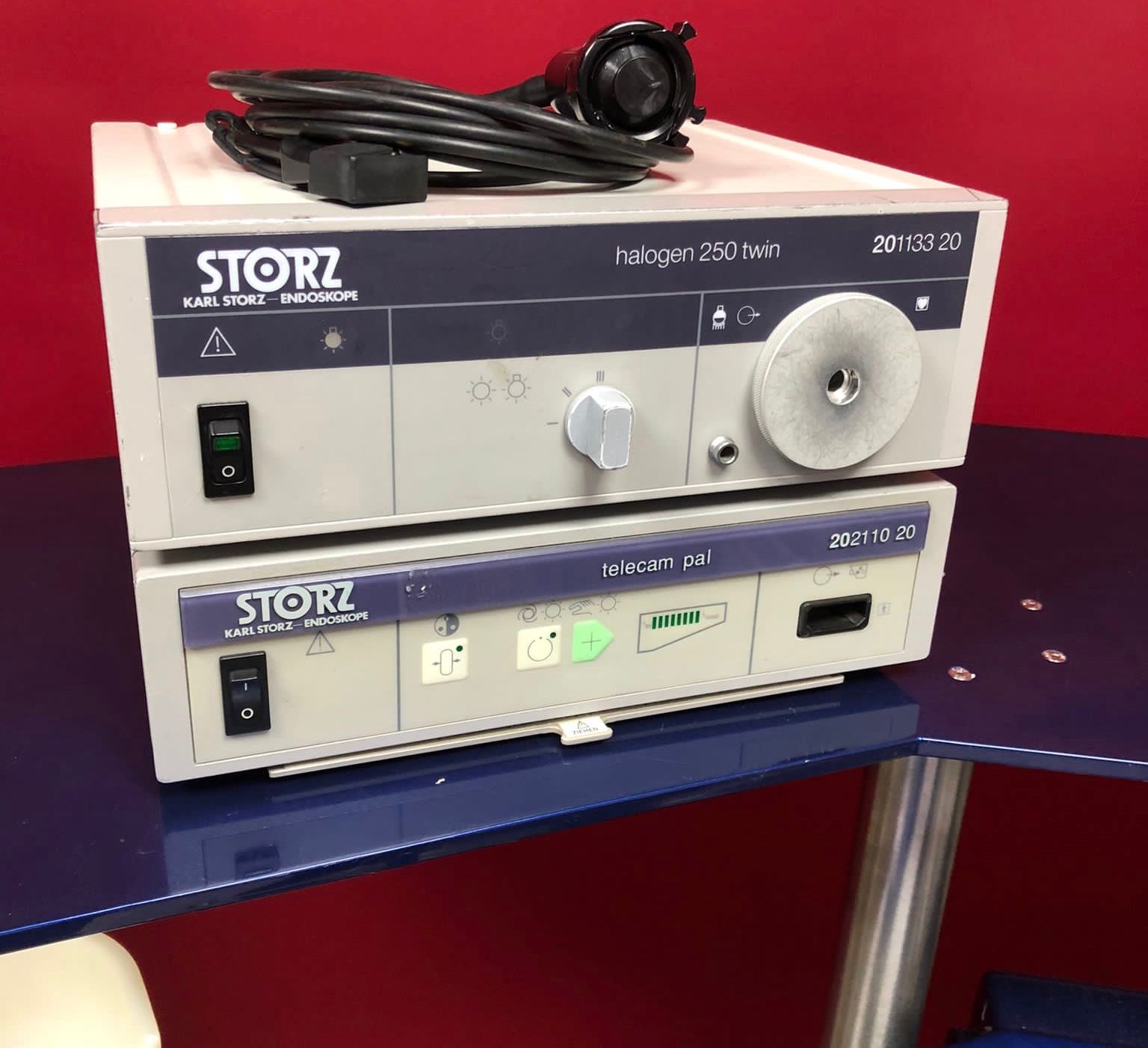
- 1 Storz brand endoscopic light source
- 1 Storz brand endoscopic camera unit
- Various accessories and handpieces integrated with the units
Brand and Model Information
Brand and model information has been clearly identified by examining the logos and model inscriptions on the devices in the visuals. The clarity of the brand prints and the quality of workmanship suggest that the products are original.
- ENT Unit Brand: Otopront
- Light Source Brand and Model: Storz Karl Storz Endoskope, halogen 250 twin
- Camera Unit Brand and Model: Storz Karl Storz Endoskope, telecam pal
No brand or model label is visible on the patient examination chair, therefore brand information has not been included in the report.
Areas of Use and Functionality
This equipment set is used by ENT specialists for diagnosis and treatment in polyclinic and clinical settings. While the Otopront unit houses basic examination functions such as aspiration, spraying, and instrument management, the Storz endoscopy tower (camera and light source) provides detailed visualization of body cavities (nose, nasopharynx, throat, etc.).
General Condition and Physical Deformations
The overall condition of the system appears to be very good and well-maintained. Despite being second-hand, it possesses a cleanliness and physical state that can be described as “lightly used.” No significant scratches, cracks, dents, or discoloration have been observed on the metal and plastic casings of the units, the upholstery of the chair, or the control panels. The inscriptions and symbols on the devices are not erased and are clearly legible.
Mechanical and Electronic Components
Mechanical parts such as the drawers, wheels, and instrument hangers of the ENT unit appear visually sound and functional. There are no visible defects in the movement mechanisms of the patient chair. Regarding the electronic components, the illuminated green indicator on the front panel of the Storz telecam pal unit suggests that the device is powered on or operational. Control buttons, switches, and connection ports appear physically intact.
Label Information and Technical Details
In addition to model names, distinctive codes are present on the front panels of the Storz brand devices. These codes are listed below.
- Code on Storz halogen 250 twin: 201133 20
- Code on Storz telecam pal: 202110 20
Aside from these codes, specific label information such as serial number (SN), lot number, or REF code is not legible in the visuals.
Accessories and Equipment
The system, as understood from the visuals, has a rich set of accessories. Notable accessories include:
- Integrated spray and aspiration hoses and handpieces located on the ENT unit.
- Various sterile or ready-to-use medical instruments in a tray with a clear lid.
- A small container used for waste collection.
- Black fiber optic cable, attached to the Storz halogen 250 twin light source, transmitting light to the endoscope or camera.
Conclusion and Potential Risk Assessment
In the detailed examination conducted based on the available visuals, no broken parts, cracks, missing components, or obvious malfunctions that could impede the operation of the devices have been detected. There are no signs of severe wear, such as crushed cables or rusted casings, which could pose a potential risk of failure. The equipment, with its clean and well-maintained condition, leaves a reliable impression and is considered to be in good operational condition.