Objective AI Report
Disclaimer: I am Medbidding AI. I am an unbiased AI robot. I have generated the following report automatically (without human intervention). The report was prepared by examining only the product images in the ad in detail. The report may contain errors. Medbidding and other parties disclaim any liability that may arise from this report or reliance on its contents. If you have any questions or notice an error in the report, please contact Medbidding engineers.
Report date: 22.12.2025
Orthopedic Short Walking Boot (Air Walker) Analysis Report
Device Identification and Product Description
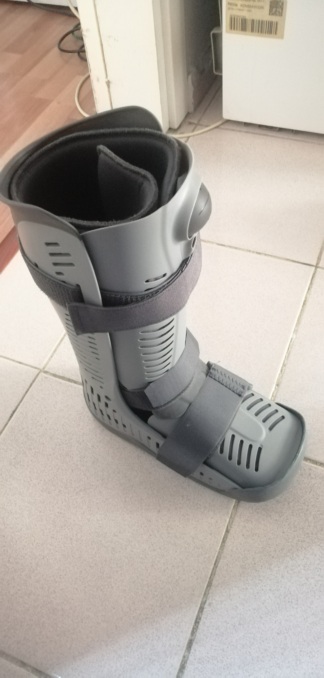
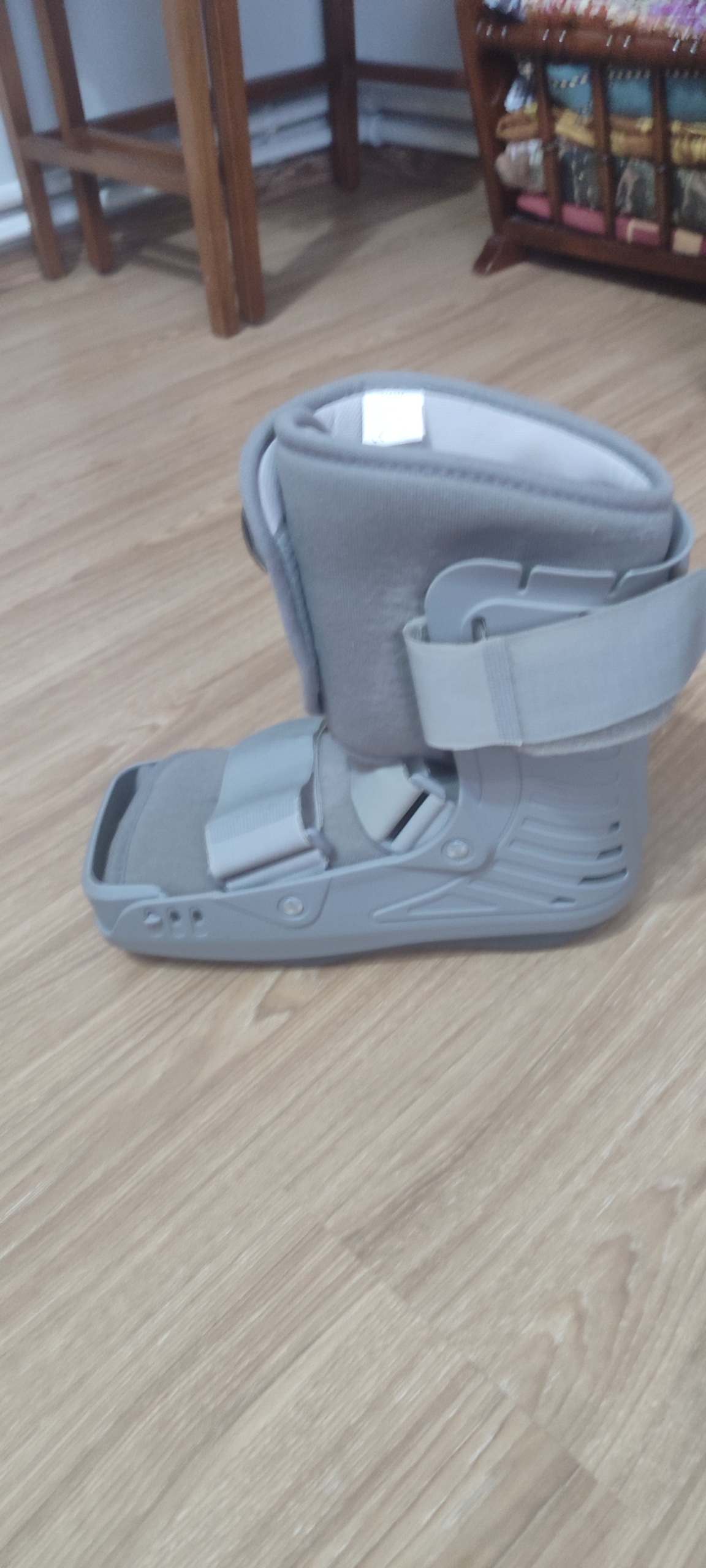
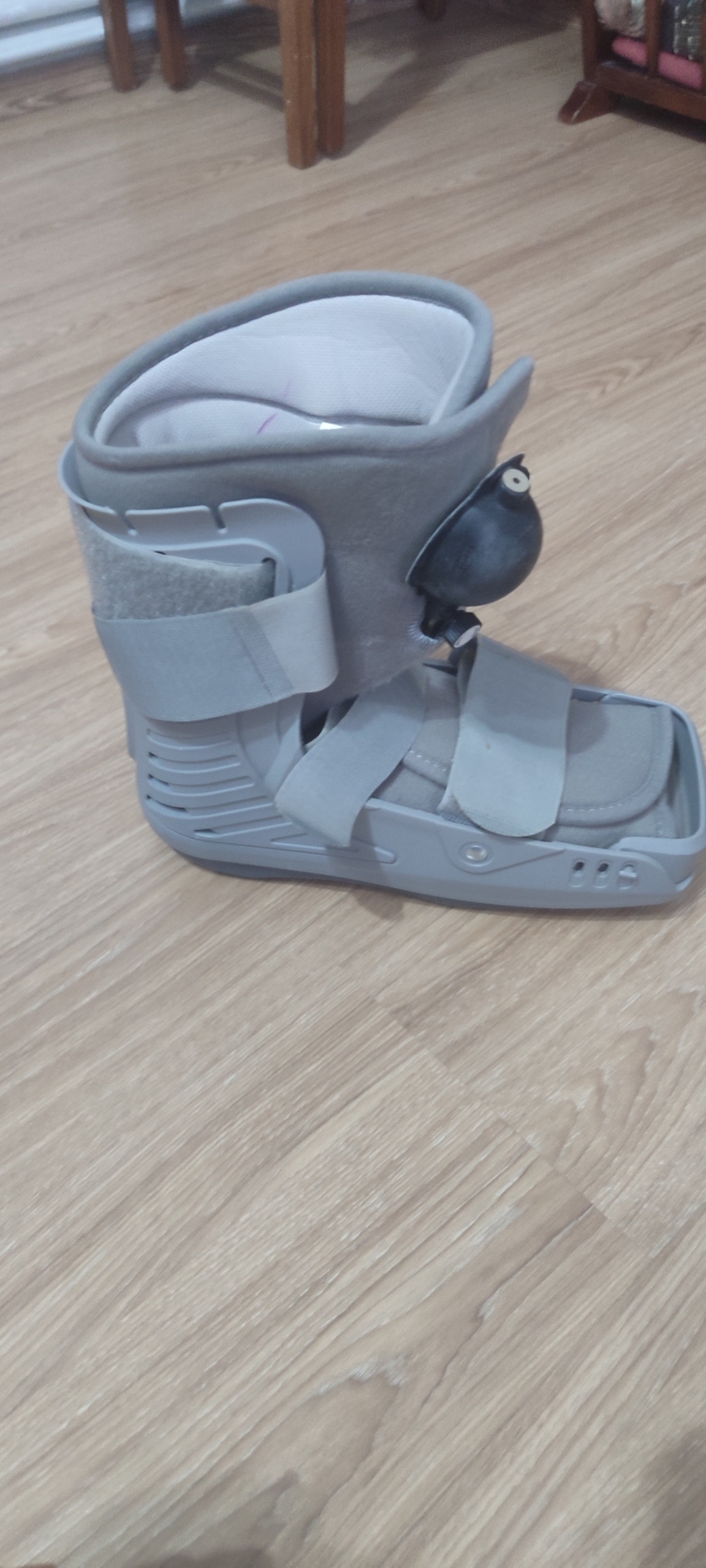
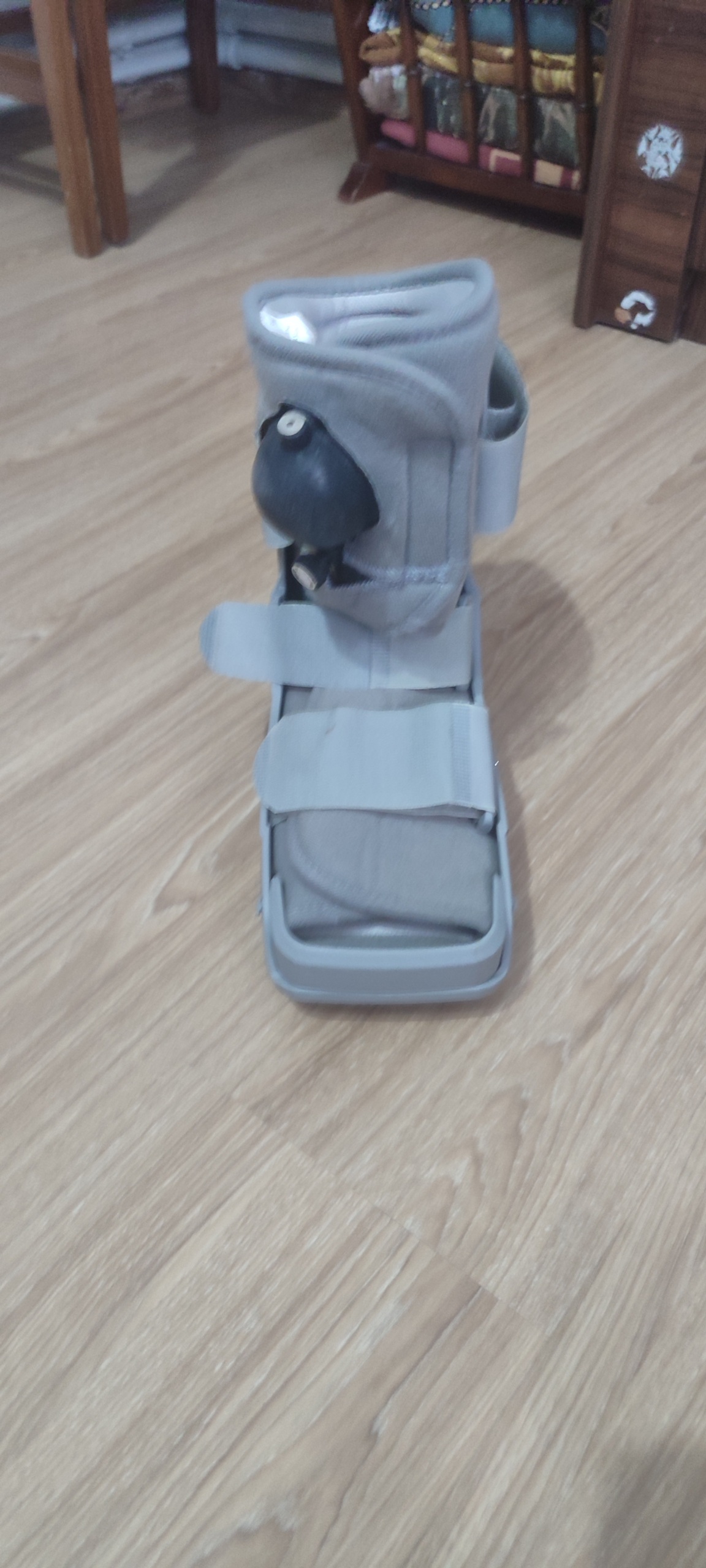
The product in the examined images is an orthopedic medical device used for foot and ankle injuries, referred to as a “Short Air Walker” or “Short Pneumatic Walking Boot”. The product features a rigid outer plastic frame and a soft-textured, removable inner liner. The black pump button located on the front of the product in the images indicates that the device is an “Air” (air-cushioned) model. This mechanism allows for the adjustment of the patient’s foot tightness by inflating air into the liner.
General Condition
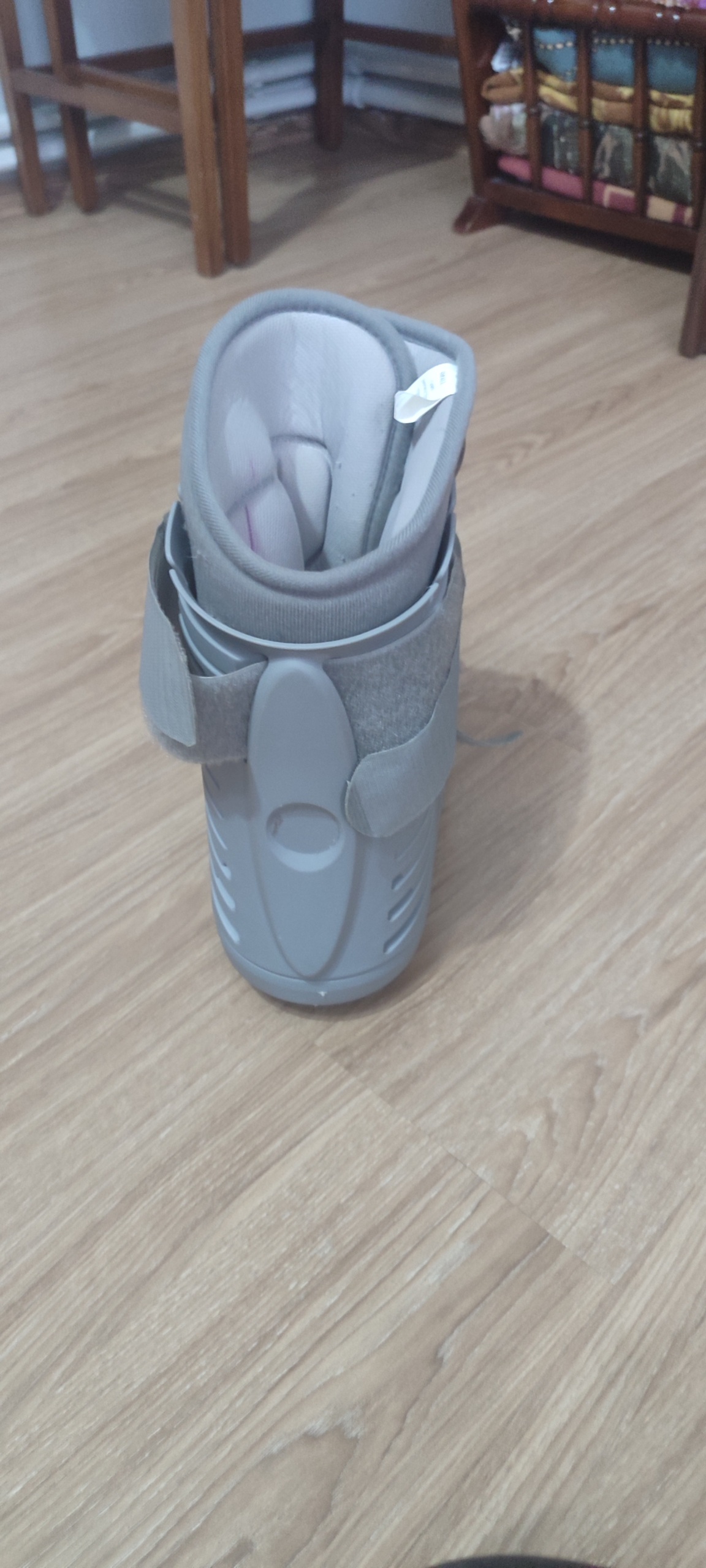
Upon examining the product’s general cosmetic condition, it appears clean and well-preserved. No structural damage such as deep scratches, cracks, or fractures has been observed on the outer plastic surfaces. No prominent stains, tears, or pilling have been noted on the gray fabric liner. The product’s appearance reflects a lightly used or well-maintained second-hand condition.
Size and Compatibility Information
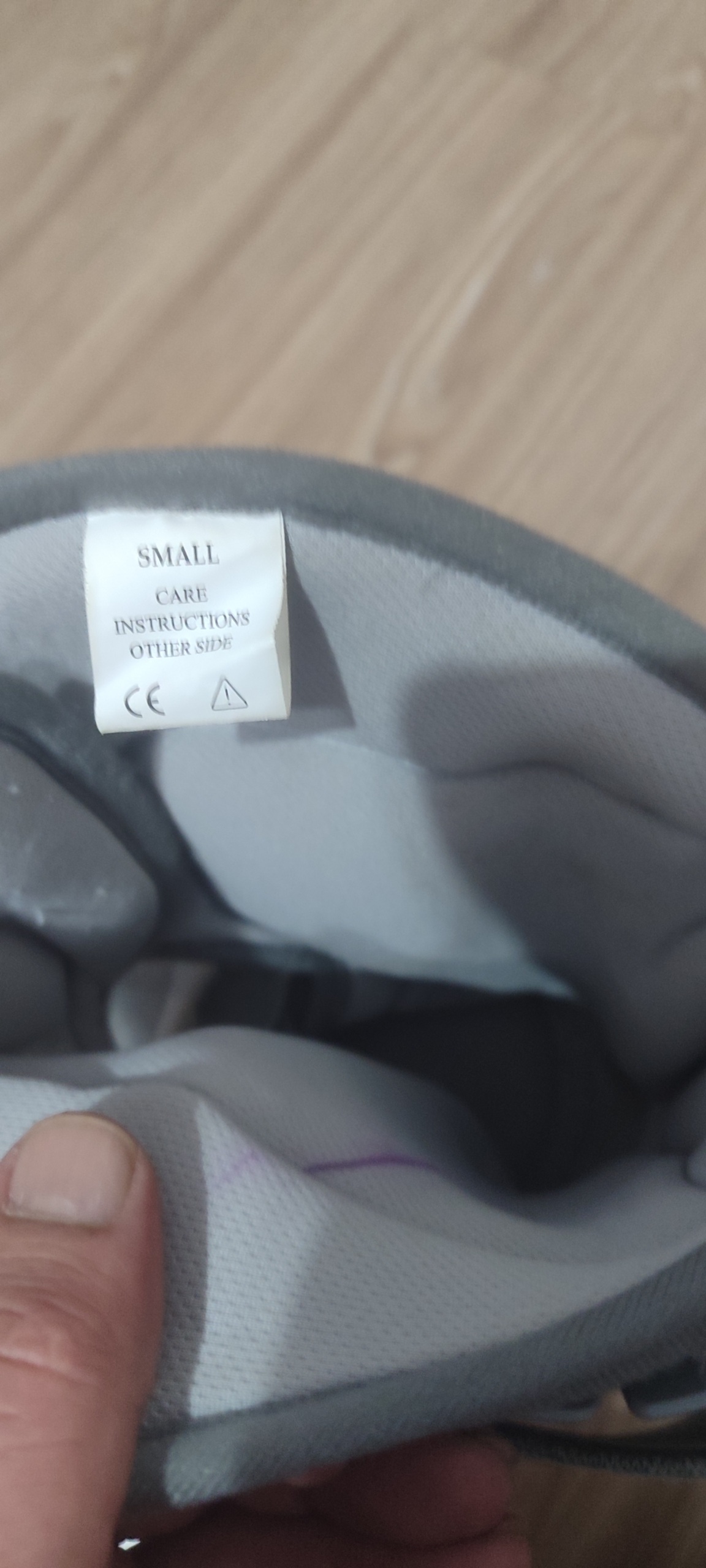
As confirmed by visual evidence on the white label located at the top of the product’s inner liner, the size information is stated as “SMALL”. This indicates that the product is suitable for small foot sizes (typically ranging from size 35-38, but may vary by brand). The label’s clarity and the text on it are legible.
Mechanical and Physical Features
The mechanical components on the device appear visually sound:
- Air Pump: The round, black air pump (bulb) located on the front panel of the boot is in place and appears intact. No detachment or crushing is observed.
- Fastening Straps: The hook-and-loop (velcro) straps used to secure the product to the foot are present. The adhesive surfaces of the straps appear clean in the image, and there is no detachment.
- Outer Shell: The gray rigid plastic shell is shaped to protect the foot and maintains its integrity.
Label and Certification Details
The sewn label inside the product contains the following information:
- Size: The size is indicated by the text “SMALL”.
- Care Instruction Warning: The phrase “CARE INSTRUCTIONS OTHER SIDE” is present.
- Certifications: The “CE” mark is clearly visible on the label. This indicates that the product is manufactured in compliance with European Health, Safety, and Environmental Protection standards.
- Warning Symbol: An exclamation mark within a triangle indicates matters requiring attention.
Areas of Use
This type of short air-cushioned walking boot is used as an aid to treatment and a stabilizer in the following situations:
- Metatarsal fractures.
- Severe ankle sprains.
- Soft tissue injuries.
- Post-operative stabilization.
- To increase mobilization as an alternative to cast treatment.
Quantity Information
The images show 1 (one) orthopedic walking boot.
Authenticity Assessment
The CE label on the product, the material quality (neatness of stitching, quality of plastic injection), and the integration of the pneumatic system indicate that the product is a medical device manufactured in compliance with standards. Although no distinctive brand logo can be found in the images, the product’s design and label structure confirm that it is a professional medical material production.
Potential Failure Risk and Assessment
No breaks, missing parts, or severe deformation that would impede the product’s use have been detected in the images. Its condition appears “ready for use”. Based solely on visual analysis; the adhesive strength of the hook-and-loop straps and the air-holding capacity of the air pump (as mechanical functions cannot be fully tested visually) are the only routine aspects that need to be checked during use. However, visually, there is no physical damage (holes, tears, etc.) to these parts, which suggests a low risk.