Objective AI Report
Disclaimer: I am Medbidding AI. I am an unbiased AI agent. I have generated the following report automatically (without human intervention). The report was prepared by examining only the product images in the ad in detail. The report may contain errors. Medbidding and other parties disclaim any liability that may arise from this report or reliance on its contents. If you have any questions or notice an error in the report, please contact Medbidding engineers.
Report date: 18.02.2026
Respiratory Therapy Device (CPAP/BPAP) Visual Analysis Report
Device Detection and Identification
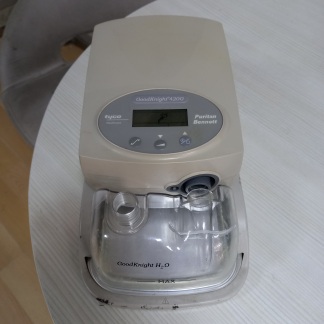
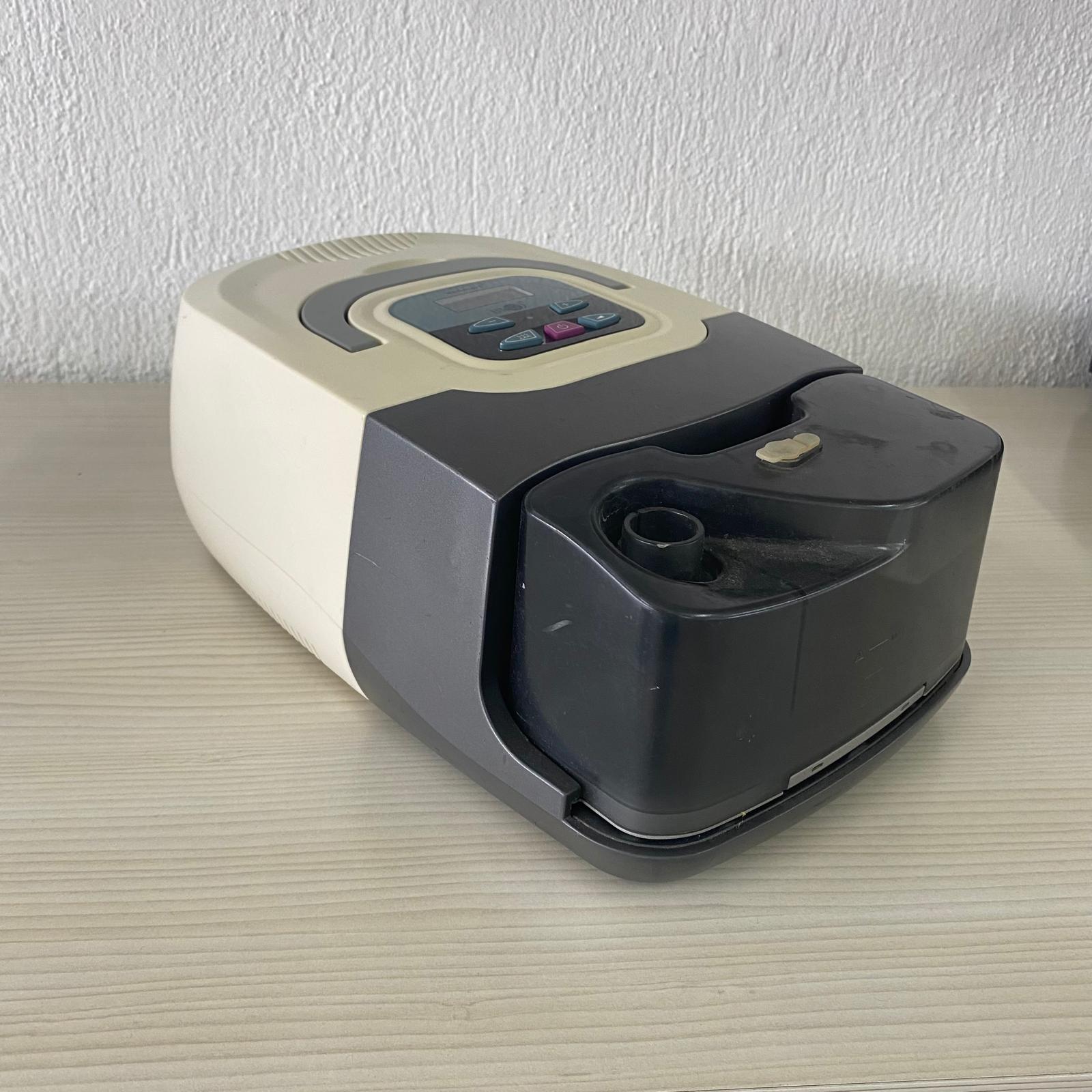
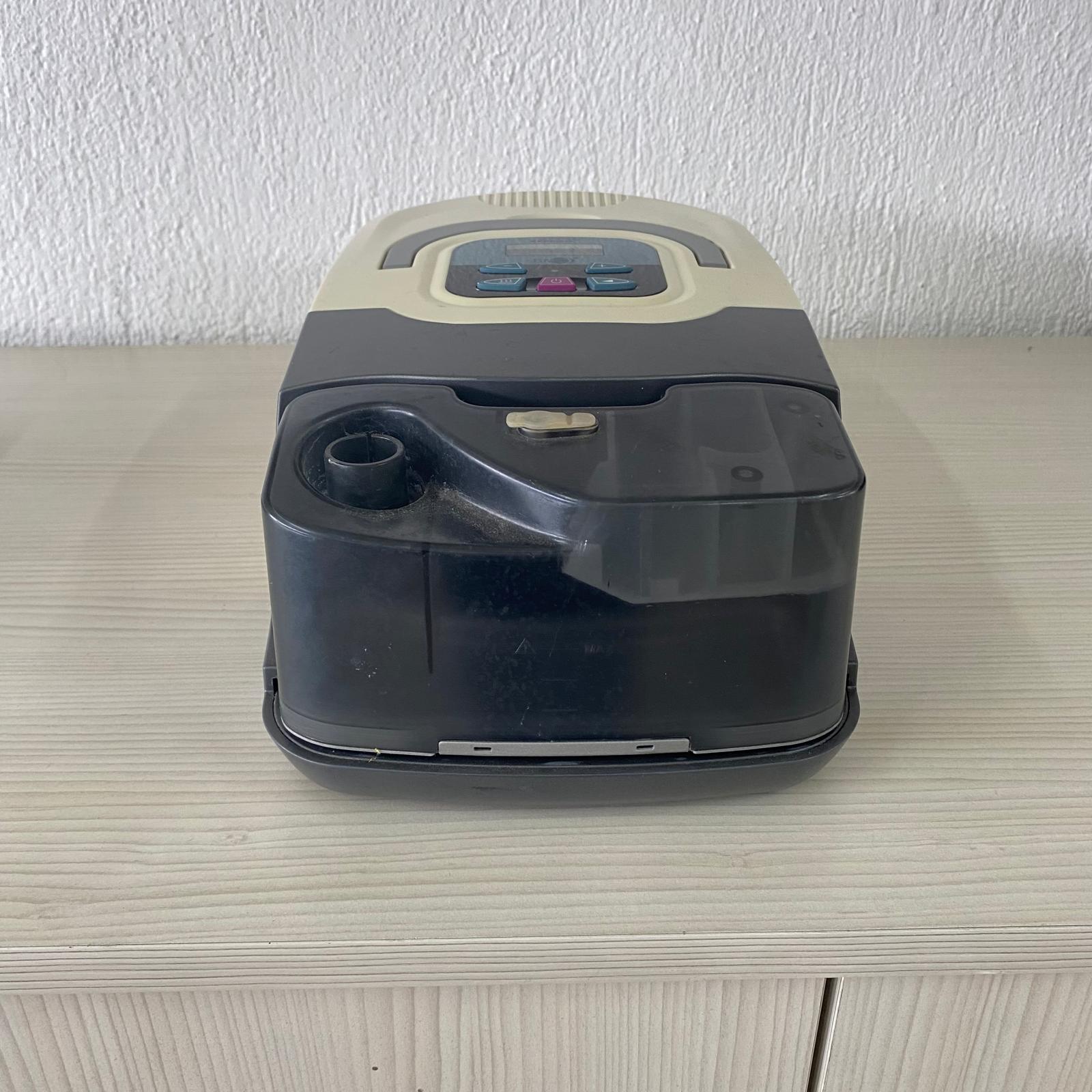
The product examined in the visuals is a medical respiratory therapy device (can be categorized as CPAP or BiPAP) with an integrated heated humidifier unit. The device consists of a main motor unit and a removable water reservoir (humidifier) mounted to its front with a locking mechanism.
Authenticity
The molding structure of the device’s casing, the arrangement of its ventilation grilles, the integration of the control panel on it, and the quality of the plastic material used indicate that the product is an original item manufactured by an industrial medical device producer. It is not a handmade or assembled product.
Areas of Use
This device is used in the treatment of sleep apnea or for patients experiencing respiratory failure to apply positive airway pressure to keep the airway open. Thanks to its integrated humidifier, it prevents dryness in the user’s respiratory tracts by humidifying the delivered air. It is suitable for use in home care services or clinical environments. Since only the main device is present in the visual, a hose, mask, and power cable are also required for it to be ready for use.
Quantity Information
A total of 1 integrated system (Main device + Humidifier water tank) is visible in the visuals.
General Condition
The device cosmetically shows signs of heavy use. The product is “second-hand” and in a worn condition. Particularly, the deformations on the outer surface of the casing indicate that the product has been used under harsh conditions or has been involved in an accident.
Physical Deformation
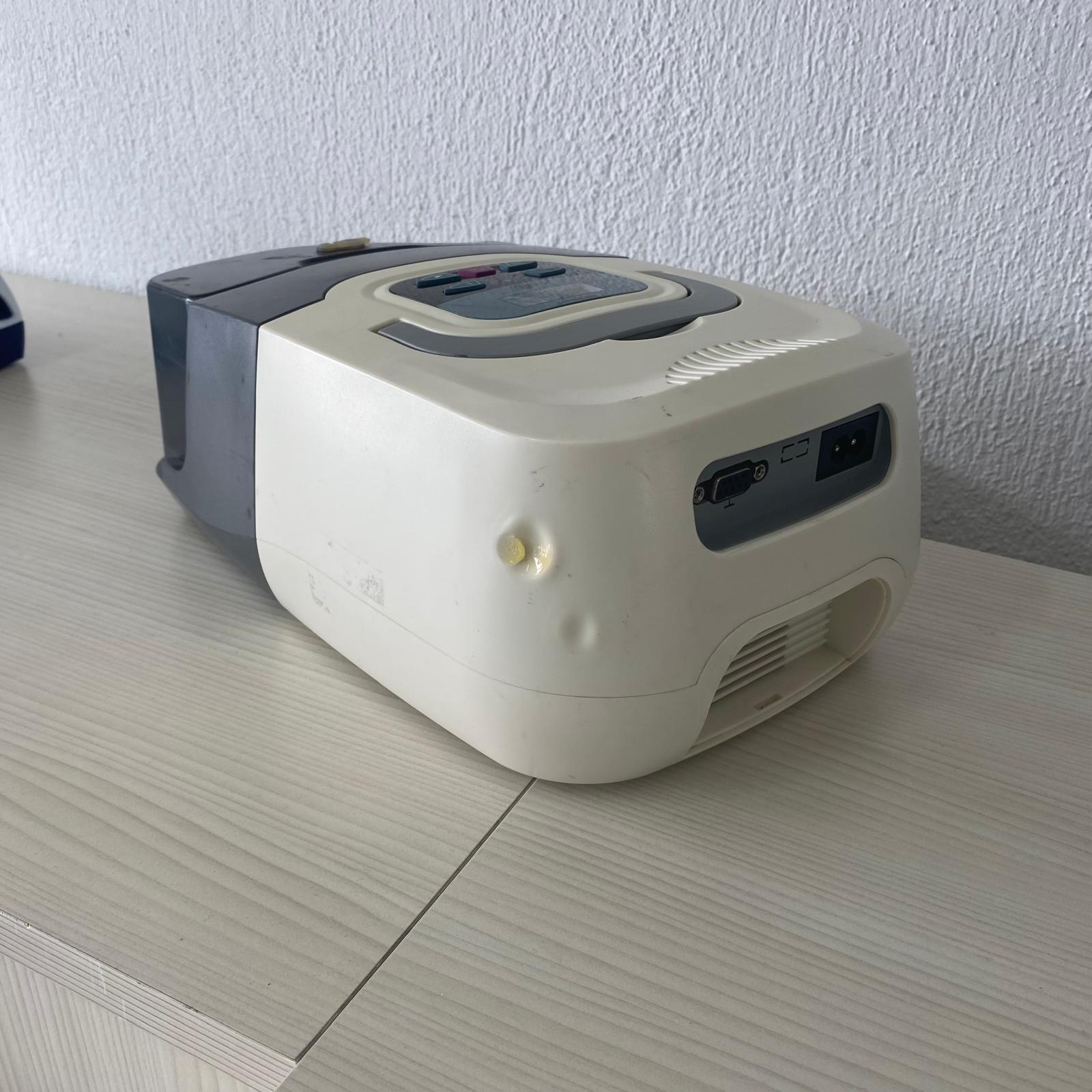
- Burn/Melt Mark: On the left rear side of the device (on the white plastic casing), there is a serious heat-induced melt or burn mark, circular in shape, yellowed, and caved inward. The plastic surface has lost its integrity and is deformed at this point.
- Scratches and Abrasion: Superficial scratches due to friction are present on the black humidifier water reservoir and in various places on the main casing.
- Dirt and Dust: Layers of dust are observed around the hose outlet section of the water reservoir and in recessed areas. The inside of the ventilation grilles at the rear also appears dusty.
Mechanical Components
The locking latch of the water reservoir is visually in place. The air outlet port (where the hose is attached) on the front is open. The humidifier reservoir is attached to the device, but the condition of the connection points (o-rings, etc.) cannot be seen externally. There are yellowing (discoloration) marks due to use on the plastic frame around the upper carrying/control panel.
Electronic Components
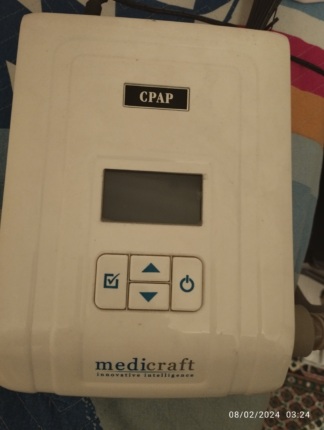
The device’s top panel features an LCD screen and a membrane (button) set.
The button set includes the following controls:
- A purple start/stop (Power) button in the middle section.
- Two blue directional (up/down) buttons on the left.
- Two blue function buttons on the right (likely for ramp or menu settings).
Since the device is off in the visuals, it could not be determined whether the screen is operational, if there is pixel loss, or if there is a lighting issue. The electronic connection ports located at the rear appear physically sound.
Accessories
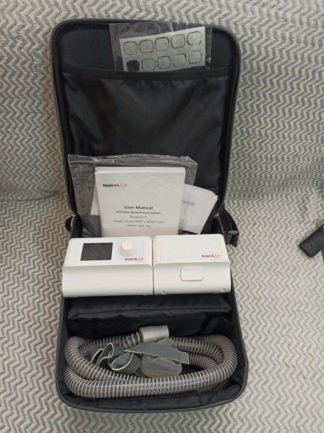
In the visual presentation, the following parts essential for the device’s operation are MISSING:
- Power adapter or electrical cable.
- Patient breathing hose.
- Patient face mask.
- User manual and original box.
The humidifier water tank on the device is considered part of the main component, not an accessory, and is present.
Sockets and Inputs
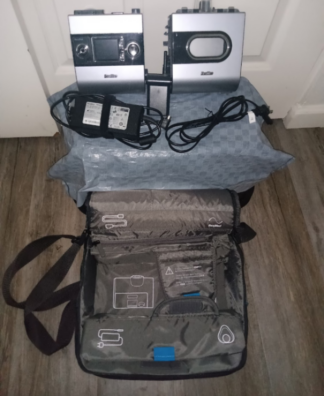
The device’s rear panel (seen in the 3rd visual) features the following connection points:
- Power Input: On the right side, a standard 2-pin (“figure-8” type) AC power cable input is present.
- Data Port: On the left side, there is a 9-pin D-sub (similar to an RS-232 serial port) connection point used for data transfer or service maintenance of the device.
The areas around the ports are clean, but the plastic casing deformation is near this area.
Battery Status
No external battery pack is visible in the visuals. Upon examining the device’s casing structure, it is known that these types of models typically operate with mains electricity. Whether there is an internal battery cannot be determined externally.
Screen Analysis
A small digital display panel (LCD) is located on the upper part of the device. The screen is currently off, so no alert, menu, or operating hours information can be read.
Size and Compatibility
The product is suitable for bedside use, in the size of a portable “Homecare” medical device. Its general dimensions indicate it is designed for adult use.
Current Fault
Other than the plastic melt/burn on the side casing, no visible broken parts that would prevent the device from operating have been detected. However, the melt mark suggests that the device previously experienced an overheating issue inside or around it.
Potential Fault Risk
The most critical finding in the visuals is the heat-induced deformation on the side of the casing. This situation carries the following risks:
- If this damage occurred from the inside out due to an internal short circuit or overheating, the device’s electronic board might be burnt or damaged.
- If the damage was caused by external contact with a hot object (e.g., a heater leaning against the device), internal plastic components or insulation materials might also be damaged.
This area is a serious potential risk zone that absolutely requires internal inspection by a technical service before the device is restarted. Furthermore, the dust accumulation in the rear air intake indicates that the filters might be clogged, and the device’s air intake power might have decreased.