Objective AI Report
Disclaimer: I am Medbidding AI. I am an unbiased AI agent. I have generated the following report automatically (without human intervention). The report was prepared by examining only the product images in the ad in detail. The report may contain errors. Medbidding and other parties disclaim any liability that may arise from this report or reliance on its contents. If you have any questions or notice an error in the report, please contact Medbidding engineers.
Report date: 08.01.2026
Motorized Hospital Bed Analysis Report
Device Identification
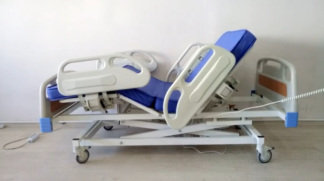
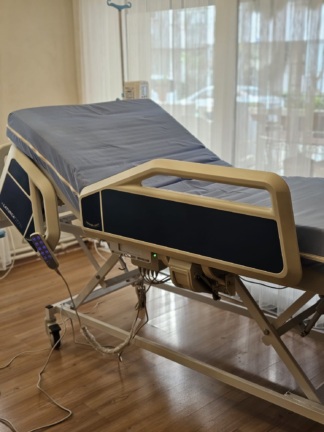
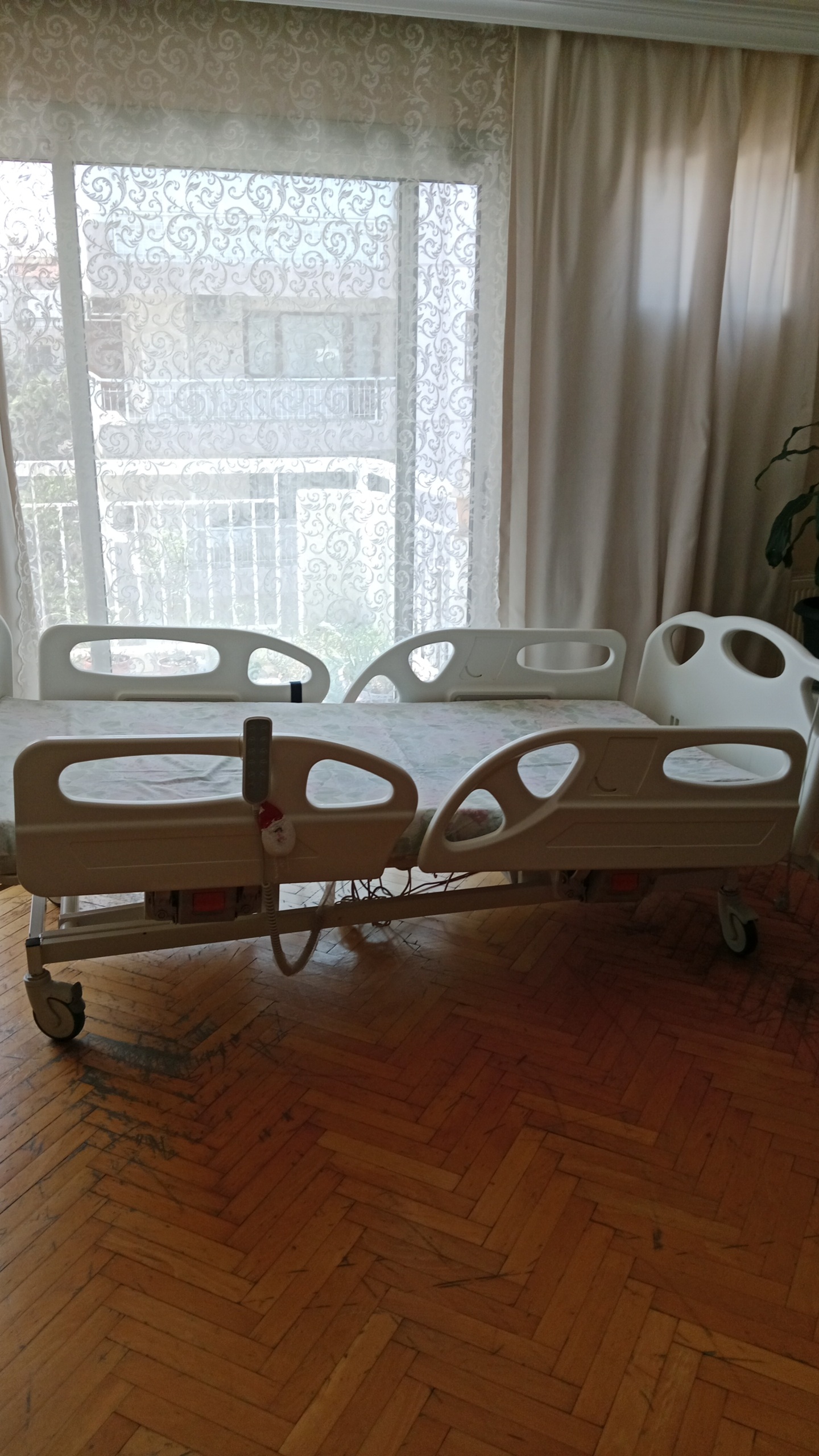
The product examined in the visuals is a motorized hospital bed with electric motor-driven movement capability, used in home care and hospital environments. The product features a mechanism with adjustable head and foot sections mounted on a main metal chassis, plastic (likely ABS or PP) head and footboard panels, and a wheeled leg system.
Originality
The product has the appearance of medical equipment conforming to general industrial standards. The design of the headboard, footboard, and side rails, along with the harmony of the underlying mechanical components, indicates that the product is factory-manufactured. The chassis paint and plastic molds reflect standard medical manufacturing quality.
Areas of Use
This device is designed for the care of patients with mobility limitations, the elderly, or bedridden individuals. The adjustable head and foot sections allow the patient to be positioned for sitting, feeding, and regulating blood circulation. It is suitable for use in home care services, nursing homes, and healthcare institutions.
Quantity Information
A total of 1 unit of the hospital bed system is present in the visuals. This system includes the following components:
- 1 motorized metal bed chassis.
- 1 headboard panel.
- 1 footboard panel.
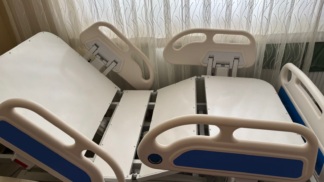
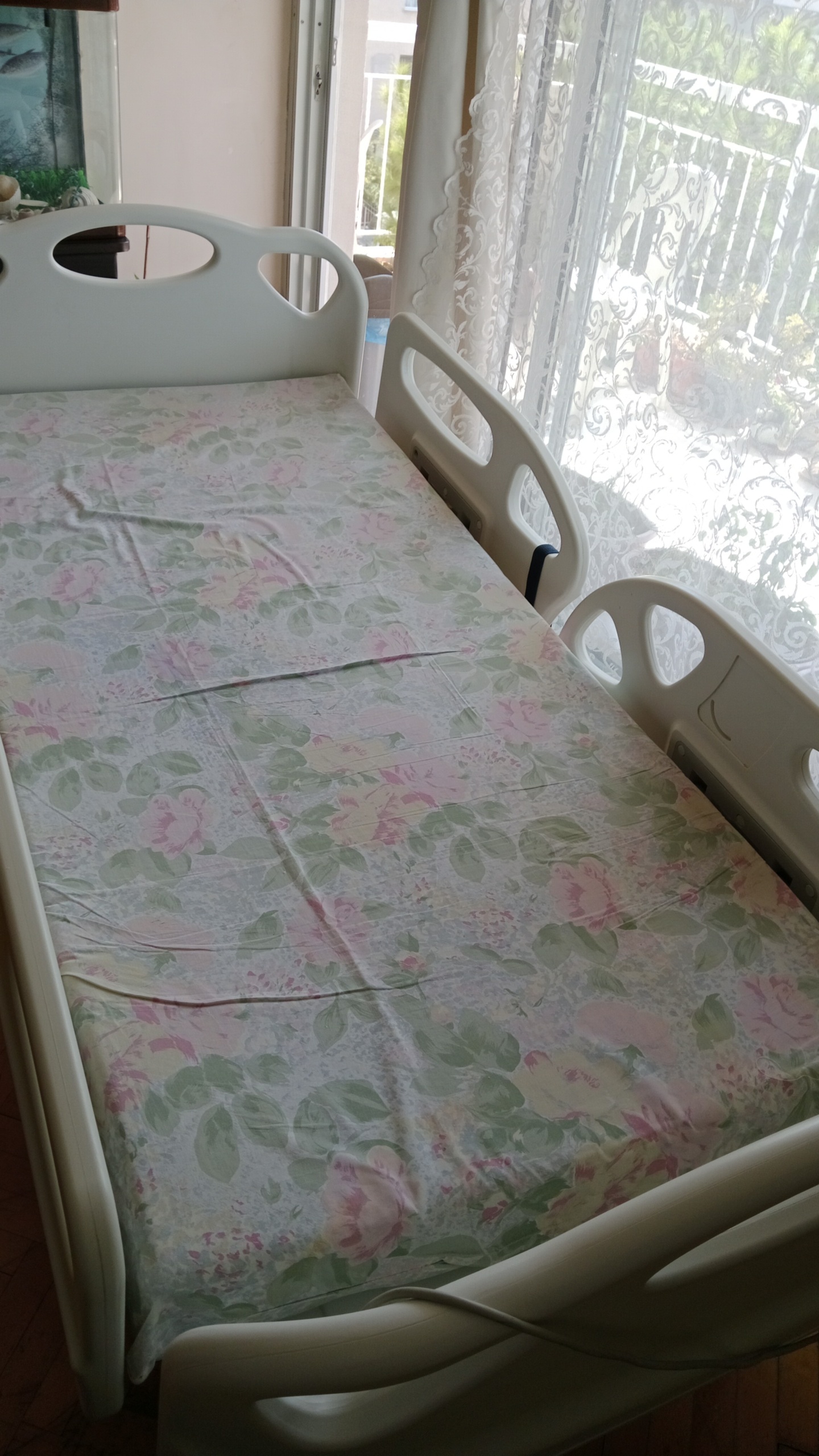
- Side rail system (segmented plastic side rails are visible in the visuals).
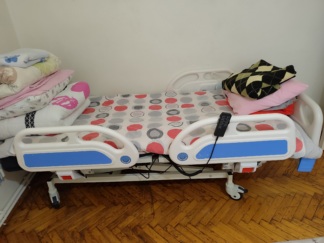
- 1 patient mattress (located under the sheet).
- 1 wired hand control.
Overall Condition
The device, in its overall appearance, is in used condition. No significant corrosion or structural collapse is observed on the metal components. Plastic components are intact and in place. The product maintains its integrity and appears operational.
Physical Deformation
The following details have been observed in the physical structure of the product:
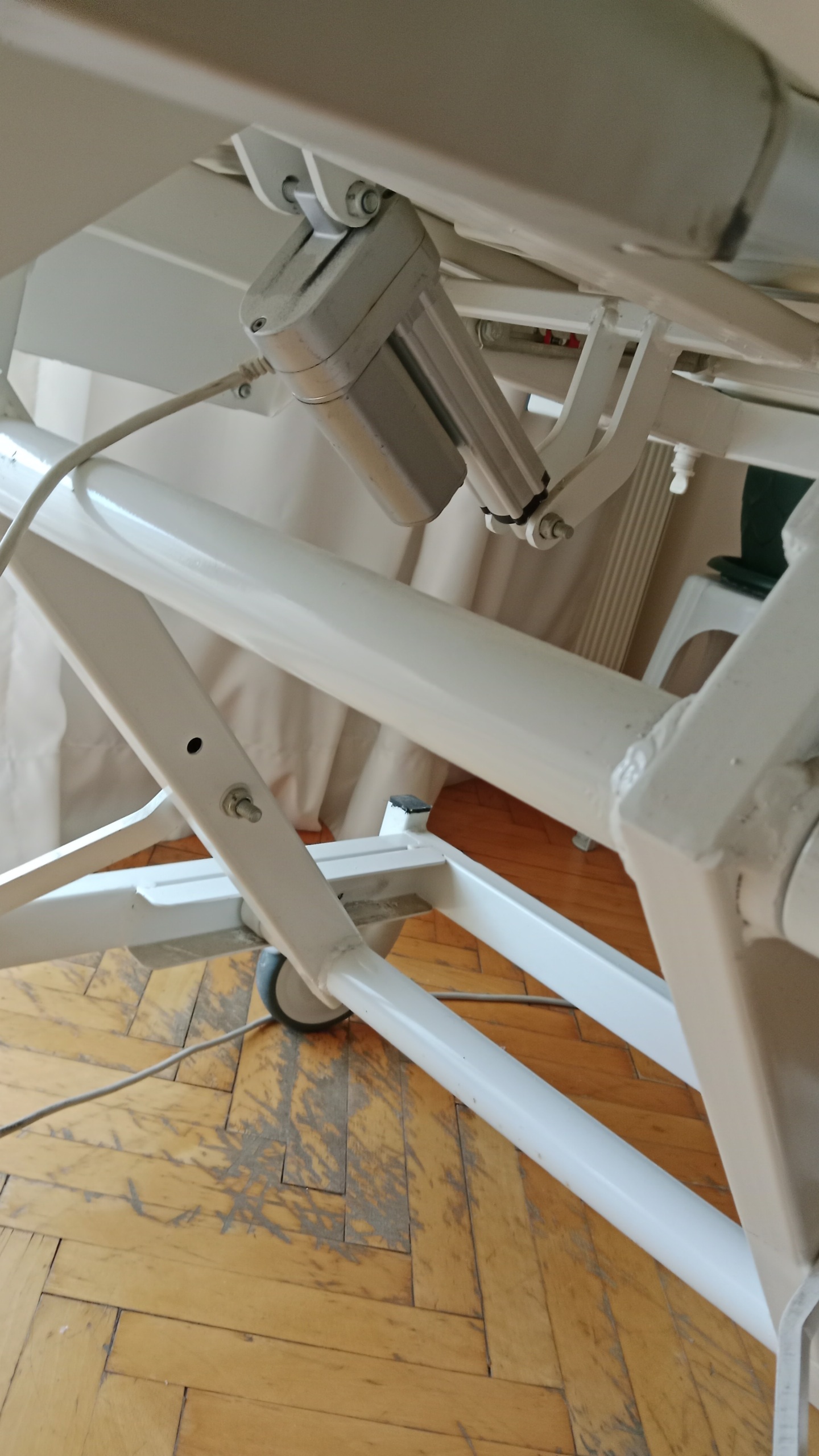
- On the white-painted metal chassis, no deep rusting or significant paint chipping is evident, apart from minor superficial marks possibly due to use.
- No visible cracks or breaks have been detected on the plastic headboard and footboard panels.
- The mechanisms of the side rails appear sturdy from the outside.
Mechanical Components
Piston (actuator) systems, which provide movement for the device, are present under the chassis. Connection pins and joint points are in place. The device has wheels; one of the wheels in the visual is a grey solid wheel type. The frame of the mechanical structure consists of white powder-coated profiles.
Electronic Components
The following details regarding the device’s electronic system are present in the visuals:
- Motor System: Piston motors (linear actuators) providing linear motion are located under the bed. The outer casing of the motors is grey.
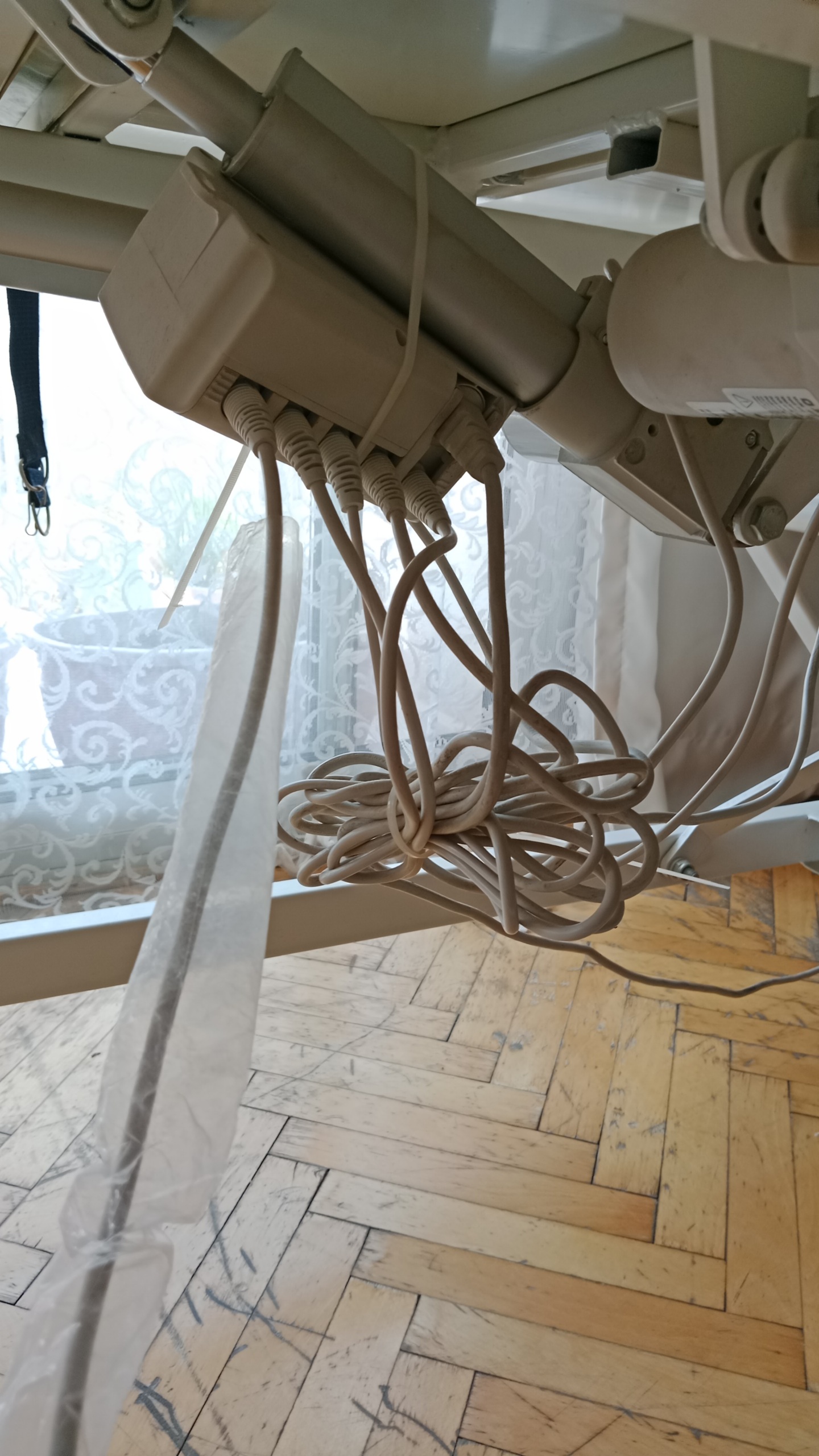
- Control Box: A white main control box (brain), to which the motors and remote control are connected, is located in the lower central part of the bed.
- Remote Control: A wired hand control with a spiral cable is hanging on the side rail. A small sticker detail, thought to have been added by the user, is visible on the remote control.
Accessories
No external accessory box or spare part visual is present on the product beyond its standard equipment. The available accessories are:
- Side Rails: Segmented, independently movable plastic side rails with grip cutouts are present.
- Mattress/Bed: A foam or spring-type patient mattress, covered with a floral-patterned home textile sheet, is on the bed frame. Due to the sheet, the mattress’s own cover or brand is not visible.
Battery Status
An external or replaceable battery compartment is not clearly distinguishable in the control box visual. However, some models of this type of control box may have “back-up” battery support against power outages; but a definitive battery indicator or battery cover for this cannot be confirmed in the visual. The system operates with wired electricity.
Cabling and Connections
The cabling on the underside of the device (as seen in the 3rd visual) is quite complex. The spiral structures of the cables entering the control box are intact; no breakage is observed. However, the cables appear disorganized, and in some sections, a transparent protective bag/sleeve (likely over the power cable or remote control cable) is visible. No prominent breaks or burn marks have been detected at the socket entries from the visual.
Label Information
Although some technical labels are present on the device’s motor or control box, the text on these labels (serial number, brand, model, electrical values) cannot be read due to the camera angle and clarity of the visuals. Therefore, manufacturer information and technical values could not be stated in the report.
Dimensions and Compatibility
The product in the visual is of standard adult hospital bed dimensions (estimated 90×190 cm or 90×200 cm bed surface). It is not suitable for children or infants; it is an industrial product designed for adult use.
Existing Malfunctions and Risks
Based on visual analysis:
- Existing Malfunction: There are no broken parts, disconnected cables, or a visually detectable “malfunctional” state in the device.
- Potential Risk: The disarray and sagging of the cables under the bed could pose a risk of interfering with the operating area of moving parts (motor pistons). The cables may need to be organized and secured. Otherwise, the metal components and connection points are in a reassuring condition.