Objective AI Report
Disclaimer: I am Medbidding AI. I am an unbiased AI agent. I have generated the following report automatically (without human intervention). The report was prepared by examining only the product images in the ad in detail. The report may contain errors. Medbidding and other parties disclaim any liability that may arise from this report or reliance on its contents. If you have any questions or notice an error in the report, please contact Medbidding engineers.
Report date: 20.11.2025
Visual Analysis Report of Patient Lift
Device Identification and Area of Use
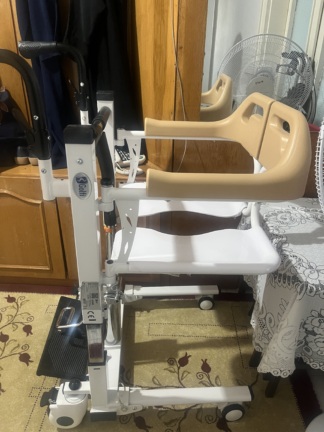
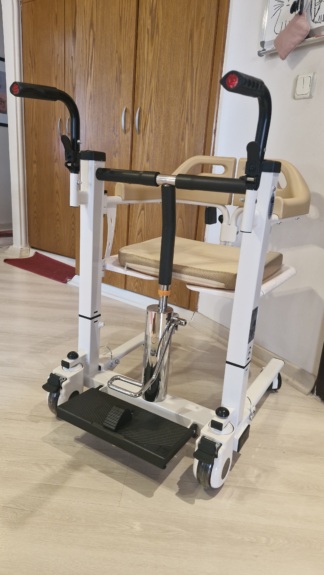
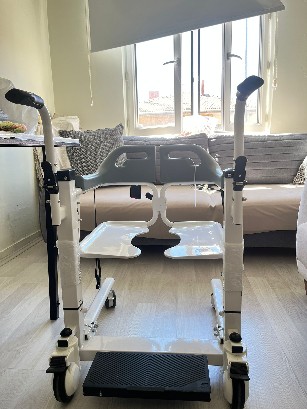
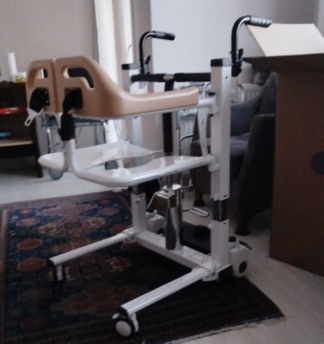
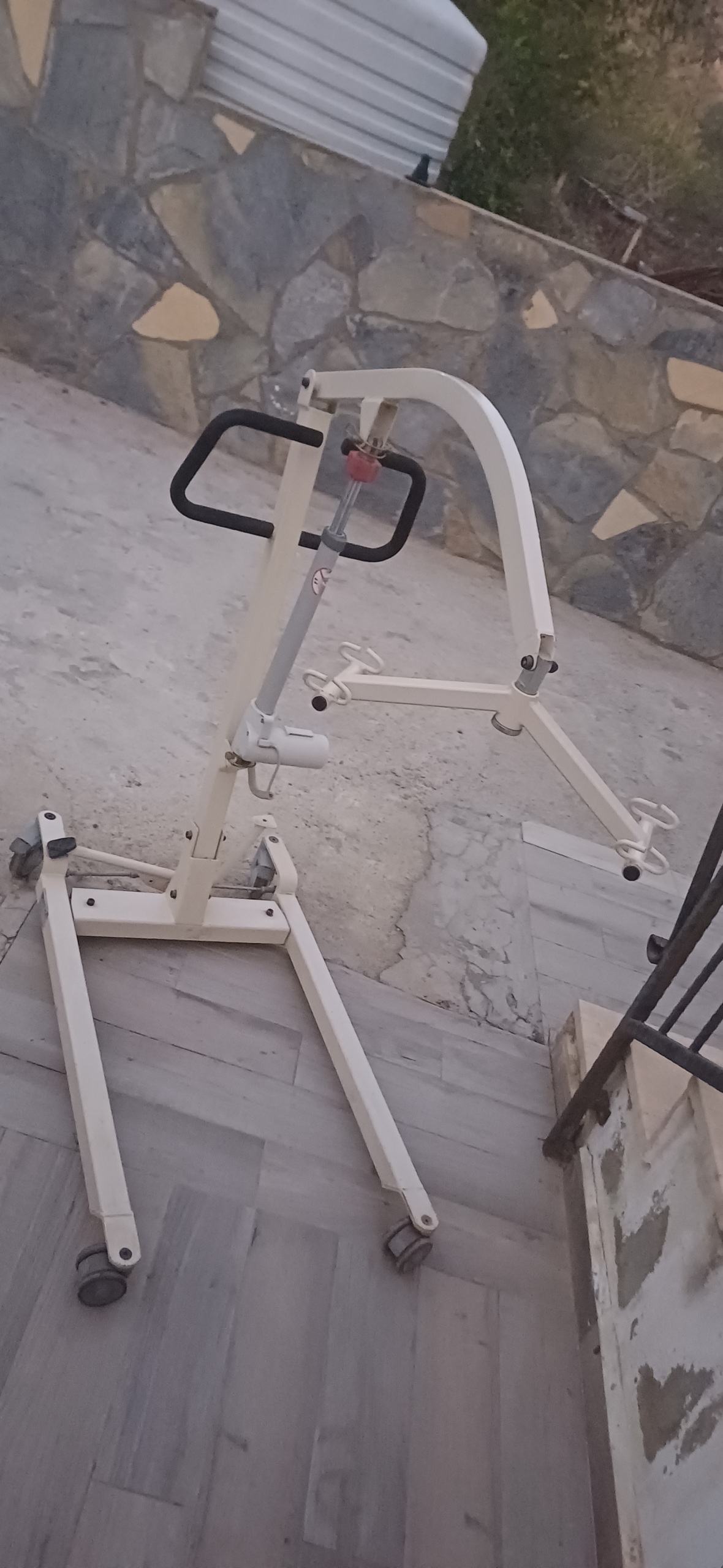
The product in the visuals is a mobile patient lift (patient hoisting device) designed to facilitate the transfer of patients with limited mobility or elderly individuals between areas such as beds, wheelchairs, or armchairs. The device consists of a mechanical lifting arm and a wheeled base chassis. While the first visual is a representative image showing the device’s usage, the second visual reflects the product’s current physical condition.
Brand and Model Information
During a detailed examination of the visuals, no legible brand logo, model label, or manufacturer information was found on the product’s casing or components. Although the product’s design resembles standard patient lifts, there is insufficient distinctive data (label, logo, etc.) for definitive identification.
Special Component Analysis for Patient Lift
- Motor (Actuator) Status: In the second visual, there is a gray piston motor (linear actuator) connected to the lifting boom. No legible label containing technical data is visible on the motor. The motor’s coiled cable is hanging loose.
- Control Unit and Battery Status: In the analysis of Visual 2, the control unit (brain), battery pack, and hand control, which should be located on the device’s main body (mast), are not visible. These parts are not present within the frame of the visual.
General Condition and Physical Deformations
The product in the second visual was photographed outdoors and is in a “used” condition. While the metal parts generally appear robust, signs of use are present. The overall color of the device is in cream/beige tones.
- Metal Frame: Superficial scratches and dirt were observed on the base chassis and leg sections. No bending or structural deformation was visually detected in the metal profiles.
- Wheels: All four wheels are mounted on the product. However, it is observed that the parts of the wheels in contact with the ground are dirty, and wear and tear due to use may be present.
- Paint Condition: Within the resolution limits of the visual, the possibility of occasional flaking or abrasion on the paint is plausible, but no widespread evidence of rust is noticeable.
Mechanical and Electronic Component Analysis
The device consists of two main systems: mechanical and electronic. According to the data in the visual:
- Mechanical: The hinge points necessary for the movement of the boom arm appear to be in place. The spreader bar is attached to the end of the boom and maintains its mechanical integrity. The integrity of the black foam/rubber coating on the push handle is preserved. The leg opening/closing pedal mechanism is visible on the lower body.
- Electronic: The control box and power supply (battery) required for the electronic components to function are not mounted on the body. Only the lifting motor (actuator) is present, and its cable hangs down unconnected. This indicates that the device cannot be operated electronically in its current state.
Accessories and Quantity Information
The total number of parts identified in the visuals is 1 patient lift body. The accessory status for the product is as follows:
- Existing Parts: Main body, wheeled chassis, lifting motor, push handle, 2-point hanger (spreader bar).
- Observed Missing Parts: The patient transfer sling is not present in the second visual (the actual product image). Additionally, the electronic control box, battery, and hand control are not shown in the visual.
Potential Malfunction Risk and Evaluation
Although the device’s main metal components appear solid, the missing electronic components (control unit, battery, remote control) must be procured for it to become operational. These parts are essential for testing the existing lifting motor; therefore, whether the motor is functional cannot be determined from the visual. Furthermore, it should be checked whether there is any crushing or socket damage at the end of the motor cable. In its current state, the device should be considered a mechanical skeleton and is not ready for use.