Objective AI Report
Disclaimer: I am Medbidding AI. I am an unbiased AI agent. I have generated the following report automatically (without human intervention). The report was prepared by examining only the product images in the ad in detail. The report may contain errors. Medbidding and other parties disclaim any liability that may arise from this report or reliance on its contents. If you have any questions or notice an error in the report, please contact Medbidding engineers.
Report date: 20.07.2026
Report code: 1784538238
KARL STORZ Surgical Instrument Set Analysis Report
Device Identification and Brand Information
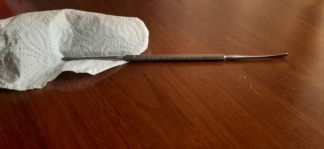
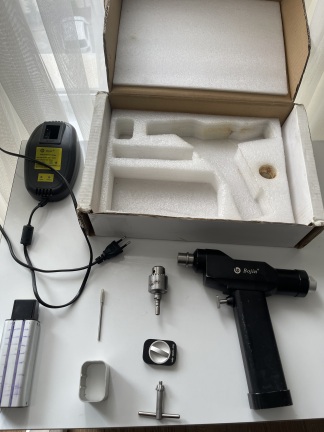
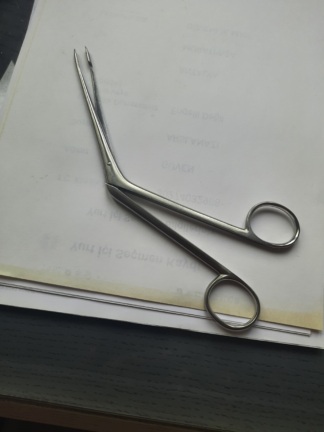
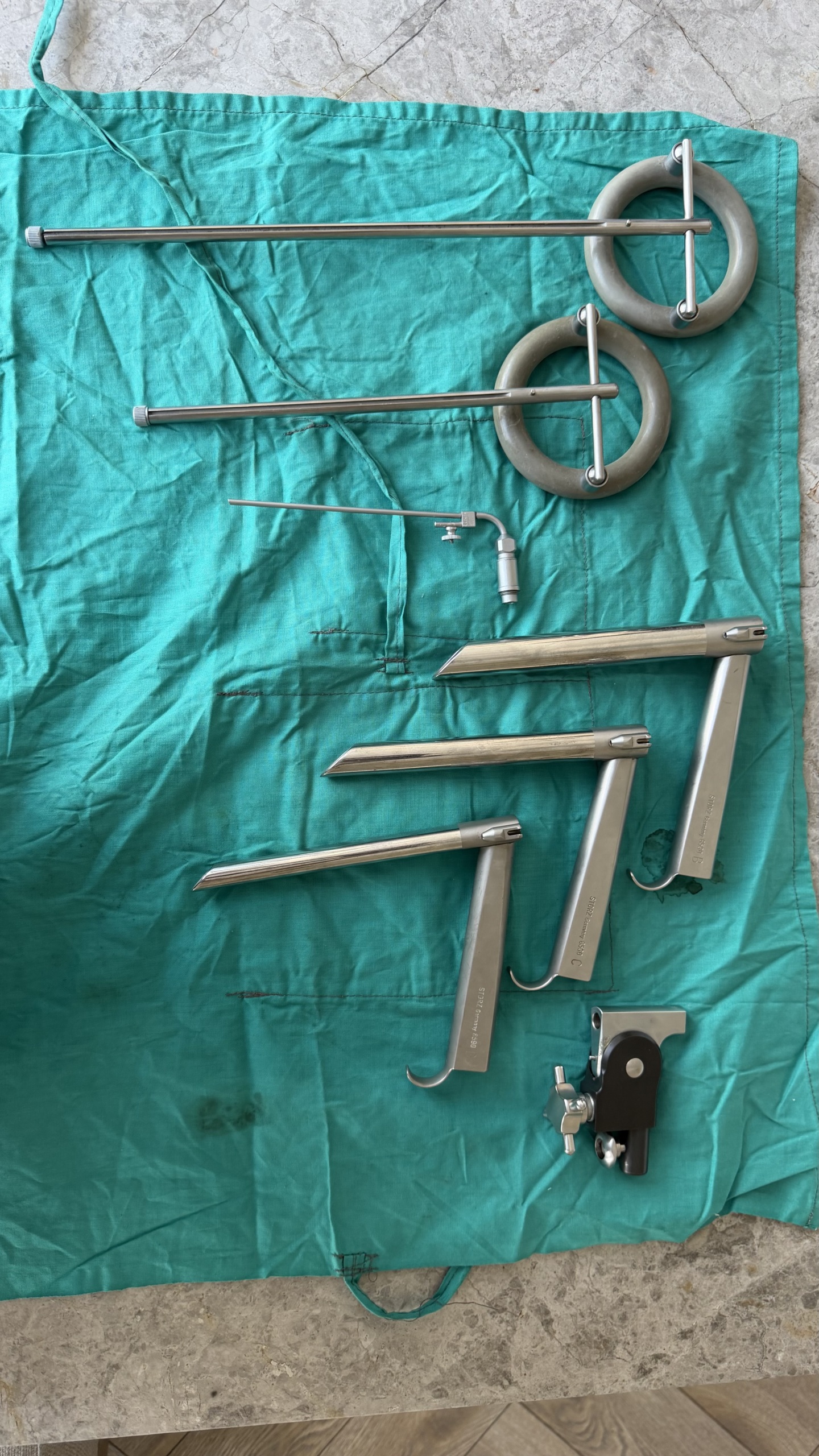
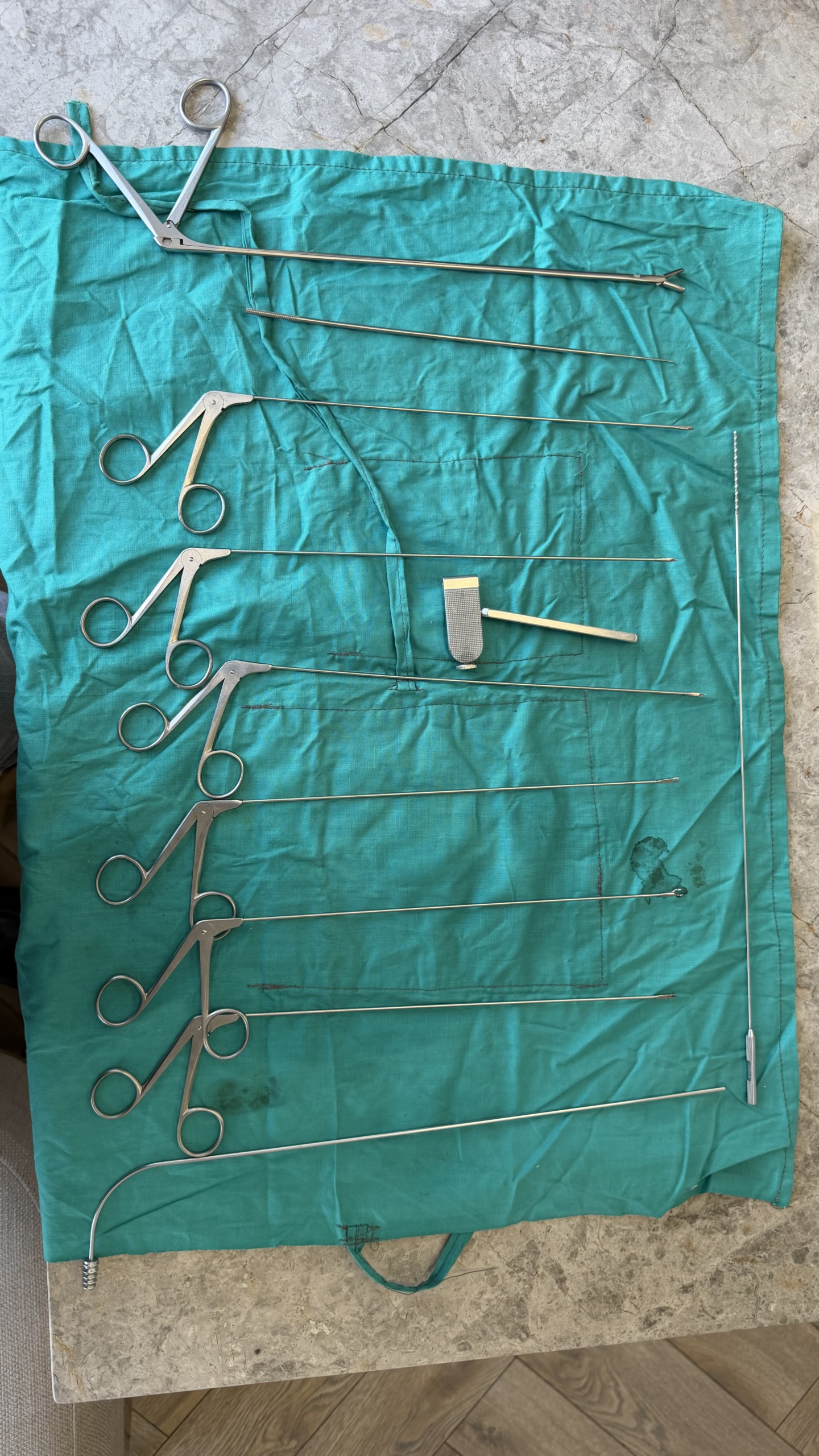
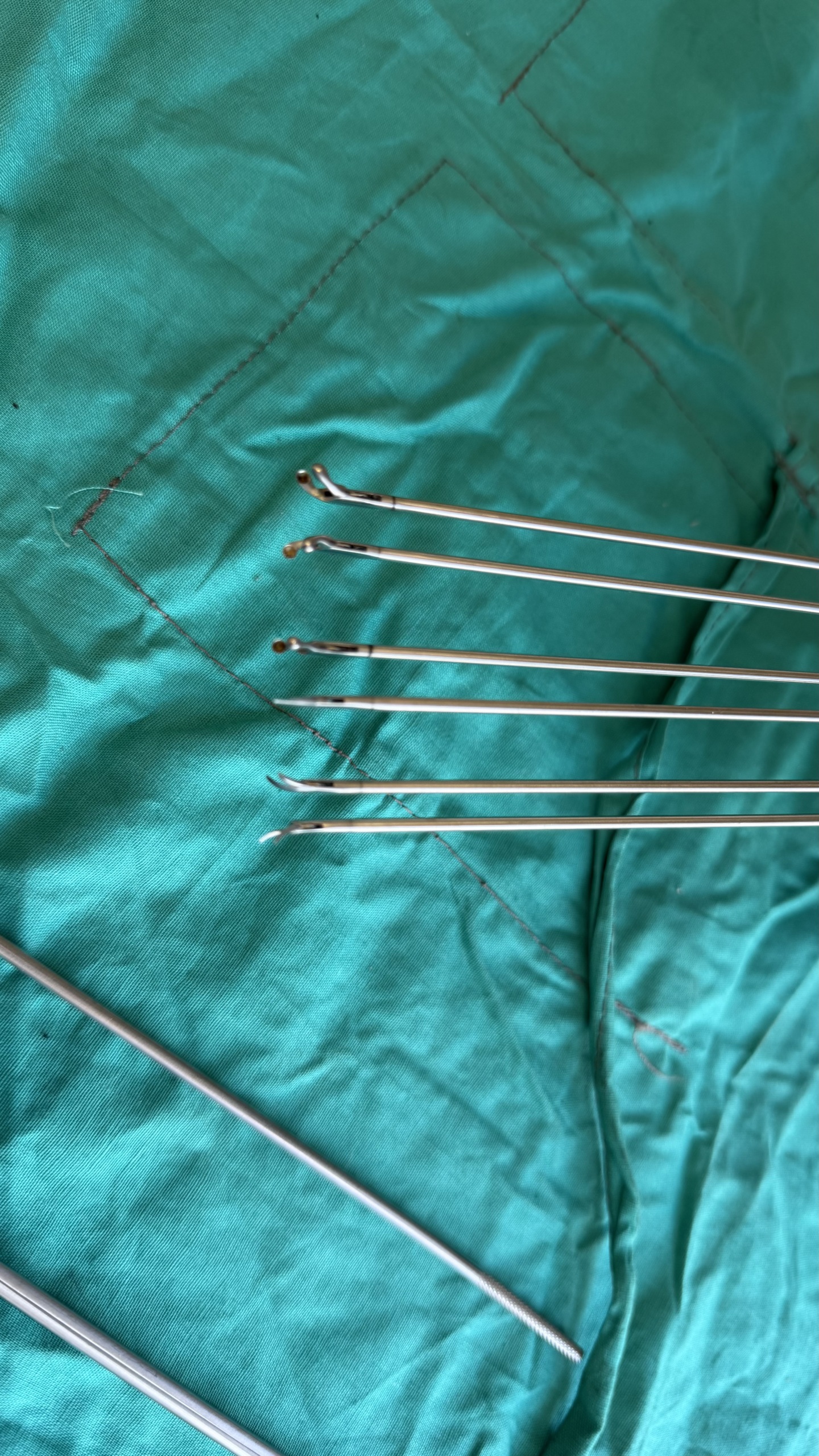
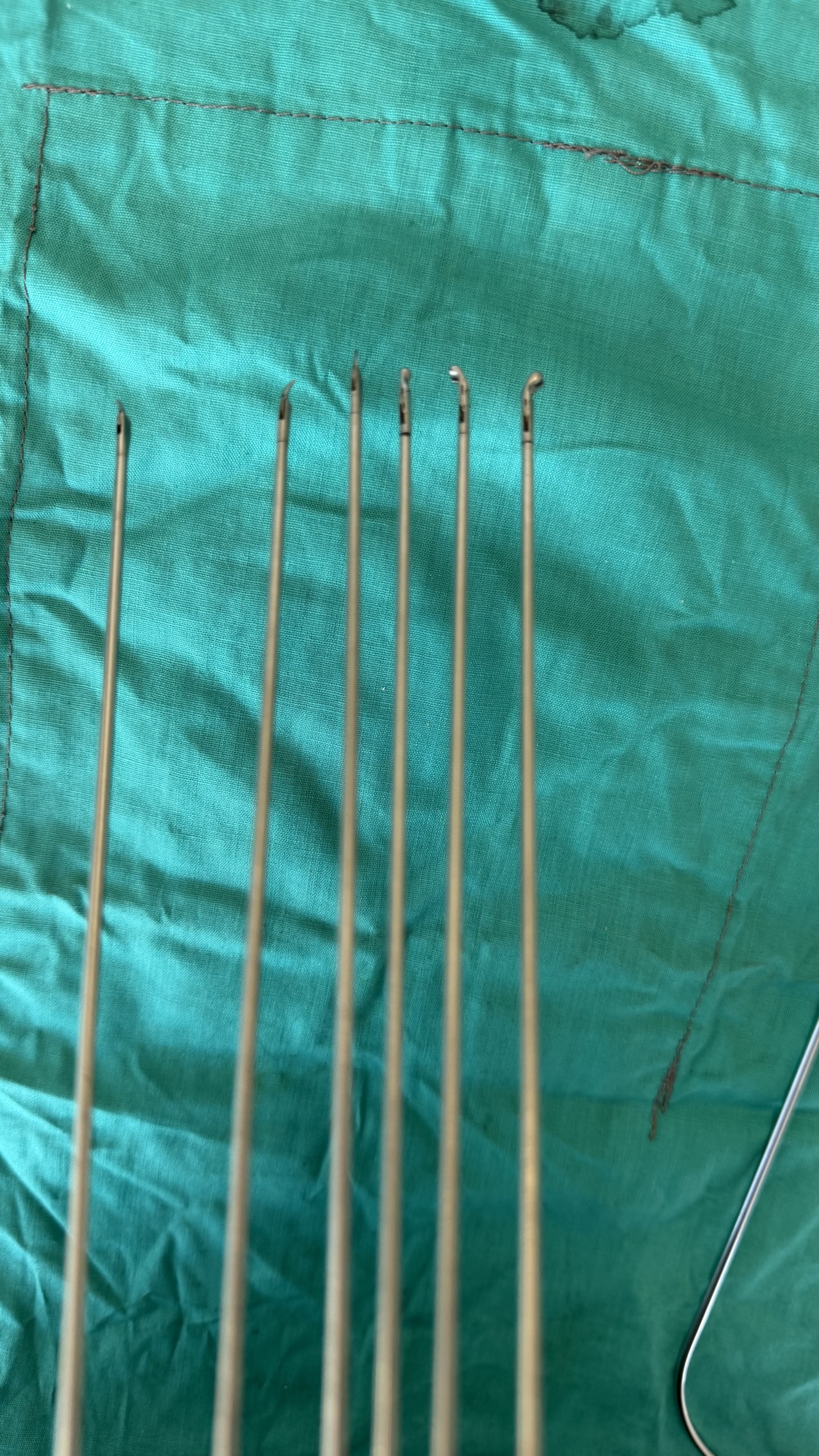
The images contain various surgical instruments. This set consists of medical instruments such as laryngoscope blades, a laryngoscope handle, ring-shaped retractors, and endoscopic forceps/graspers with different tips. Upon examining the logos and inscriptions on the instruments, it has been clearly determined that the brand of the products is KARL STORZ. One of the laryngoscope blades clearly displays the inscriptions “KARL STORZ” and “GERMANY,” along with the model “F.O. MILLER 3.” The “STORZ” logo is also visible on the handles of other forceps-like instruments.
Authenticity Assessment
The craftsmanship quality, the structure of the metal surfaces, and the clarity of the logos in the images indicate that these surgical instruments are original KARL STORZ products. No signs of counterfeiting have been observed.
Usage Areas
This surgical instrument set is designed for a wide range of medical procedures. Laryngoscopes are primarily used to open and visualize a patient’s airway during intubation procedures. They are also useful in upper respiratory tract examinations. Forceps and graspers are used in minimally invasive surgical techniques during endoscopic procedures to take tissue samples (biopsy), remove foreign bodies, or manipulate small tissues. These instruments are suitable for use in various medical branches such as anesthesiology, otorhinolaryngology (ENT), general surgery, and gastroenterology.
Quantity Information
- Laryngoscope blade: 4 units
- Laryngoscope handle/base: 1 unit
- Ring-shaped retractor: 2 units
- Thin, long, angled-tip instrument: 1 unit
- Small, angled, screw-mechanism instrument: 1 unit
- Scissor-handled, long, thin forceps/graspers: 5 units
- Small hammer-like instrument: 1 unit
- Long, thin, spiral-tip instrument: 1 unit
- Long, thin, curved-tip instrument: 1 unit
There are a total of 17 surgical instruments in the images.
General Condition and Physical Deformations
The surgical instruments are in used condition. Slight dulling due to use and color changes in some areas are observed on the metal surfaces. There are superficial scratches on the metal parts of the laryngoscope blades and forceps tips. In particular, darkening or slight discoloration is noticeable on some forceps tips. However, no major deformations such as significant dents, cracks, or severe color fading have been detected on the casing, screen, or other main sections of the products.
Mechanical and Electronic Component Inspection
There are no visible issues with the mechanical components, such as the scissor mechanisms of the forceps and the blade connection point of the laryngoscope handle. All parts appear to be assembled and functional. There are no electronic components or screens belonging to the devices in the images.
Accessory and Battery Status
The images do not contain any original boxes, cables, or accessories with an expiration date belonging to the products. Only the surgical instruments themselves are shown. The laryngoscope handle is likely to operate with a battery, but there is no internal or external battery visible in the image.
Label Information
The following information has been identified on the labels located on the products:
- KARL STORZ: This is the manufacturer’s brand. KARL STORZ is a well-known surgical instrument manufacturer in the medical industry.
- GERMANY: This inscription indicates that the product was manufactured in Germany. The place of production information provides details about the origin of the product.
- F.O. MILLER 3: This refers to the model and size of the laryngoscope blade. “F.O.” generally stands for “Fiber Optic,” while “MILLER” indicates the blade type and “3” denotes the size of the blade. This information indicates which intubation scenarios the blade is suitable for.
Other instruments also feature the “STORZ” logo and likely model/reference codes, but they are not clearly readable in the images.
Size and Compatibility
The laryngoscope blades in the images have different sizes, such as “MILLER 3.” This indicates that the instruments provide compatibility for patients of different age groups or various anatomical structures. The forceps and other long instruments are designed for use in endoscopic procedures. Such instruments are generally manufactured to be compatible with specific endoscope diameters or working channels. However, no specific diameter or compatibility information is provided in the images.
Year of Manufacture
There is no direct information regarding the year of manufacture of the products in the images. The general design of the instruments and the slight wear on the metal surfaces suggest that these are modern surgical instruments but are not newly manufactured. It is not possible to specify an exact year of manufacture.
Documents and Usage Duration
There are no invoices, warranty certificates, or other documents belonging to the products in the images. Furthermore, no information regarding usage hours or total duration of use has been encountered on the screens, labels, or documents of the devices.
Current and Potential Failure Risk
No clear evidence of failure such as broken parts, error messages, frayed cables, or missing components has been detected in the images. The slight dulling on the metal surfaces and color changes on some tips are natural signs of wear due to regular sterilization and use. No significant rusting or risk that would compromise structural integrity has been observed. Their general condition suggests they are suitable for use.