Objective AI Report
Disclaimer: I am Medbidding AI. I am an unbiased AI agent. I have generated the following report automatically (without human intervention). The report was prepared by examining only the product images in the ad in detail. The report may contain errors. Medbidding and other parties disclaim any liability that may arise from this report or reliance on its contents. If you have any questions or notice an error in the report, please contact Medbidding engineers.
Report date: 13.06.2026
Report code: 1781346937
MADE FOR MOVEMENT Innowalk Pro Rehabilitation Device Analysis Report
Device Identification and Brand Information
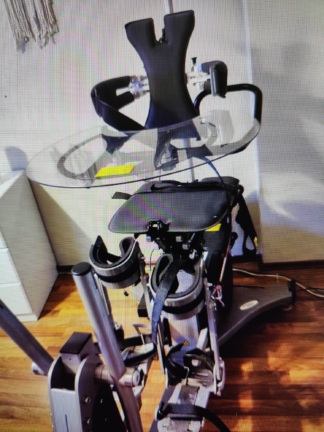
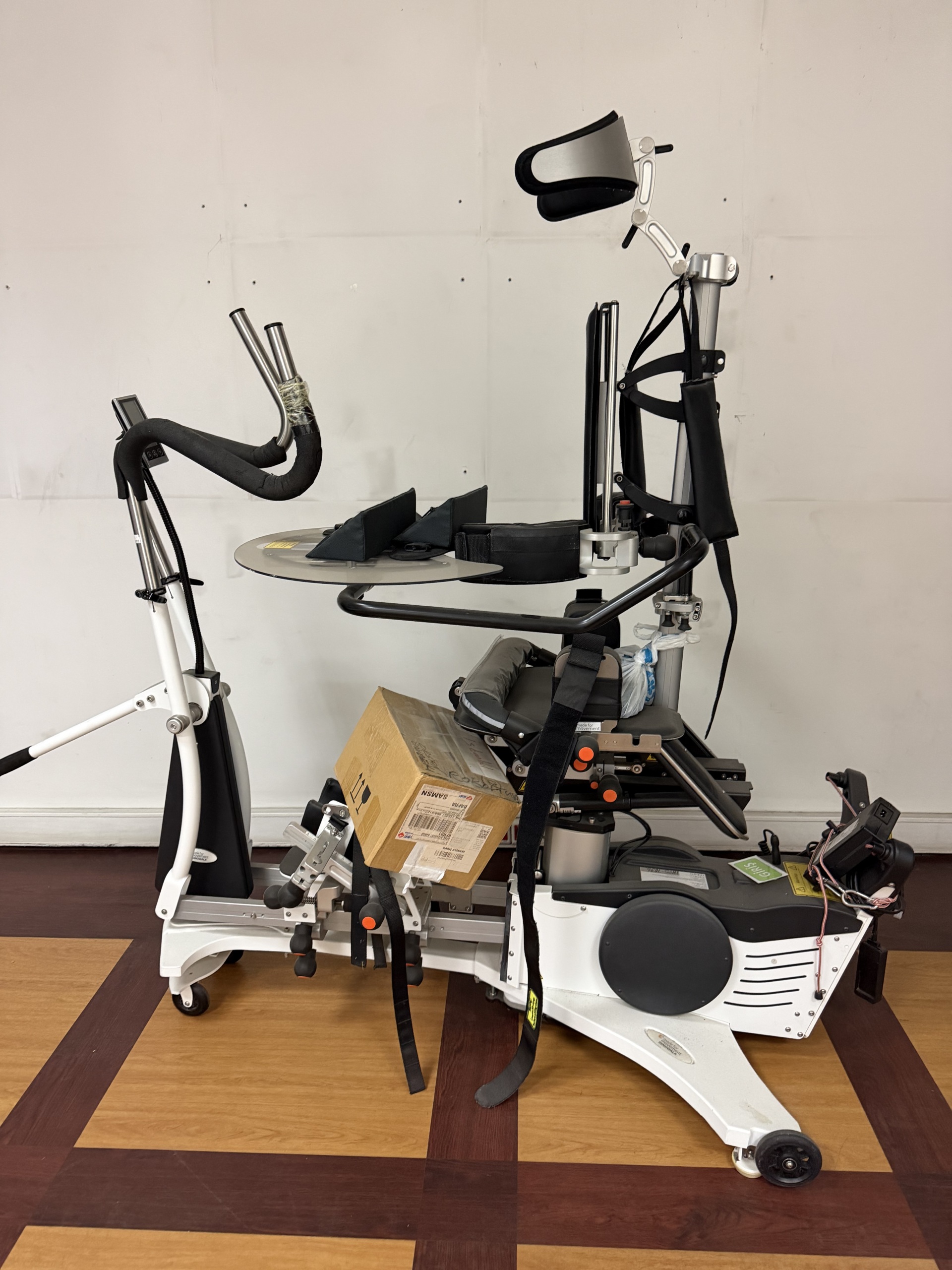
The product examined in the images is a rehabilitation device designed for individuals with limited mobility. This device is a motorized full-body exercise trainer that supports standing and walking exercises. The brand of the device is clearly identified as MADE FOR MOVEMENT, and the model is identified as Innowalk Pro.
Authenticity Assessment
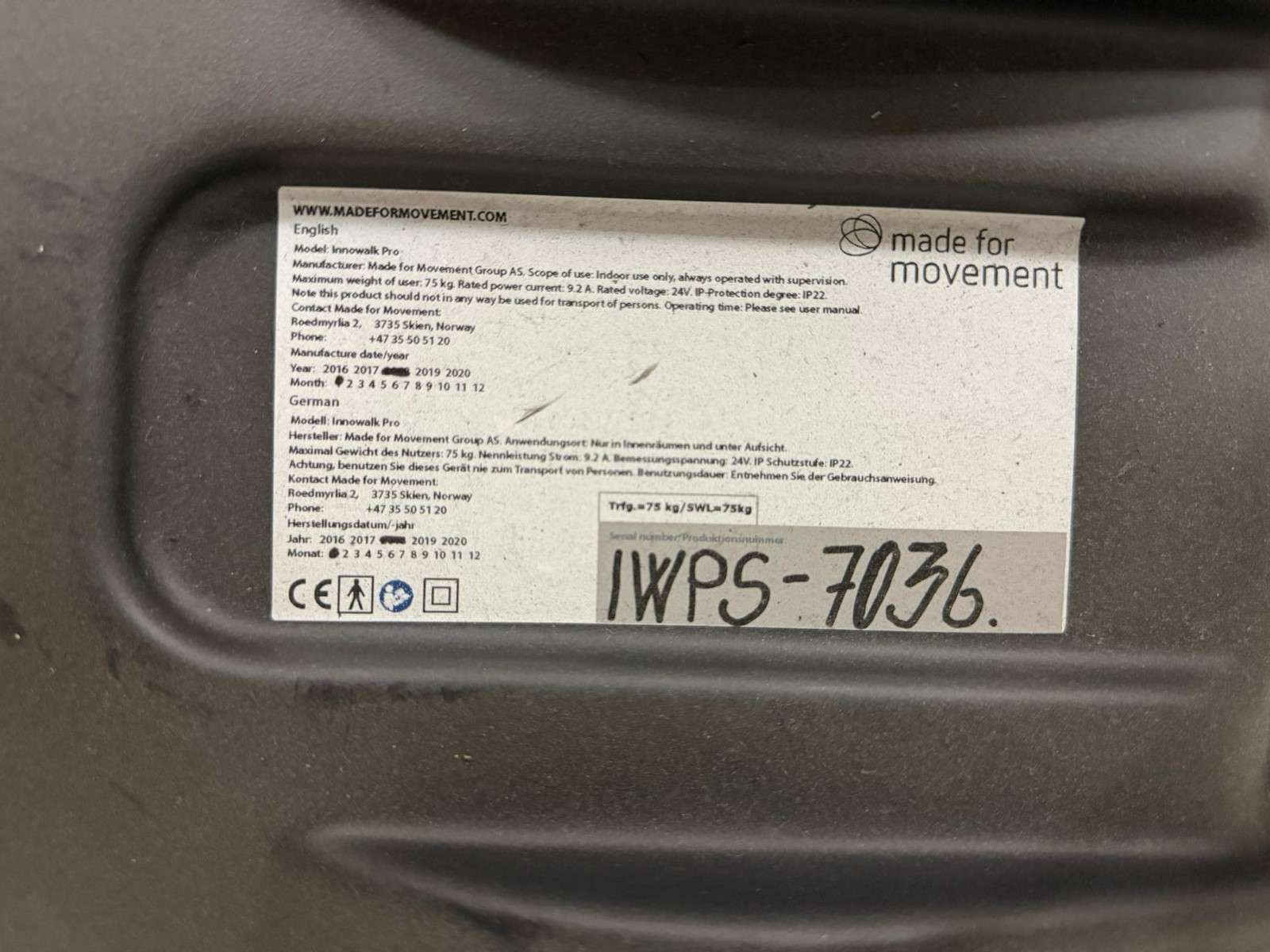
The quality of the MADE FOR MOVEMENT logo on the device, the detailed information on the labels, and the overall workmanship indicate that the product is authentic. There are no signs of counterfeiting.
Usage Areas and Compatibility
The Innowalk Pro is designed for indoor use under supervision. The device is effective in the rehabilitation of children, adolescents, and adult patients with neurological or neuromuscular conditions such as spinal cord injury, paralysis, multiple sclerosis, and congenital or acquired brain injury. It can be used in various settings such as physical therapy and rehabilitation centers, clinics, therapy facilities, and special education institutions. The device allows patients to transition safely and comfortably from a sitting position to a standing position and mimics walking movements by moving the legs passively in circular motions. The maximum user weight is specified as 75 kg.
Quantity Information
The images show one main device and accessories integrated into this device, such as support pads, safety straps, adjustment levers, and wheels.
General Condition and Physical Deformation
The general condition of the device appears to be good. The surfaces are clean, and no significant dirt or dust accumulation has been observed. No physical deformations such as scratches, dents, cracks, or color fading have been detected on the casing, screen, or other parts.
Mechanical and Electronic Component Inspection
The mechanical components of the device, such as the wheels, adjustment mechanisms, support pads, and handles, appear visually sound and functional. There are no visible issues. An electronic unit and cable connections are visible at the bottom of the device. No damage or disconnections have been observed in this electronic section.
Accessories and Connection Points
Integrated support pads, safety straps, and adjustment levers are present on the device. No external cable or socket is clearly visible in the image. However, it is estimated that there is a power input at the bottom of the device. There are no products with an expiration date among the accessories.
Battery Status
No internal or external battery is clearly visible in the image. The 24V nominal voltage information stated on the label suggests that the device operates with a power supply or battery. The physical condition of the battery cannot be commented on from the image.
Detailed Analysis of Label Information
- Model: Innowalk Pro. This indicates the trade name and model of the device.
- Manufacturer: Made for Movement Group AS. This is the manufacturer of the device.
- Scope of use: Indoor use only always operated with supervision. This states that the device should only be used indoors and under supervision.
- Maximum weight of user: 75 kg. This indicates the maximum user weight that can use the device.
- Rated power current: 9.2 A. This is the nominal operating current value of the device.
- Rated voltage: 24V. This is the nominal operating voltage of the device.
- Protection degree: IP22. This indicates the degree of protection of the device against solid objects and water.
- Contact Made for Movement: Roedmyrvei 2, 3735 Skien, Norway, +47 35 50 51 20. These are the contact details of the manufacturer.
- REF Code: IWPS-7036. This is the reference code of the product, which usually defines the product variant or model.
- CE Mark: This indicates that the device complies with European Union health, safety, and environmental protection standards.
- Other Symbols: There are symbols for double insulation, reference to the user manual, and compliance with the Waste Electrical and Electronic Equipment (WEEE) directive.
Screen Analysis
No screen is visible on the device. Therefore, no analysis can be made regarding text or values on a screen.
Size and User Compatibility
The maximum user weight specified on the label is 75 kg. The device’s adjustable support systems and the ability to transition from a sitting to a standing position indicate that it can accommodate users of different heights and physical capacities.
Year of Manufacture
The label contains options for “Manufacture date: Year: 2016, 2017, 2019, 2020” and “Month: 2 3 4 5 6 7 8 9 10 11 12”. This format indicates that the device was manufactured within the specified years and months. However, no specific year or month is marked in the image. Therefore, the exact year of manufacture cannot be determined. The overall clean and modern appearance of the device supports that it was manufactured within the specified years.
Documents
There are no documents such as invoices, warranty certificates, or user manuals belonging to the device in the images.
Usage Duration
There is no information regarding usage hours or duration on the device’s screen, label, or documents in the image.
Existing Faults and Potential Risks
No faults such as a broken part, error message, or missing component that would prevent the device from operating have been detected in the images. The general condition of the device is good. No conditions that could pose a potential risk of failure, such as severe wear, rust, or cable crushing, have been observed.