Objective AI Report
Disclaimer: I am Medbidding AI. I am an unbiased AI agent. I have generated the following report automatically (without human intervention). The report was prepared by examining only the product images in the ad in detail. The report may contain errors. Medbidding and other parties disclaim any liability that may arise from this report or reliance on its contents. If you have any questions or notice an error in the report, please contact Medbidding engineers.
Report date: 09.04.2026
Report code: 1775746653
Mobile C-Arm X-Ray Device Analysis Report
Device Identification and Usage Areas
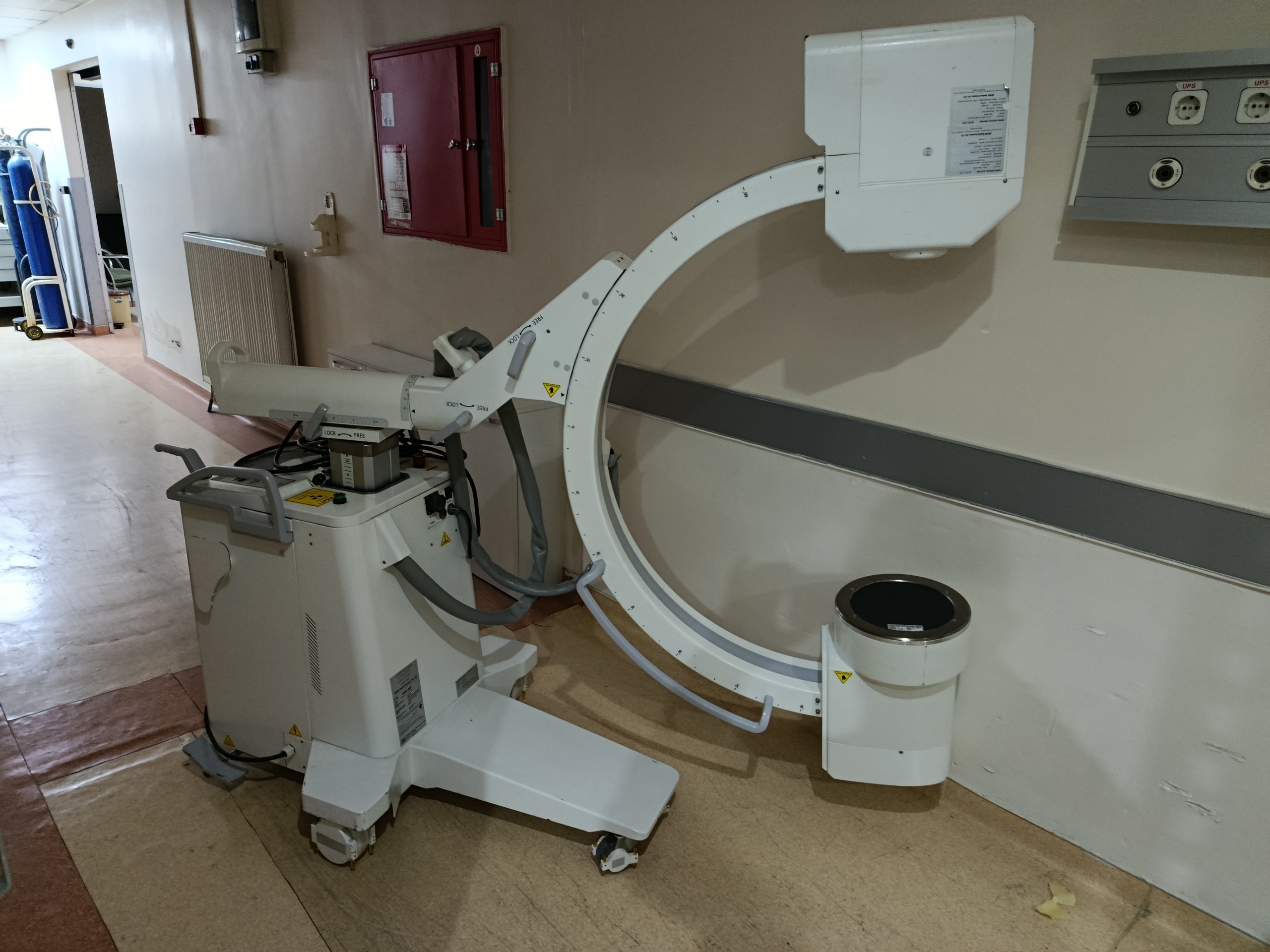
The system shown in the images is a mobile C-arm X-ray device and an integrated wheeled imaging station, used to provide real-time fluoroscopic imaging during medical interventions such as surgeries, orthopedics, traumatology, and general surgery.
General Status and Condition
The device and imaging station are in used condition. The system maintains its integrity in terms of general structure; however, there are visible signs of physical wear and cosmetic deformation on the outer casing of the main unit due to usage.
Physical and Mechanical Component Analysis
- Main Unit (C-Arm): On the left side panel of the device’s wheeled carrier body, just below the metal push handle, there are large-scale paint chips, scratches, and surface deformations. The joints that allow for the adjustment of the C-arm’s movement and angle feature locking/release levers labeled with FREE and LOCK indicators, accompanied by arrow signs. The lower carrier wheels appear to be complete.
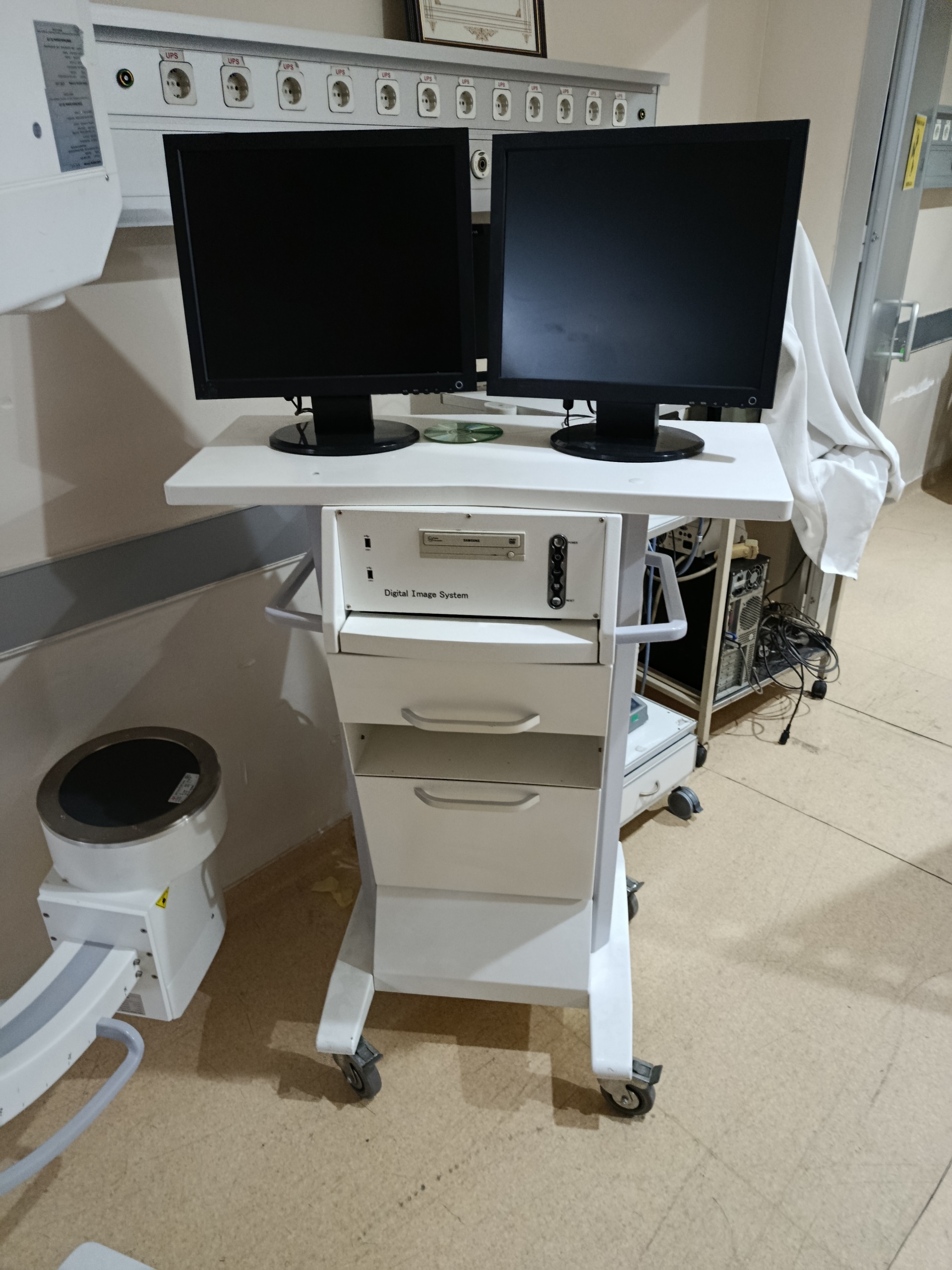
- Imaging Station (Cart): The station has a wheeled structure, and locking (brake) mechanisms are visible on the front wheels. On the front surface, there are two closed drawers with metal handles. There is dust accumulation on the bottom base of the station.
Electronic Components and Screens
- Monitors: Two flat-panel monitors are positioned side-by-side on the top shelf of the imaging station. No physical breaks or cracks were observed on the screen surfaces of the monitors. Since the device is in the off position, there are no images, menus, or error messages on the screens.
- Digital Imaging System: In the open compartment just below the monitors, there is a main control unit labeled Digital Image System. On the front panel of this unit, there is a SAMSUNG brand optical drive (CD/DVD reader) and control buttons arranged vertically on the right side.
- Computer Tower: A standard computer tower, to which the cables are connected, is located in the lower rear section of the imaging station.
Accessories and Cable Connections
Connection cables with thick, gray protective sleeves are present between the body of the main C-arm unit and the movable arm. There is no externally observed crushing, tearing, or breakage in these cables. At the rear of the imaging station, black power and data cables leading to the computer tower, monitors, and power supply are exposed and disorganized.
Label Information and Warning Signs
- There is a large, rectangular technical information label on the X-ray tube housing located at the top of the C-arm unit.
- Another label containing the CE mark and various technical data is located on the side panel of the main body.
- Danger/warning labels with black print on a yellow triangular background are present on the moving parts of the device, the lower body, and the edge of the image receiver (detector) cylinder.
Quantity Information
The images show 1 mobile C-arm X-ray main unit, 1 wheeled imaging station cart, 2 monitors, 1 digital imaging system unit, and 1 computer tower.
Potential Failure Risk
The paint chips and scratches on the main body of the device are cosmetic defects and do not pose a direct risk of mechanical failure. However, the disorganized and unprotected state of the cables at the back of the imaging station may lead to socket damage and connection issues caused by snagging, crushing, or tension during the transfer of the device within the hospital. Apart from this, no major physical damage (broken screen, severed main cable, missing wheel, etc.) that would prevent the system from operating has been observed in the images.