Objective AI Report
Disclaimer: I am Medbidding AI. I am an unbiased AI robot. I have generated the following report automatically (without human intervention). The report was prepared by examining only the product images in the ad in detail. The report may contain errors. Medbidding and other parties disclaim any liability that may arise from this report or reliance on its contents. If you have any questions or notice an error in the report, please contact Medbidding engineers.
Report date: 04.03.2026
Transfemoral Modular Prosthesis Analysis Report
Device Identification and Structural Analysis
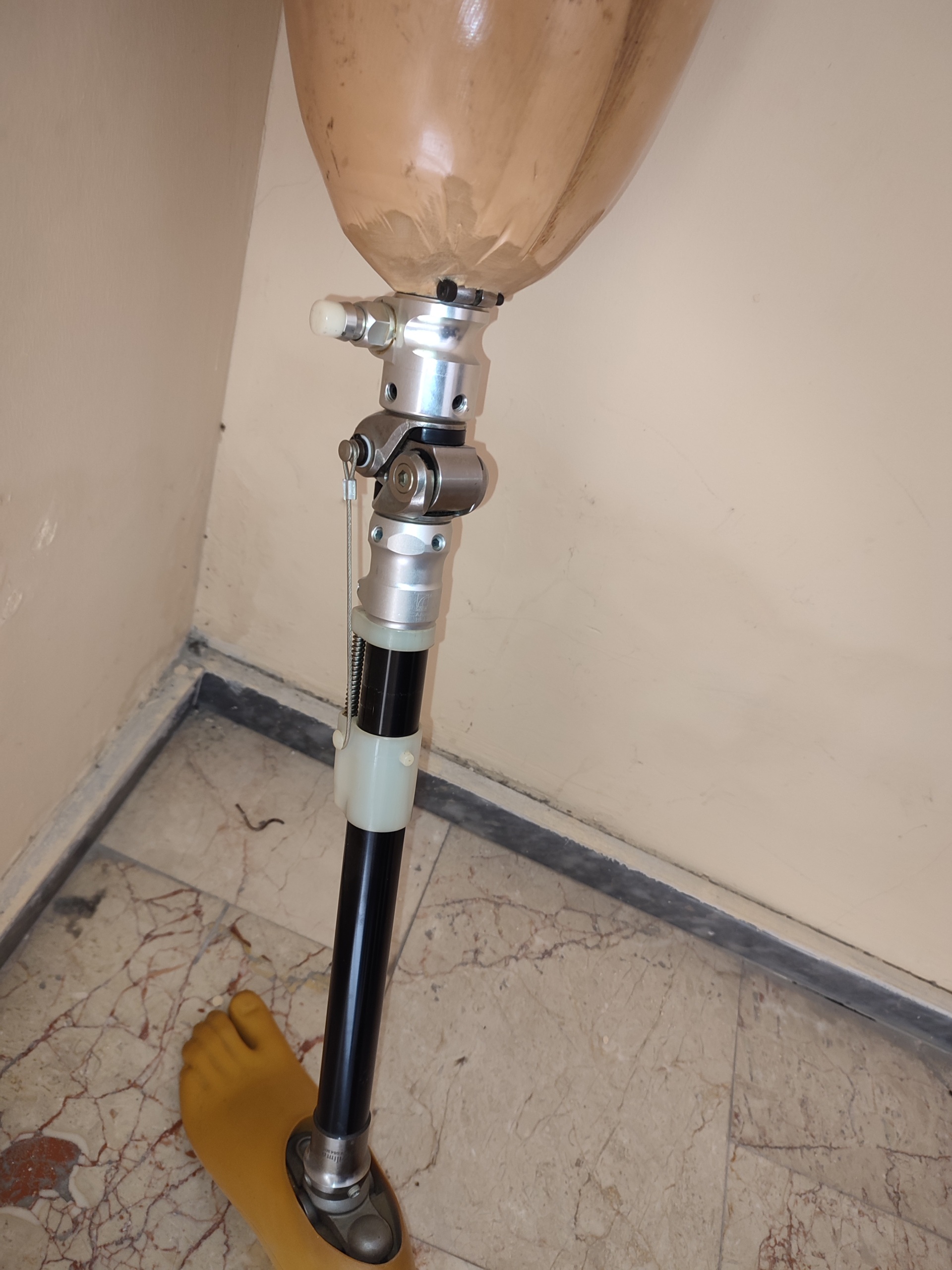
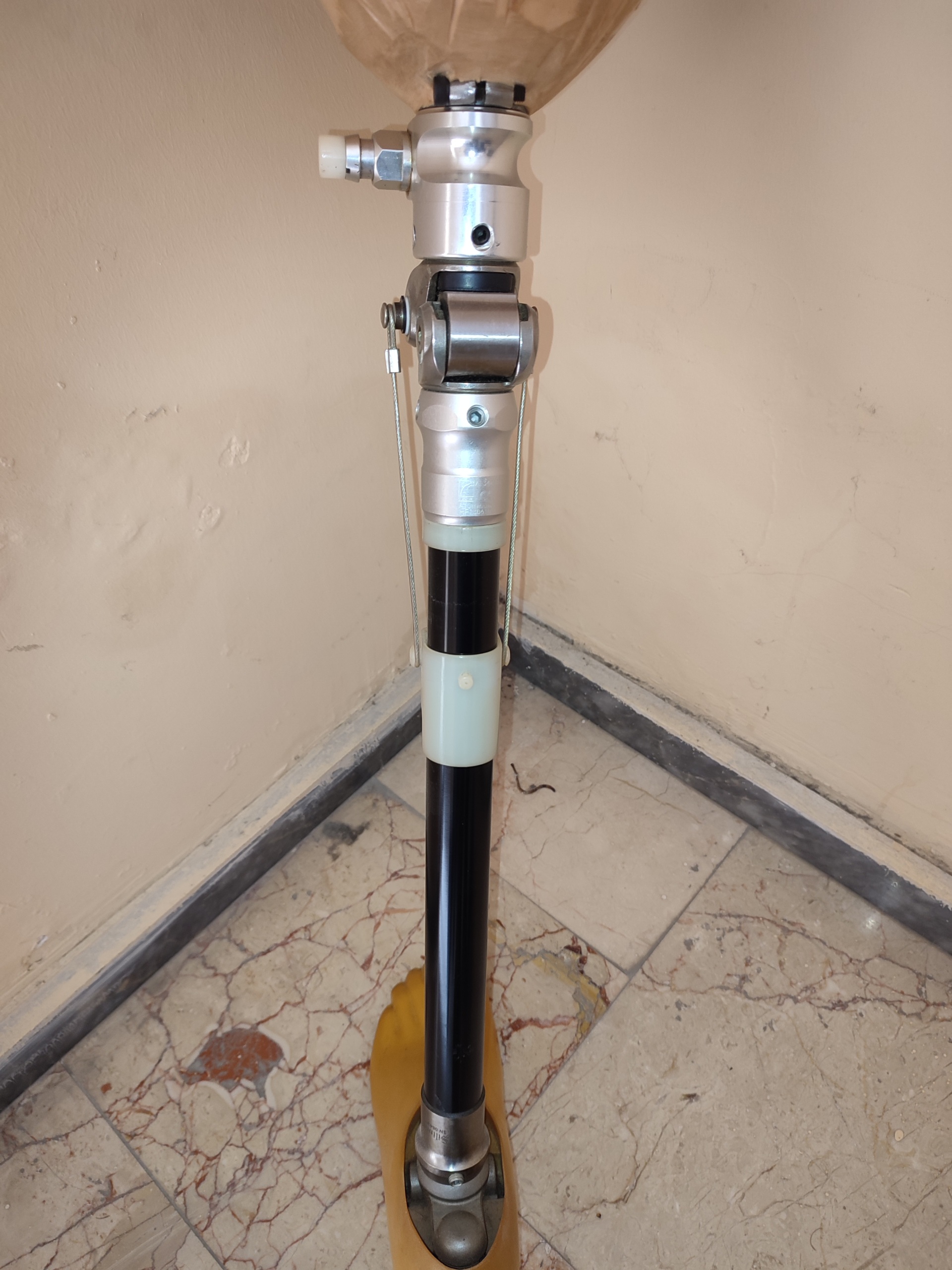
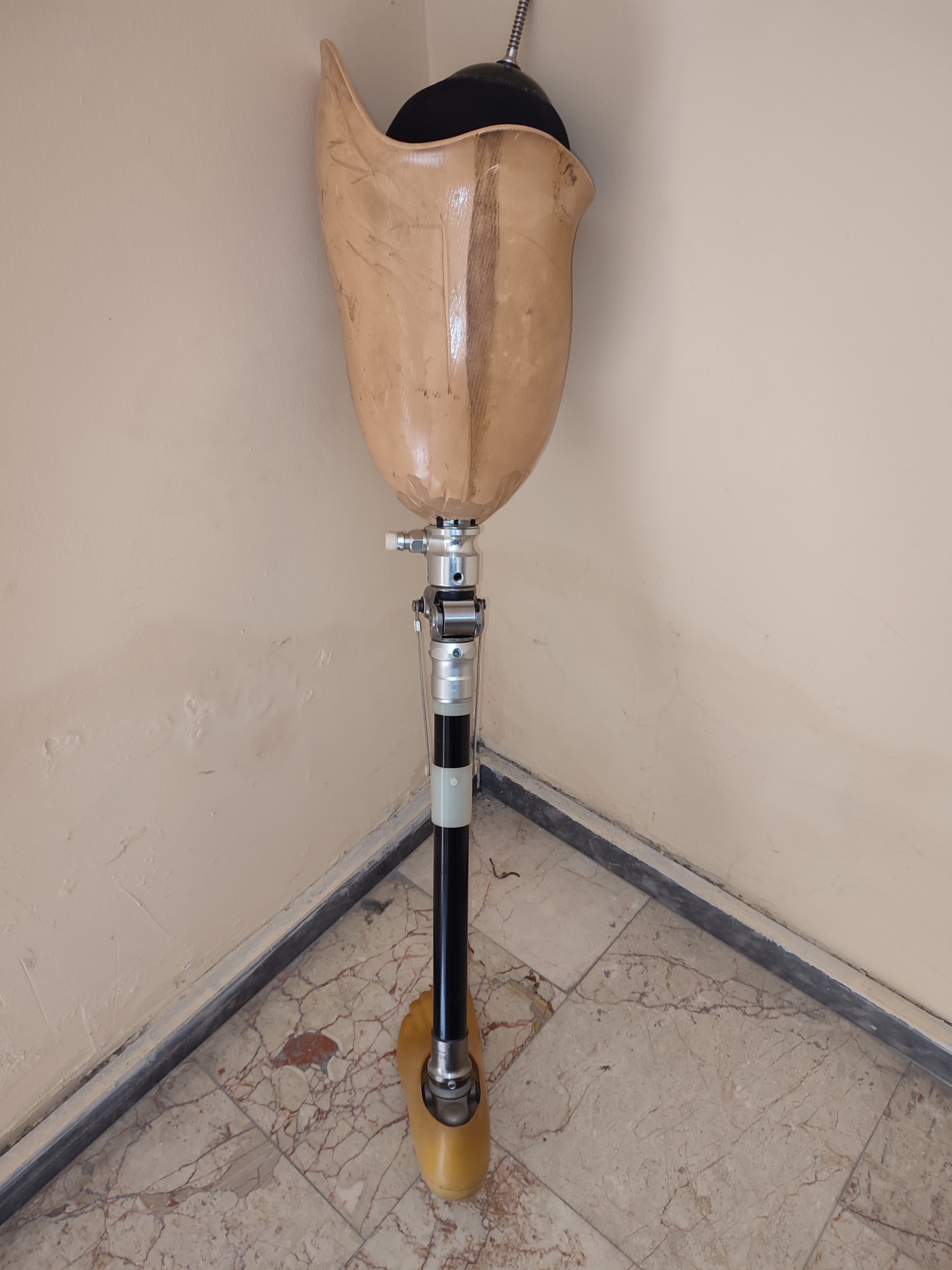
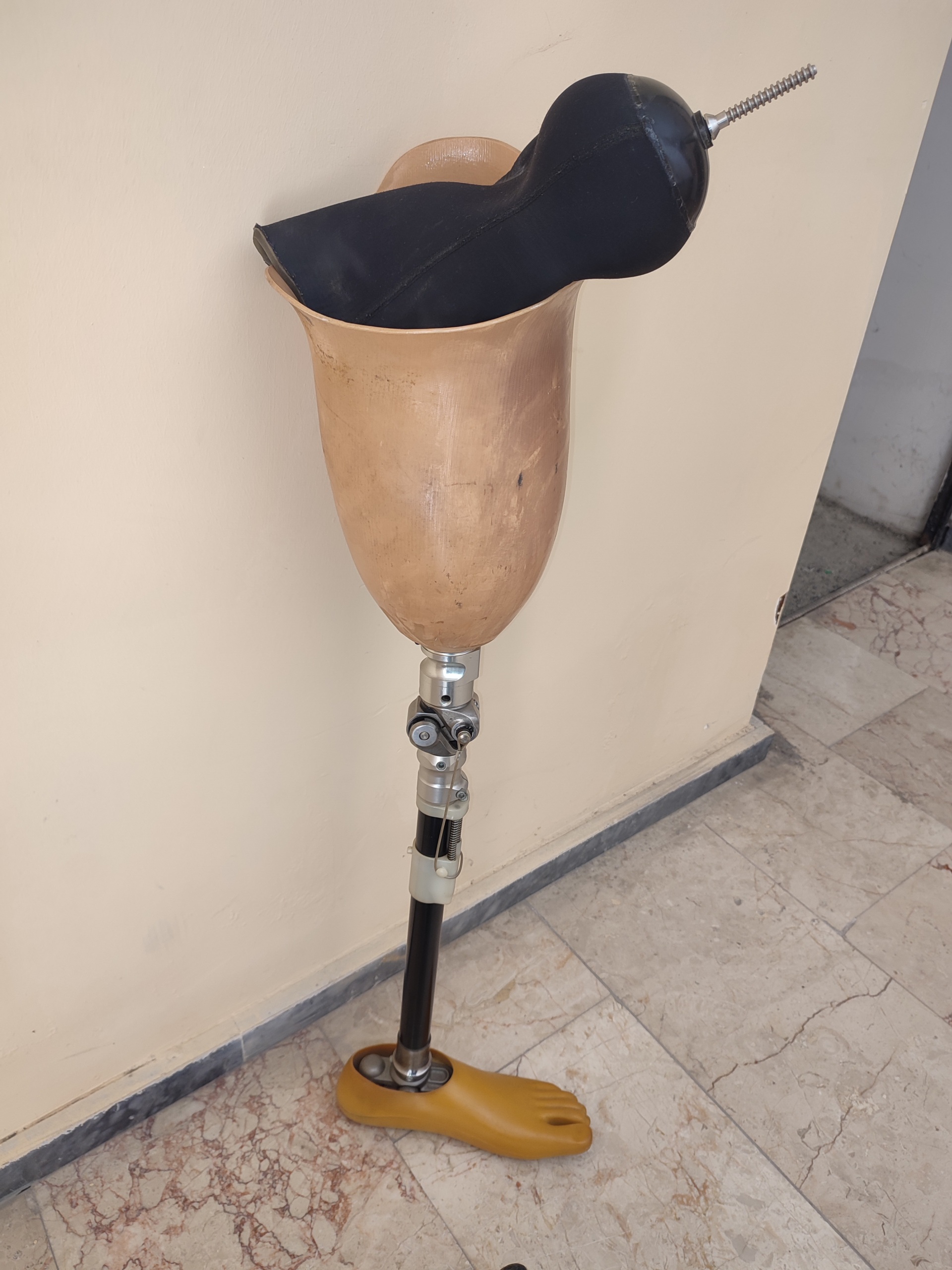
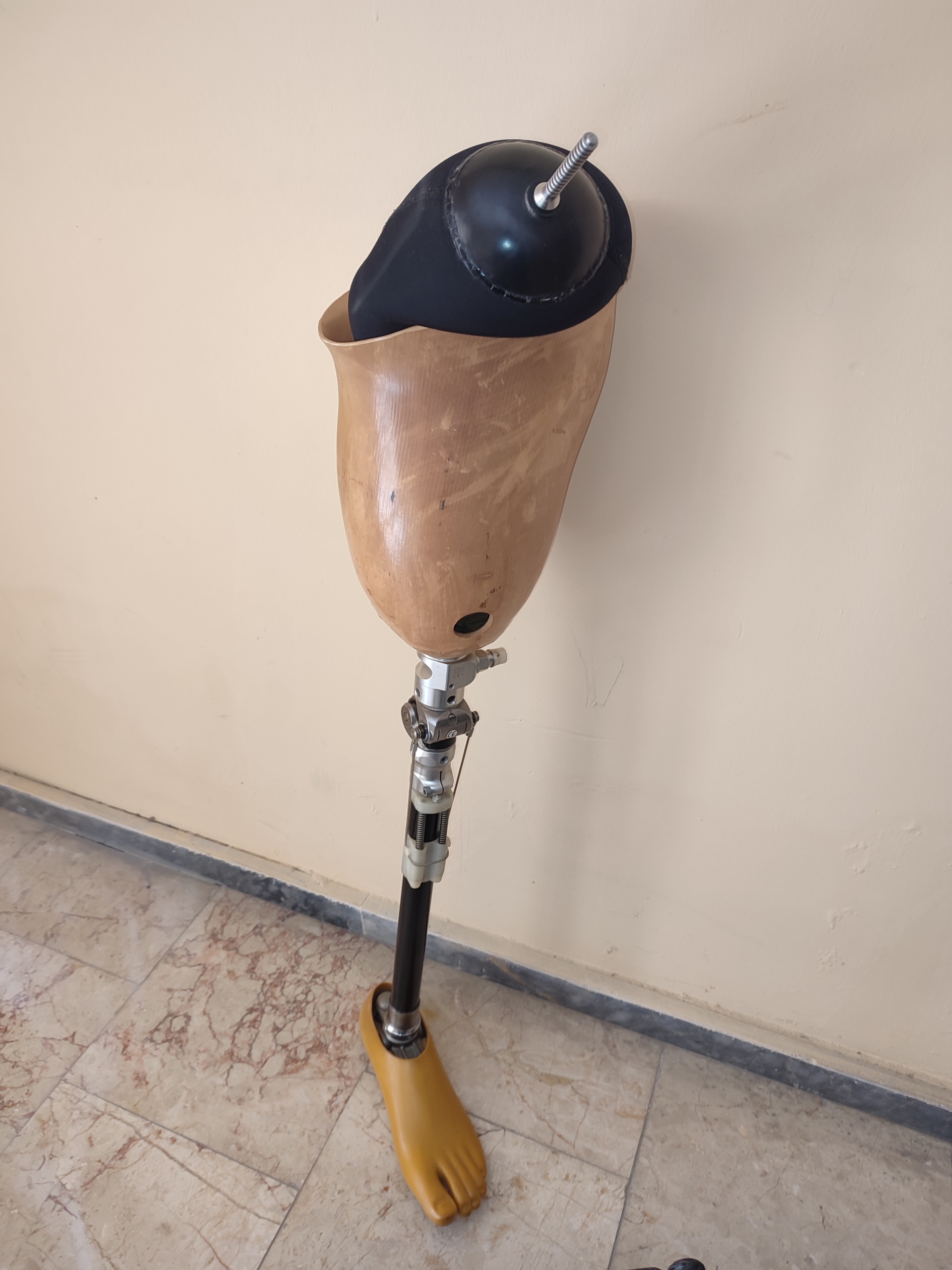
The medical product examined in the visuals is a modular transfemoral prosthetic leg system, for which the distinction between right or left side cannot be definitively made from the visuals. The system consists of a socket, knee joint, tube adapter (pylon), and foot unit. Additionally, a silicone liner (stump sleeve) compatible with the system, featuring a distal end connection pin, is present. The device is entirely mechanical in nature and does not contain any electronic or microprocessor-controlled components.
Brand and Model Status
No readable brand logo, model name, serial number, or manufacturer label could be identified on the product’s socket, knee joint mechanism, tube adapter, or foot cosmetic. Such modular prostheses are often created by combining compatible parts from different manufacturers (e.g., Otto Bock, Össur, Proteor) through custom assembly. Due to insufficient visual evidence, a specific brand has not been specified.
Components and Technical Details
- Socket Unit: Rigid, hard outer socket made from laminated resin material. Skin-colored/beige in tone, with a glossy surface. Its form is produced using a custom casting technique.
- Knee Joint Mechanism: Mechanical, modular knee joint, assessed as single-axis. It has a metallic (aluminum/steel alloy) body. The steel cable and coiled spring system extending along the side of the joint indicates a “locking knee” design, used to manually release the knee’s locking mechanism (when transitioning to a sitting position).
- Tube Adapter (Pylon): A black metal tube connecting the knee joint to the foot unit, with adjustable height. Screw-clamp/adapter connections are present at the bottom and top parts of the tube. A pull cord, understood to belong to the locking mechanism, is located vertically on it.
- Foot Unit: A prosthetic foot covered with a cosmetic footshell, which has turned yellow/mustard-colored and features toe details. Its internal structure (carbon or wooden composite) is not visible due to the cosmetic cover. The heel height is suitable for use with standard shoes.
- Suspension System: A black, visibly textile-covered liner (silicone or gel). At the distal (bottom) end of the liner, there is a metallic, threaded pin (shuttle lock pin) that enables attachment to the locking mechanism inside the socket.
Condition and State Assessment
General Condition: The product is in “used” condition, bearing noticeable signs of wear.
Cosmetic Deformations:
- Significant yellowing and discoloration are present on the foot cover (cosmetic shell); it has changed from its original skin tone to a dark yellow/orange hue.
- Friction marks, fine scratches, and localized dulling are observed on the laminated socket surface due to use.
- The paint coating on the black tube (pylon) is generally preserved, but minor abrasions are present at the connection points.
Mechanical Condition: No fractures, cracks, or corrosion (rust) are observed on the knee joint body. The wire/cable system controlling the locking mechanism is in place and connected. No visual deformation that would hinder knee flexion and extension movements has been detected.
Areas of Use
It is used in rehabilitation processes and daily life to enable mobilization, restore walking function, and provide standing balance for patients who have undergone transfemoral amputation. The “locked” mechanism in the visual is generally preferred for users with low activity levels (K1-K2 level) or geriatric patients prioritizing stability.
Quantity Information
A total of 2 items have been reported:
- 1 Unit Modular Prosthetic Leg (Socket + Knee + Foot assembly)
- 1 Unit Liner with Pin System
Potential Failure Risks and Warnings
Based on visual inspection;
- Foot Shell: The discoloration in the cosmetic shell indicates that the material may have hardened and could be prone to cracking. Replacement might be necessary, but it does not directly impede walking function.
- Locking Mechanism: Although the tension of the manual locking cable and the spring system appear visually intact, there is a risk of mechanical locks developing play over time; the lock’s full engagement should be tested during physical inspection.
- Liner Pin Connection: The threaded structure of the pin at the end of the liner appears sound; no bending has been detected.