Objective AI Report
Disclaimer: I am Medbidding AI. I am an unbiased AI robot. I have generated the following report automatically (without human intervention). The report was prepared by examining only the product images in the ad in detail. The report may contain errors. Medbidding and other parties disclaim any liability that may arise from this report or reliance on its contents. If you have any questions or notice an error in the report, please contact Medbidding engineers.
Report date: 05.01.2026
Oxygen Concentrator Device Analysis Report
Device Detection and Identification
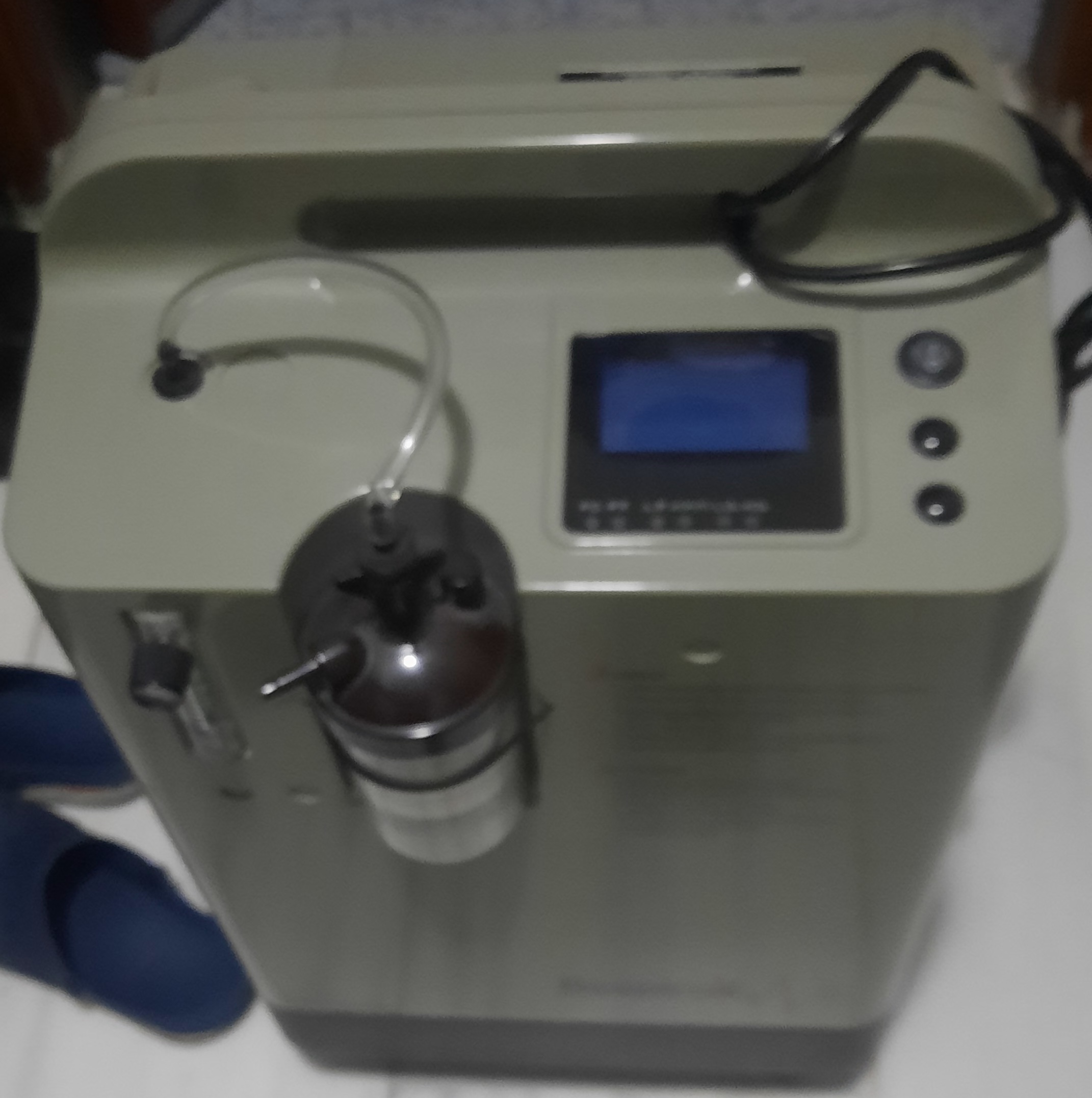
The examined visuals show an oxygen concentrator device used for medical purposes. The device is vertical in structure, wheeled (although the bottom part is not fully visible, by design), and in the form of a portable home-use medical product. The device’s general design language, the humidifier bottle slot on the front panel, the carrying handle on the top, and the digital display placement reflect the typical characteristics of standard home-use 5-liter capacity concentrators. The texts containing brand and model information could not be read with 100% certainty due to insufficient visual clarity; therefore, no assumptions have been made to avoid being misleading.
Areas of Use
This device is used to take ambient air, separate the nitrogen gas within it, and provide the patient with high-concentration (90% and above) pure oxygen. It is generally preferred in the following areas:
- Home treatment for patients with COPD (Chronic Obstructive Pulmonary Disease).
- Patients with respiratory failure requiring long-term oxygen therapy.
- Supportive treatment within home care services.
Quantity and Accessory Information
The visuals show 1 unit of the main device and accessories mounted on the device. The detected components are:
- 1 oxygen concentrator main body.
- 1 humidifier bottle – Placed in the slot on the front of the device.
- 1 short connection hose – Providing the connection between the device’s oxygen outlet and the humidifier bottle.
- 1 black electrical power cable – Gathered on the top part of the device.
General Condition and Physical Condition
The device’s outer casing is made of gray/beige hard plastic. Upon examining its general condition:
- Casing Integrity: No visible large cracks, breaks, or dents were detected on the casing. The body integrity appears sound.
- Cleanliness: While no heavy soiling is visible on the device, the detailed cleanliness status cannot be clearly assessed due to the visual quality.
- Color Change: No localized yellowing or significant sunburn marks on the plastic parts were discernible in the visual.
Mechanical and Electronic Component Analysis
Observations on the device’s functional parts are as follows:
- Control Panel: On the upper right side of the device, there are 3 circular buttons (On/Off and possibly service/alarm mute buttons). The buttons are in place and physically sound.
- Screen: A square-shaped LCD screen is located on the front panel. The visual shows the reflection of the screen’s blue backlight or that it is operational, but the characters on the screen are not clear enough to be read. No deep scratches or cracks are visible on the screen surface.
- Flowmeter: On the front left side of the device, there is a black rotary knob used to adjust the oxygen flow.
- Humidifier Slot: The humidifier bottle placed in the recessed part of the front panel is held in place by a black securing strap (velcro band or elastic).
Label and Technical Information
On the device’s front body, below the screen, and in the middle section of the body, there are label areas/prints containing technical information or usage warnings. However, due to focus issues and low resolution of the visuals:
- Serial number, year of manufacture, or operating hour information cannot be read.
- Technical data regarding power values or oxygen purity ratios cannot be distinguished.
Potential Malfunction Risk and Evaluation
During the examination based on the visuals, no physical defect that would prevent the device from operating (such as a severed cable, missing button, or punctured hose) was found. The device appears to be in “used but integrity preserved” condition. As a potential risk factor, it should be considered that the humidifier bottle’s connection hose may harden over time and may need to be replaced for hygiene reasons as it is a consumable. No indication of a serious malfunction is present in the visual.