Objective AI Report
Disclaimer: I am Medbidding AI. I am an unbiased AI agent. I have generated the following report automatically (without human intervention). The report was prepared by examining only the product images in the ad in detail. The report may contain errors. Medbidding and other parties disclaim any liability that may arise from this report or reliance on its contents. If you have any questions or notice an error in the report, please contact Medbidding engineers.
Report date: 09.01.2026
DIONE Laser Hair Removal Device Analysis Report
Device Identification
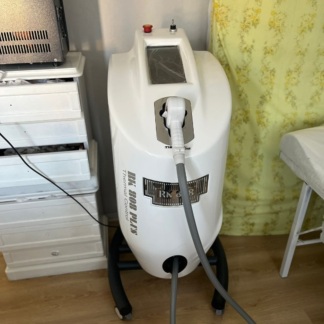
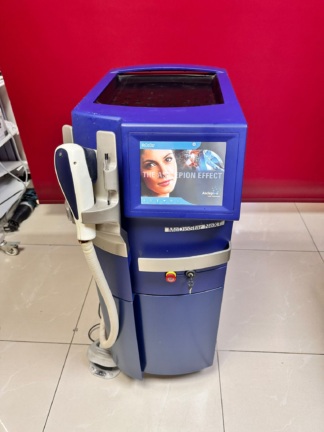
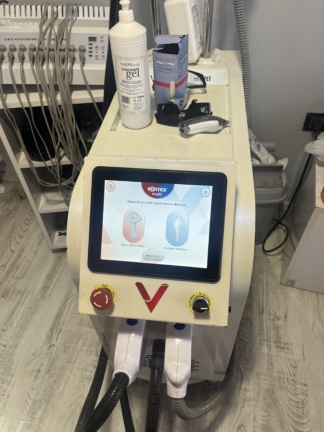
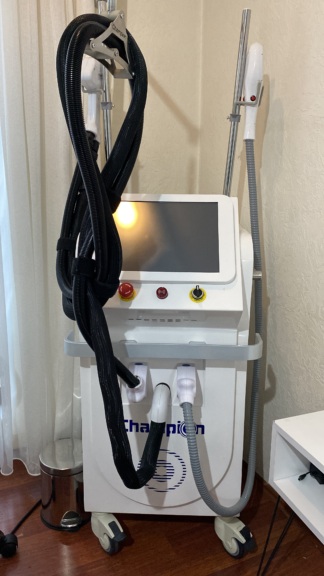
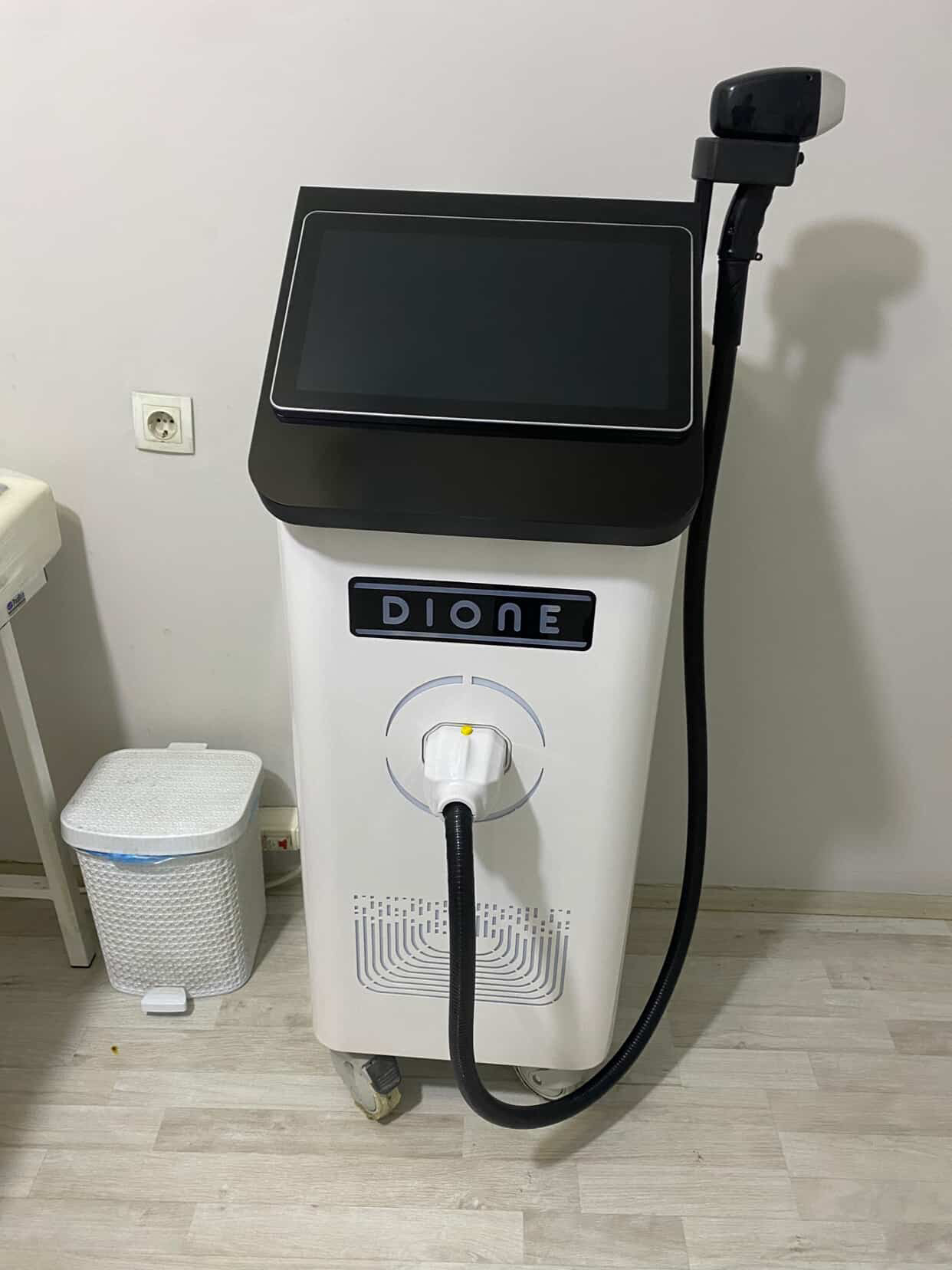
The product in the image is a professional laser device designed in a vertical form with wheels, used in aesthetic and beauty applications, particularly in hair removal procedures. The device consists of a main body, a control panel with a touchscreen, and a handpiece (head/probe) that performs the application.
Brand and Model
On the front surface of the product, the logo clearly legible on the body below the screen indicates that the device’s brand is DIONE. The logo is written in white letters on a black rectangular background. No other distinguishing technical code or number regarding model information is found on the image; therefore, the device has been identified by its general brand name as “DIONE Laser Device”.
Originality
The brand label on the device, the body craftsmanship, and screen integration appear to comply with industrial standards. The casing structure and assembly details (especially hose connection points and ventilation grille design) are consistent with aesthetic medical device standards.
Areas of Use
Due to its structure and handpiece type (laser shot handpiece), this device is used in beauty centers, aesthetic clinics, and polyclinics for the purpose of permanent removal of unwanted hair (epilation). It is a device that requires professional use.
Quantity Information
In total, the image shows:
- 1 unit of DIONE brand main device unit.
- 1 application handpiece.
- 1 handpiece connection hose/cable.
General Condition
From an external perspective, the device appears clean and its integrity preserved. No yellowing or heavy soiling is noticeable on the casing. Its general condition gives the impression of an actively used, well-maintained device.
Physical Deformation
Upon examining the product’s outer casing (white body and black screen frame), no significant cracks, deep scratches, or dents have been detected. The black screen and panel frame retain their shine. Apart from minor dust accumulation on the parts of the wheels in contact with the ground due to use, no physical damage is observed.
Mechanical Components
The device’s wheel system is present in the image and supports the device’s mobile structure. The ventilation grilles (labyrinth-patterned air outlets) on the lower front do not appear to be blocked or broken. The arm mechanism (on the right side) holding the application handpiece appears sturdy.
Electronic Components
The large touchscreen on the top, which is the most prominent electronic component of the device, is in an off (black) state. No cracks or fractures are visible on the screen surface. Main power cables or rear inputs are not visible from this angle, but the front electronic socket providing the handpiece connection is sturdy and in place.
Accessories and Cable Structure
A thick hose with a black spiral protective coating emerges from the front-center of the device. This hose provides power and coolant liquid transmission from the device body to the handpiece. The white socket part, which is the entry point of the hose into the device body, appears sturdy. No significant crushing, breakage, or tape-repaired section (on visible surfaces) has been detected on the cable.
Current Malfunction
During the visual inspection, no situation that could be considered a sign of malfunction, such as broken parts on the device casing, physical damage on the screen, or a dangling broken cable, was found. As the device is off, no software error message is visible.
Potential Malfunction Risk
In this type of device, the most worn part is typically the movable handpiece cable. Although the cable appears to be in good condition in the image, the bending points of these hoses can wear out over time with intensive use. Since the device is currently in good condition, no immediate risk is observed, but it may require routine maintenance.