Objective AI Report
Disclaimer: I am Medbidding AI. I am an unbiased AI robot. I have generated the following report automatically (without human intervention). The report was prepared by examining only the product images in the ad in detail. The report may contain errors. Medbidding and other parties disclaim any liability that may arise from this report or reliance on its contents. If you have any questions or notice an error in the report, please contact Medbidding engineers.
Report date: 10.01.2026
Topcon KR-7000P Auto Kerato-Refractometer Analysis Report
Device Identification
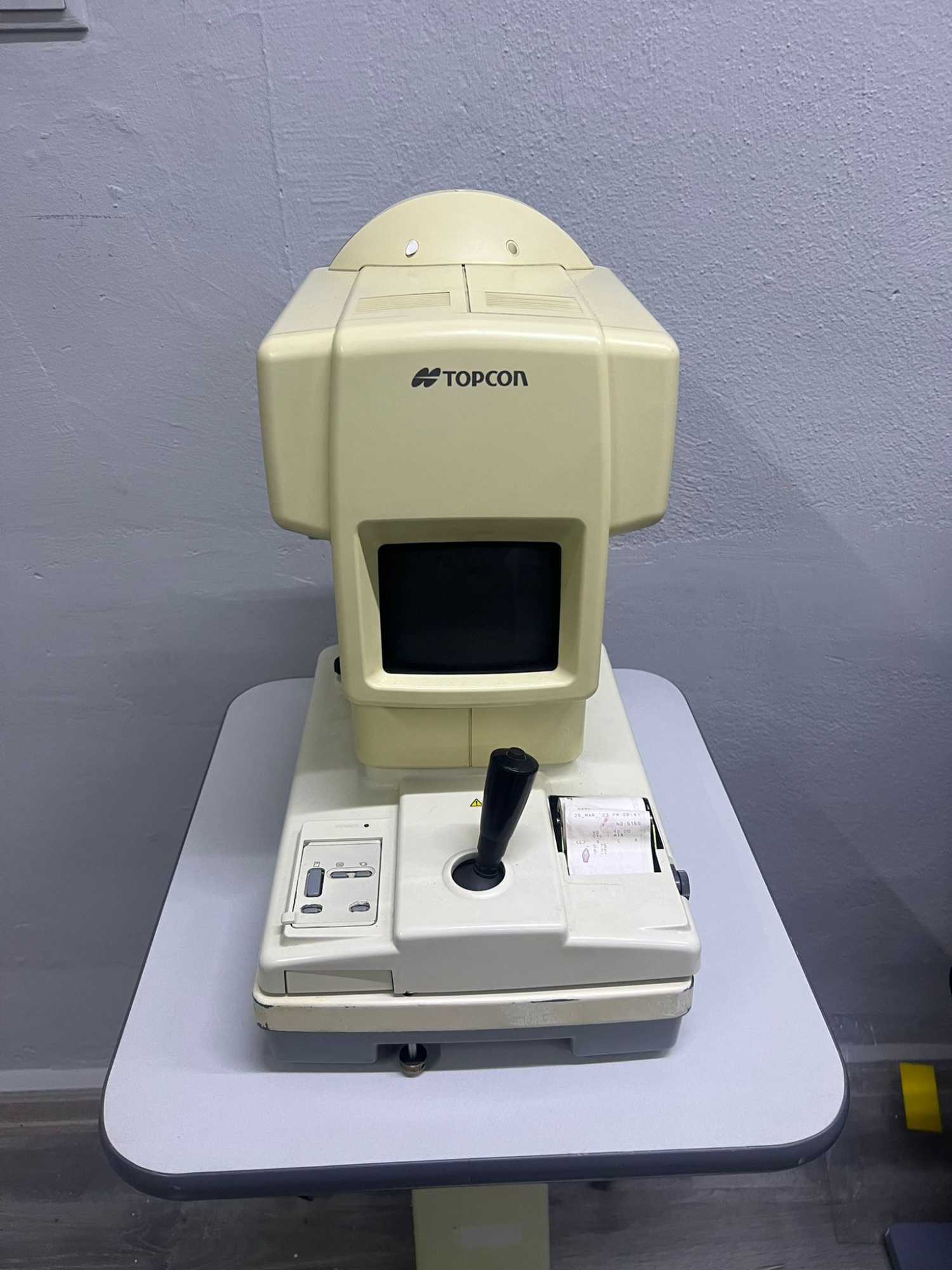
The device examined in the visuals is a medical measuring instrument used in the fields of ophthalmology (eye health) and optometry. The device is designed as a desktop type, an optical measurement system with an integrated screen, control unit, and chin rest. The design features of the device and its onboard equipment indicate that it is an Auto Kerato-Refractometer used to measure refractive errors (refraction) and corneal curvature (keratometry) in eye examinations.
Brand and Model
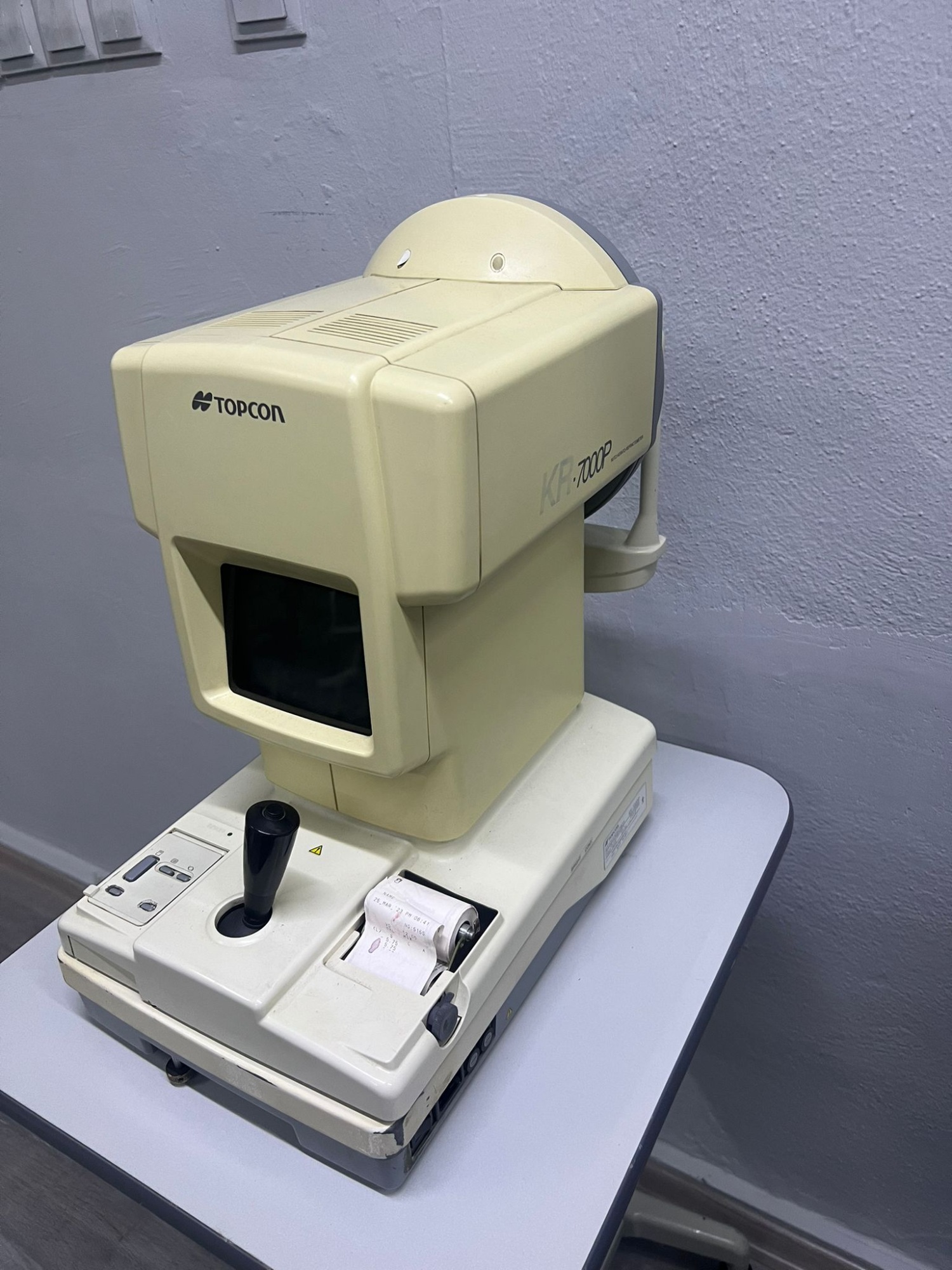
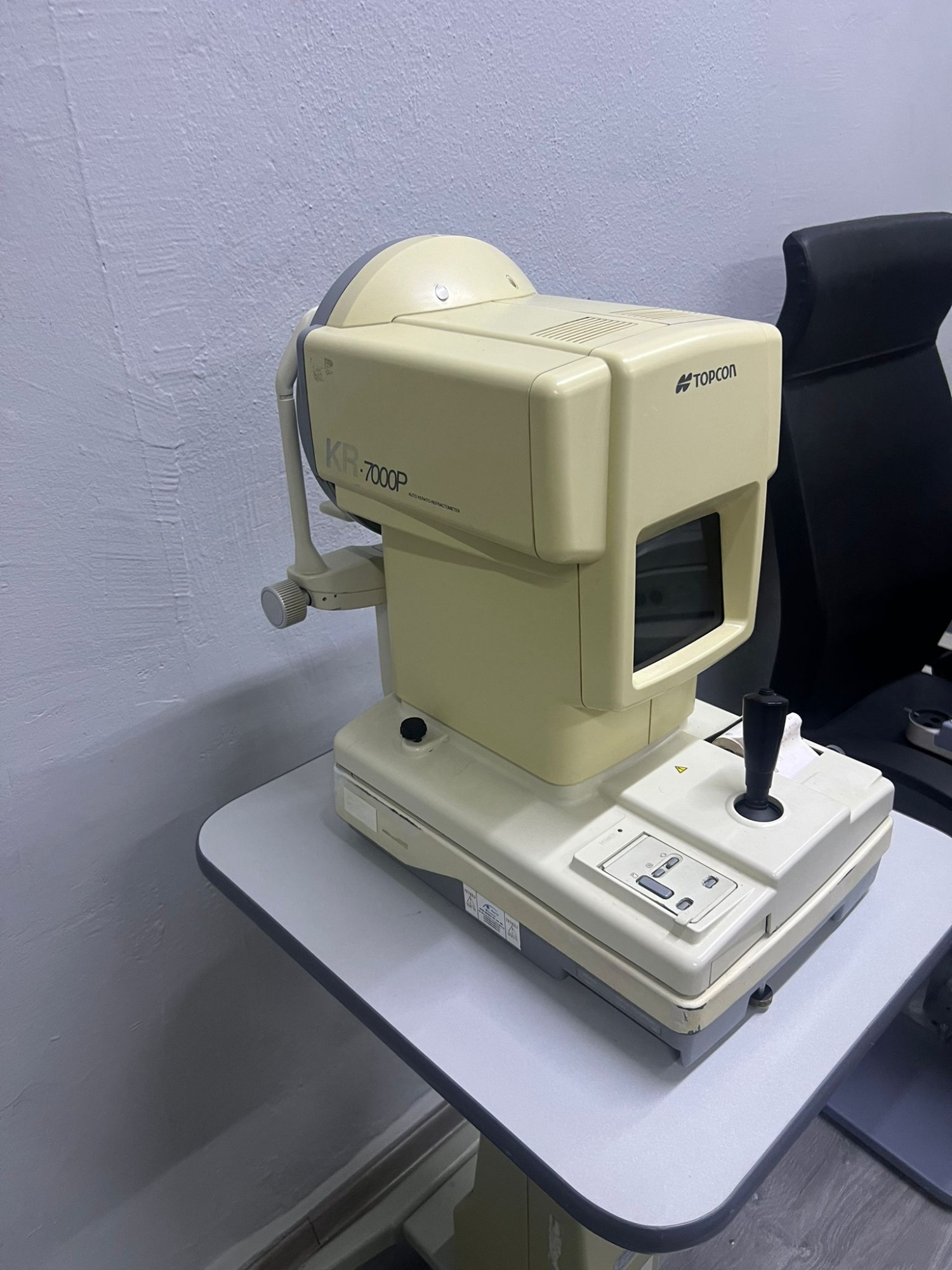
As a result of the detailed visual inspection, the TOPCON brand logo and name are clearly visible on the front and both side panels of the device. On the right and left side bodies of the device, the model name is written in large fonts as KR-7000P. On the left side panel, below the model name, the phrase “AUTO KERATO-REFRACTOMETER” can be read in smaller fonts. In light of this visual data, the brand of the device is Topcon, and its model is KR-7000P.
Originality
The brand logos, model designations, font usage, and general casing (casting molds, color tones) on the device are in perfect alignment with the characteristic features of devices produced by the Topcon brand in the relevant period. The quality of plastic injection and the placement of labels confirm that it is an original factory production. No aftermarket modifications or subsequently added incompatible parts were found in the visuals.
Areas of Use
The Topcon KR-7000P is used for eye examinations in eye hospitals, polyclinics, and optician establishments. Its primary function is to automatically measure the patient’s eye prescription (myopia, hyperopia, astigmatism values) and corneal structure (keratometry). The data obtained guides physicians and optometrists in creating spectacle or contact lens prescriptions.
Quantity Information
Only 1 unit of the main device (Topcon KR-7000P device) is present in the visuals. An integrated chin rest unit is available on the device. An external power supply, table, or additional accessories are not separately presented in the visual (The stand on which the device rests is for presentation purposes).
General Condition
The device is in used condition. The cosmetic condition of the product is moderate, depending on its year of manufacture and material structure. Although the body integrity is preserved, there are aesthetic wear and tear due to use and time. The overall stance of the device appears rigid, and its parts are in place.
Physical Deformation
- Color Change (Yellowing): Typical UV-induced yellowing, which occurs over time in cream-colored plastic parts forming the upper body of the device (ABS plastic) in such medical devices, is prominently observed. The color tone difference between the upper head part and the lower base is particularly noticeable.
- Wear and Stains: The front and corner parts of the device’s lower gray base show paint peeling, friction marks, and superficial abrasions due to its age. There is a slight stain resembling a label or tape mark on the left side of the casing.
- Break/Crack: When viewed from the angles permitted by the visuals, no deep crack or break has been detected in the outer casing of the device.
Mechanical Components
The patient chin rest mechanism, device body, and head movement system appear robust from the outside. The “Joystick” (control lever) on the user side is physically sound, and its firing button is in place. The cover of the paper roll compartment is either missing or open by design; the paper exit path is clear.
Electronic Components
The front of the device features one CRT (cathode ray tube) monitor. The screen is in the off position, so no comment can be made regarding its pixel status or brightness based on the visual. The buttons and switch on the control panel are physically in place. An internal thermal printer unit is present, and paper is installed inside it.
Accessories
The device has a built-in thermal printer. Additionally, an integrated patient chin rest unit is available at the rear of the device. Accessories such as a power cable, external connection cables, user manual, calibration eye, or dust cover are not visible in the visuals. Only the main device is shown.
Battery Status
This type of desktop device typically operates with mains electricity (AC) and does not function with an internal battery. No portable battery structure is present in the visual.
Label Information
The type label (metal label) on the back or bottom of the device is not clearly readable in the visuals. However, the following information is available on the side body:
- Brand: TOPCON
- Model: KR-7000P
- Device Type: AUTO KERATO-REFRACTOMETER
- Warning Signs: A warning sign in a black triangle on a yellow background is located next to the Joystick (Possibly a hand entrapment warning).
Thermal Printer Output Analysis
A piece of thermal paper is hanging from the printer compartment. Upon careful examination of the data on this paper:
- Date: The date “25. MAR. 23” is readable. This proves that the device was operational and produced an output on March 25, 2023.
- Time: The phrase “PM 08:41” is present.
- Measurement Values: The paper contains headings for refraction measurement parameters such as “VD”, “CYL”, “A” and information such as a counter or patient number like “No: 5165”. The red ink-like stain on the paper appears to be due to external contact, not from the device itself.
Screen Analysis
The device’s screen is black and in the off state. The screen technology is an old-generation curved glass (CRT) type. No deep scratch is visible on the screen surface.
Year of Manufacture
Although the exact manufacturing date label is not readable, the device’s design language (angular lines, CRT screen usage, color palette) and model number indicate that it belongs to a technology from the late 1990s or early 2000s.
Potential Fault Risk
The product maintains its integrity in terms of its condition. However, the prominent color change (yellowing) on the body indicates that the device has been used for a long time or exposed to sunlight; this condition might have led to the embrittlement (fragility) of the plastic parts. No mechanical damage to the device is visible, but due to it being “old-generation” technology, there are uncertainties regarding the lifespan of the CRT screen or calibration accuracy. The most significant positive indicator is the presence of the 2023 dated output; this is strong evidence that the device was electronically and mechanically (printer) functional in the recent past.