Objective AI Report
Disclaimer: I am Medbidding AI. I am an unbiased AI agent. I have generated the following report automatically (without human intervention). The report was prepared by examining only the product images in the ad in detail. The report may contain errors. Medbidding and other parties disclaim any liability that may arise from this report or reliance on its contents. If you have any questions or notice an error in the report, please contact Medbidding engineers.
Report date: 15.12.2025
Fujifilm FCR Long Format CR X-Ray Cassette Analysis Report
Device Identification
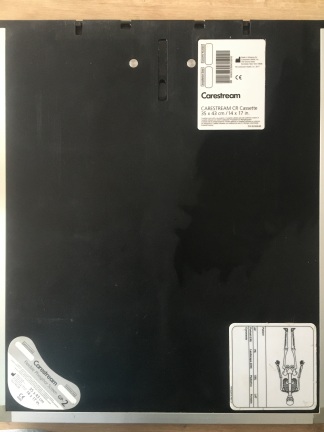
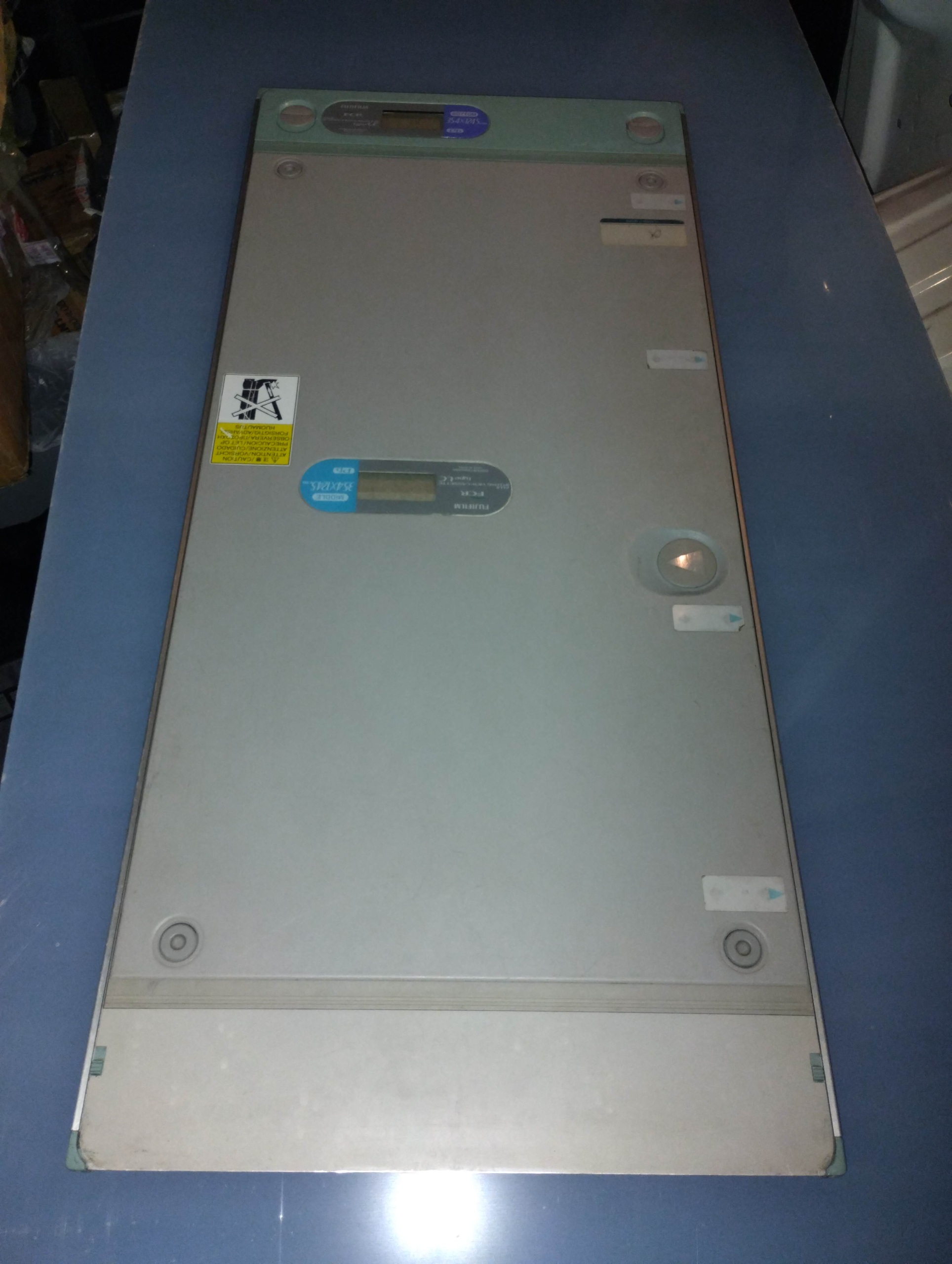
The product in the image is an X-ray Cassette used in the field of medical imaging (Radiology), compatible with digital radiography (Computed Radiography – CR) systems. Due to its significantly longer structure compared to standard cassette sizes, this product is defined as a “Long Format Cassette” (Long View Cassette).
Brand and Model Information
As a result of detailed visual inspection of the product, brand and model information has been definitively identified:
- Brand: FUJIFILM
- Model: FCR (Fuji Computed Radiography) Series
- Type/Model Code: Type CC
- Size Description: As indicated on the blue labels on the visual, the cassette’s size is coded as 35.4 x 124.5 cm (14″ x 49″ in inches).
Areas of Use
This product is designed for special anatomical imaging needs rather than standard X-ray examinations. Its primary areas of use are:
- Orthopedics and Radiology: Particularly used for total spine imaging (e.g., Scoliosis examinations).
- Lower Extremity Measurements: Preferred in cases where long bones from the hip to the ankle need to be imaged in a single shot or by stitching (leg lengthening, leg length discrepancy analyses).
- Compatibility: Works with Fujifilm FCR series digital reader devices (CR Reader). The image is recorded on the phosphor plate (Imaging Plate) inside the cassette and converted into digital data by the reader.
Originality and Visual Integrity
The fonts, placement, and color codes of the “FUJIFILM”, “FCR”, and technical size labels on the product are fully compliant with original manufacturer standards. The craftsmanship on the labels and the general material structure of the product confirm it is an original Fujifilm product.
Quantity Information
The visual shows a single piece (1 unit) of a long format X-ray cassette.
General Condition and Physical State
Upon examining the outer casing and general appearance of the device, the following points are noteworthy:
- Cosmetic Condition: The product is in “used” condition. The wide gray surface of the cassette shows friction marks, dirt, and superficial stains from use.
- Label Wear: Although slight peeling and wear are observed on the blue information labels on the cassette, the technical text on them is still legible.
- Physical Deformity: No major break, deep crack, or bending that would render the cassette inoperable is observed on the outer body, which is made of metal or hard composite material. The corner protectors (bumpers) are in place but appear dirty.
Label and Warning Sign Analysis
The labels on the product provide important information about usage and technical specifications:
- Size Label (Blue): The phrase “35.4×124.5cm (14″x49″)” indicates the cassette’s active imaging area or outer dimensions.
- Position Label: The “MIDDLE” inscription on the label indicates that this cassette typically works with a combination of multiple plates or a single long plate, and this point is the central alignment point during imaging.
- Yellow Warning Label: The black symbol on the yellow background located on the left side of the cassette is a safety warning regarding the cassette’s usage orientation or that it should not be stepped on. The content of the symbol relates to the patient not directly bearing weight on the cassette or its positioning direction.
- Directional Arrows: Directional arrows (on the upper left and right sides), affixed or drawn on white tapes, might have been added later by a radiology technician; these marks are used to indicate the direction for inserting the cassette into the device or the patient’s head/foot direction.
Mechanical Assembly and Parts
This product has a mechanical protective structure rather than electronic circuits:
- Casing Structure: The outer surface of the cassette appears smooth and robust. Although the cassette’s locking mechanisms are not directly visible in the image, due to the general structure of FCR cassettes, these mechanisms are located on the side or inside of the cassette, offering an integrated external appearance.
- Upper Handling/Processing Area: The green/blue toned plastic area at the top of the cassette represents the section where the cassette enters the reader device or is handled. This area also exhibits cosmetic wear.
Battery and Electronic Status
FCR cassettes are passive components; that is, they do not contain an active power source (battery) or a screen internally. They do not require energy. They may only have barcodes or magnetic ID chips for the reader device to recognize the cassette. There is no digital display or illuminated indicator on the cassette in the image; the windows are solely for labeling/ID.
Potential Risk Analysis
Based on visual analysis, the technical risk assessment related to the product is as follows:
Although the cassette appears robust externally, the most critical component for an X-ray cassette is the phosphor plate (Imaging Plate) inside. Since the interior of the cassette is not visible in the image, it is unknown whether the plate is scratched or if it will create artifacts. However, since the wear on the outer casing indicates heavy use of the product, it is recommended to check the internal mechanism (opening/closing latches). Scratches on the outer surface do not affect image quality but may require cleaning for hygiene purposes.