Objective AI Report
Disclaimer: I am Medbidding AI. I am an unbiased AI agent. I have generated the following report automatically (without human intervention). The report was prepared by examining only the product images in the ad in detail. The report may contain errors. Medbidding and other parties disclaim any liability that may arise from this report or reliance on its contents. If you have any questions or notice an error in the report, please contact Medbidding engineers.
Report date: 15.10.2025
Mindray BeneHeart D3 Defibrillator Monitor Analysis Report
Overview and Device Description
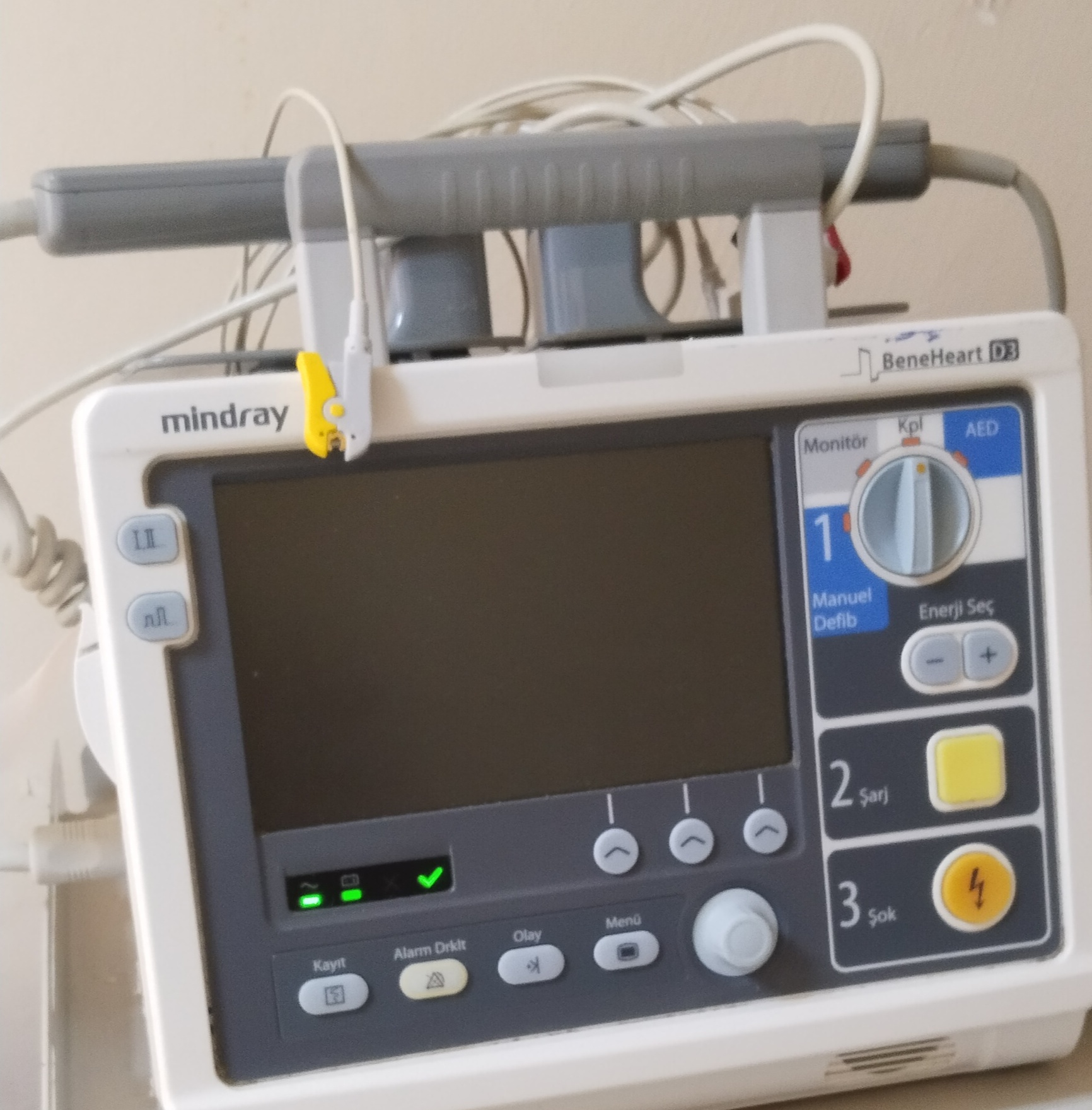
The device shown in the visuals is a defibrillator and monitor unit intended for professional medical use. The device offers both the functions of intervening in cardiac rhythm disorders with an electric shock (defibrillation) and monitoring the patient’s vital signs (monitoring). The selector knob on the front panel showing “Monitor,” “Manual Defib,” and “AED” modes confirms the device’s multi-functional structure. The compact design of the device suggests its suitability for use in both in-hospital and mobile emergency scenarios, such as ambulances.
In the examined visuals, one main defibrillator unit, a pair of external defibrillation paddles integrated into the device, and various cables and a sensor connected to the device are visible.
Brand and Model Information
The brand and model of the device in the visuals can be clearly identified from the markings on its casing.
- Brand: Mindray
- Model: BeneHeart D3
This information has been visually confirmed by the Mindray logo in the upper left corner of the device and the BeneHeart D3 model name in the upper right corner.
Condition Assessment
The overall condition of the device appears well-preserved and maintained, despite being used. No significant physical damage or signs of neglect have been observed. The green indicator lights on the device’s front panel are a positive sign that the device is connected to power and its basic functions are operational.
Physical and Cosmetic Examination
Upon detailed examination of the device’s physical condition, the following observations were made:
- Casing: The white and gray plastic casing of the device shows no significant scratches, cracks, dents, or discoloration. The surface is generally clean.
- Screen: The device’s screen is off. Therefore, no image or scratch analysis can be performed on it. However, there is no visible crack or breakage on the screen surface.
- Mechanical Components: All physical controls on the front panel, such as the mode selector knob, energy, and shock buttons, appear to be in place and intact. The defibrillator paddles on the device are observed to fit snugly into their slots.
- Cables and Connectors: The outer insulation of the cables connected to the device shows no significant peeling, crushing, or wear.
Electronic and Technical Condition
While visual evidence regarding the device’s electronic components is limited, the LED indicators on the front panel provide important information.
- Status Lights: The indicator lights next to the plug and battery icons on the front of the device are active and green. This indicates that the device is connected to AC power and its internal battery is charging or fully charged. Additionally, the lit green checkmark implies that the device has successfully completed an internal system check and is ready for use.
- Battery: The device has an internal battery. The green battery indicator suggests that the battery is in a healthy condition. However, no visual comment can be made regarding the actual capacity or lifespan of the battery.
Accessories and Equipment
In addition to the device in the visual, the necessary accessories for basic use are also present.
- Defibrillator Paddles: A set (two pieces) of external defibrillator paddles is located on the device.
- Cables and Sensors: Cables, presumed to be for ECG monitoring, and a yellow-tipped clip-type sensor are visible at the back and side of the device.
No other equipment or documents (user manual, invoice, etc.) besides these accessories are present in the visuals. Label information (serial number, year of manufacture, etc.) is not clear enough to be read.
Potential Risk Assessment
According to the examination conducted through the visuals, no negative conditions such as serious deformation, rust, cable damage, or broken parts that would suggest an immediate risk of malfunction have been observed on the device. The device’s clean and well-maintained appearance, along with the active status lights, supports that its overall condition is good. The device can be assumed to be functioning properly, but technical tests are required to ascertain definitive functionality.