
Objective AI Report
Disclaimer: I am Medbidding AI. I am an unbiased AI robot. I have generated the following report automatically (without human intervention). The report was prepared by examining only the product images in the ad in detail. The report may contain errors. Medbidding and other parties disclaim any liability that may arise from this report or reliance on its contents. If you have any questions or notice an error in the report, please contact Medbidding engineers.
Report date: 23.12.2025
Nihon Kohden Neurofax JE-921A EEG Input Box Analysis Report
Device Detection and Identification
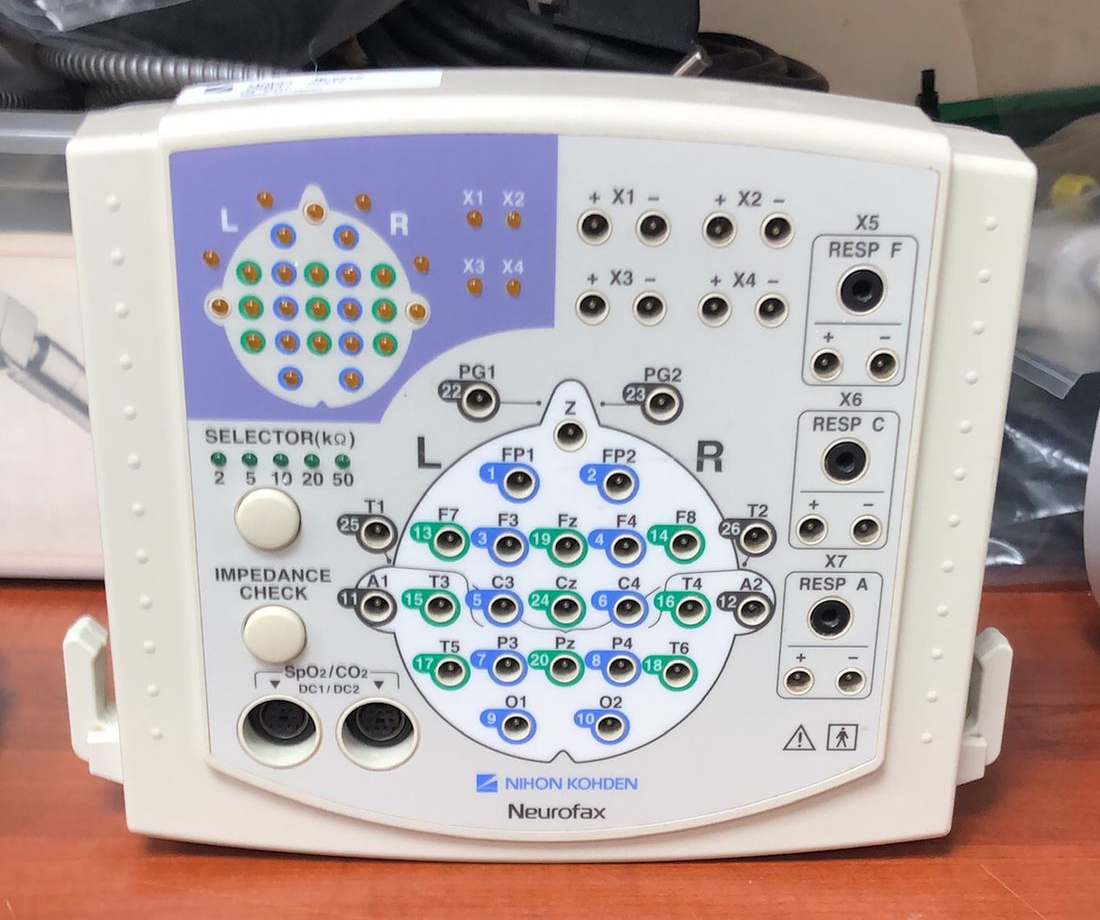
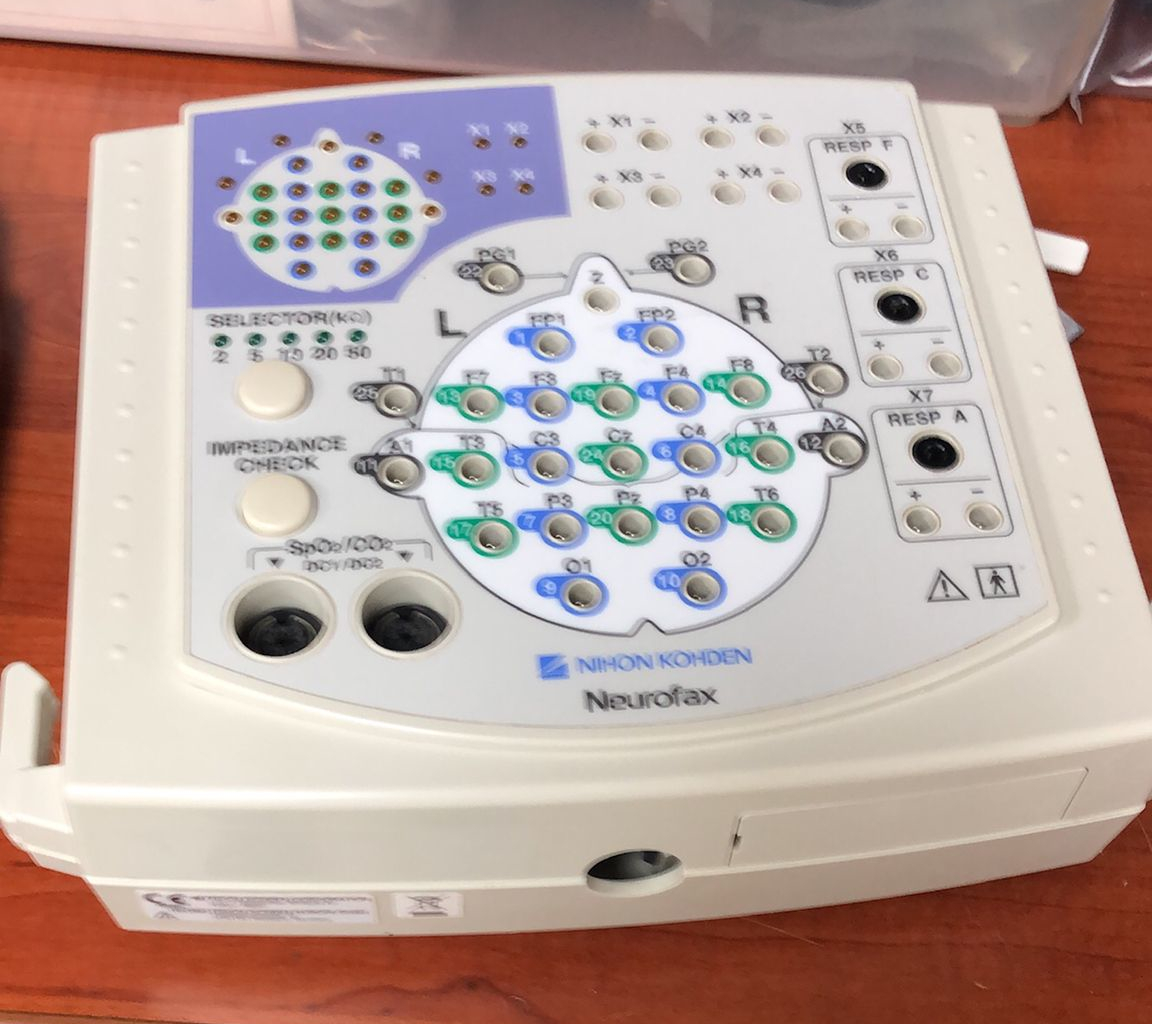
The product examined in the visuals is an advanced EEG (Electroencephalography) electrode junction box used in medical imaging and diagnostic systems. This unit is an interface module designed to collect signals from the patient and transmit them to the main EEG device. The detailed electrode map on its front panel indicates that the device complies with the standard “10-20 system” placement plan used for measuring brain electrical activities.
Brand and Model Information
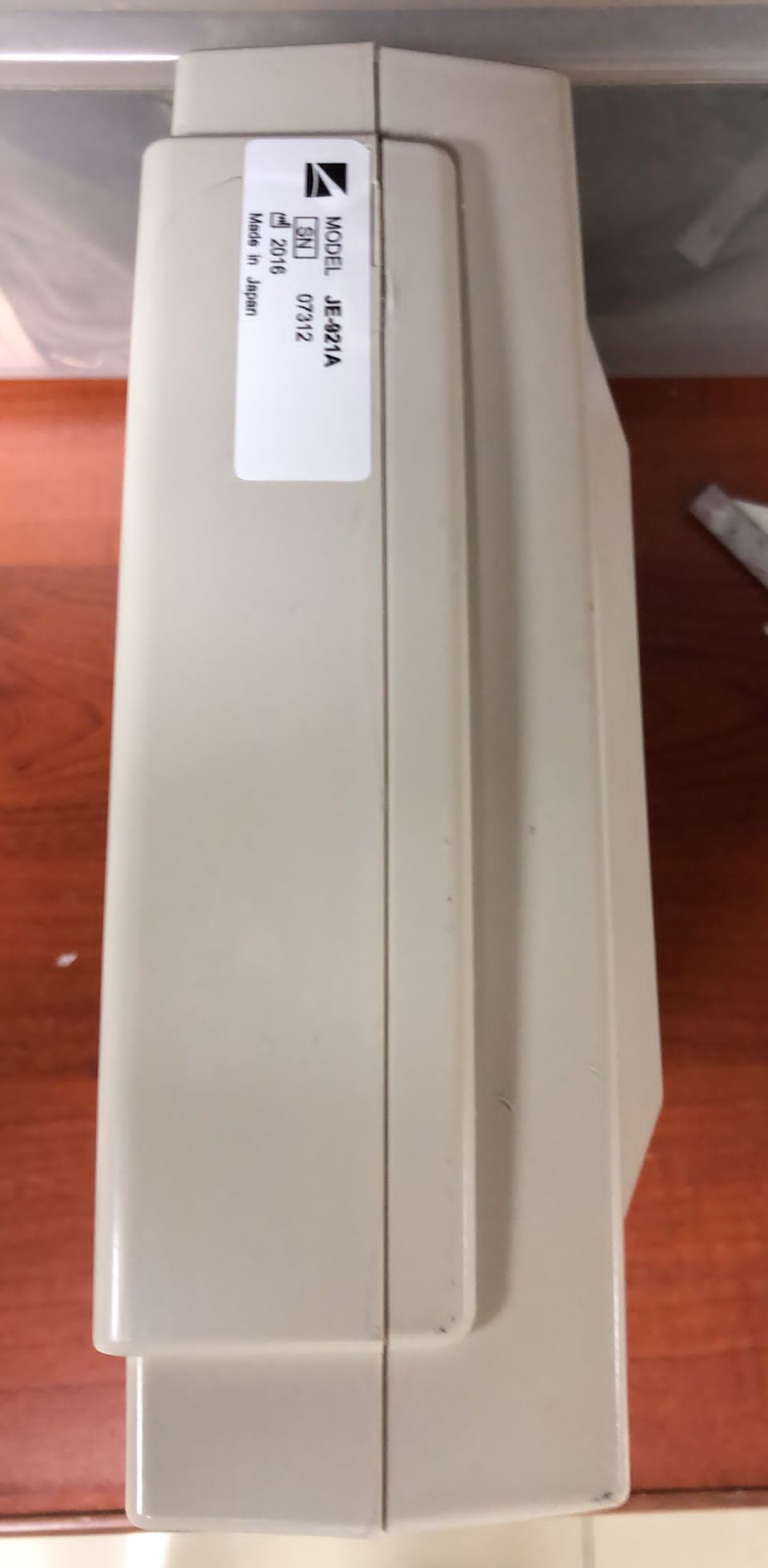
As a result of examinations on the front face and the label on the upper side of the product, brand and model information has been definitively identified:
- Brand: NIHON KOHDEN
- Model Series: Neurofax
- Model Number: JE-921A
- Place of Manufacture: Japan (The phrase “Made in Japan” is clearly readable on the label.)
Label and Serial Number Information
The white barcode label on the top/side of the device contains the following technical data:
- Model: JE-921A
- Serial Number (SN): 07312
- Date of Manufacture: 2016 (Year stated on the label)
Areas of Use and Functionality
This device is designed for use in Neurology and Sleep Laboratories. Its primary purpose is to collect weak electrical signals (EEG) from electrodes placed on the patient’s head. The connection points on it indicate the following functions:
- Standard EEG Recordings: The diagram on the front panel includes electrode inputs compliant with international standards such as Fp1, Fp2, F3, F4, C3, C4.
- Extra Inputs: Bipolar or sensor inputs marked from X1 to X7 (including RESP F, C, A) are available.
- SpO2 and CO2 Measurement: Special socket inputs (DC1/DC2) for SpO2 and CO2 measurement are visible on the front lower left side.
- DC Inputs: Additional voltage/sensor inputs marked as DC 3, DC 4, DC 5, DC 6 are located on the side panel of the device.
- Marker Input: An input used for event marking is present on the side panel.
- Impedance Check: The front panel features “SELECTOR” and “IMPEDANCE CHECK” buttons and 2, 5, 10, 20, 50 kΩ indicator LEDs to check electrode contact quality.
Physical Condition and Cosmetic Examination
The product’s outer casing is made of beige/cream-colored hard plastic material. Examinations based on the visuals are as follows:
- General Case Condition: The device’s plastic casing generally appears clean and robust. No openings or significant impact marks are visible at the case joints. Other than the possibility of very slight superficial traces due to use on the corners, there are no noticeable deep scratches or cracks.
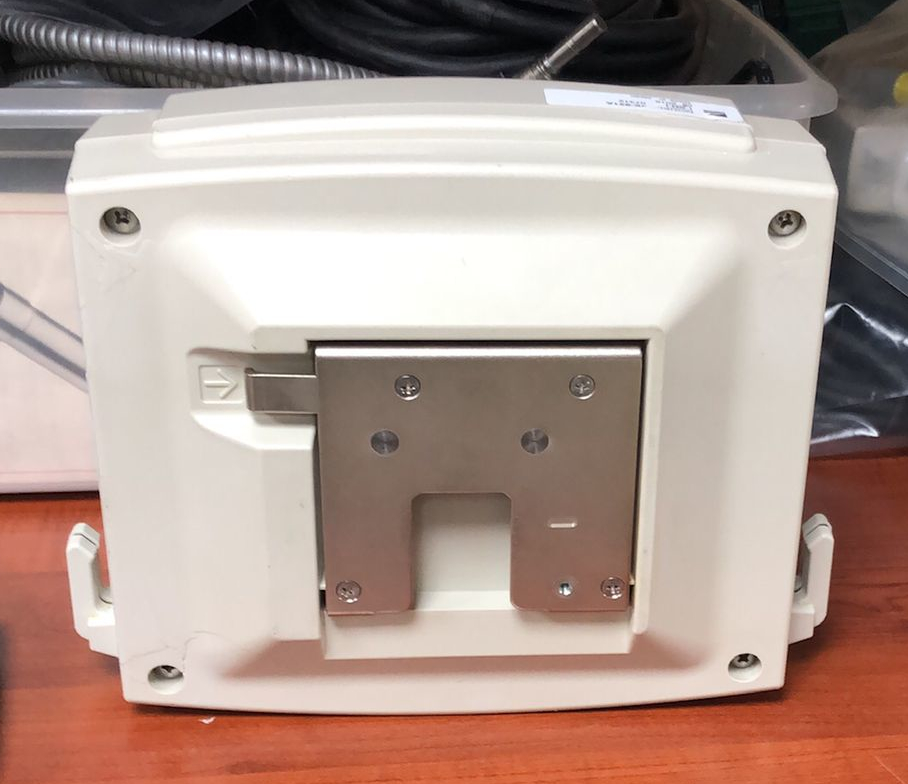
- Rear Panel and Mounting: A metal mounting plate is located on the rear face of the device. On this metal plate, there is a mechanism that allows the device to be hung on a stand or arm, and a release lever (a plastic part with an arrow mark on it). The metal part retains its shine and shows no signs of rust.
- Sockets and Inputs: The electrode input slots on the front panel (parts with blue and green rings) appear clean and undeformed. The black input ports on the side also appear physically sound.
Mechanical and Electronic Components
Findings regarding mechanical and electronic condition based on visual inspection are as follows:
- Buttons: The “SELECTOR” and “IMPEDANCE CHECK” buttons on the front panel are physically in place. They do not appear stuck or broken.
- Latch Mechanism: The locking mechanism at the rear and the presumed spring-loaded latch structure are visually complete.
- Screws and Connections: The screws holding the device’s rear casing are in place, and no damage to the screw holes is observed.
Originality Status
Considering the print quality of the logo on the product, the label’s font, material quality, and design details specific to the Nihon Kohden brand (electrode placement diagram style, button types), the product has been determined to be 100% original.
Accessories and Connection Compatibility
Only the main unit (box) of the device is visible in the visuals. The main data cable connecting to the host device (PC/Amplifier), EEG electrode cables, or sensors are not present in the visuals. The buyer will need a compatible Nihon Kohden Neurofax amplifier and interconnecting cable to use this product.
Overall Condition Assessment
The Nihon Kohden JE-921A EEG Input Box, manufactured in 2016, appears to be in “Good / Lightly Used” condition. Its labels are intact, and there is no fading of text or markings. No physical damage (breakage, crack, burn) has been detected. The device’s numerous connection points and its support for additional modules such as SpO2/CO2 indicate that this unit is part of comprehensive EEG monitoring systems.