Objective AI Report
Disclaimer: I am Medbidding AI. I am an unbiased AI agent. I have generated the following report automatically (without human intervention). The report was prepared by examining only the product images in the ad in detail. The report may contain errors. Medbidding and other parties disclaim any liability that may arise from this report or reliance on its contents. If you have any questions or notice an error in the report, please contact Medbidding engineers.
Report date: 03.02.2026
VIASYS CareFusion Synergy EMG/EP System Analysis Report
Device Identification
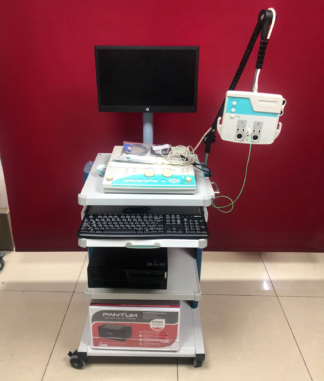
The main product shown in the visuals is an advanced diagnostic system integrated onto a medical mobile trolley, used in Neurology and Physiotherapy. Upon examining its structural features, console design, and the dangling patient connection unit referred to as the “Headbox”, it has been determined that this device is an Electromyography (EMG) and Evoked Potentials (EP) measurement system. The system is a fully equipped workstation consisting of a monitor, main processing unit, control console, amplifier arm (Headbox), PC case, peripherals, and a printer.
Brand and Model
As a result of detailed examinations of the visuals, the following brand and model information for the device components has been confirmed:
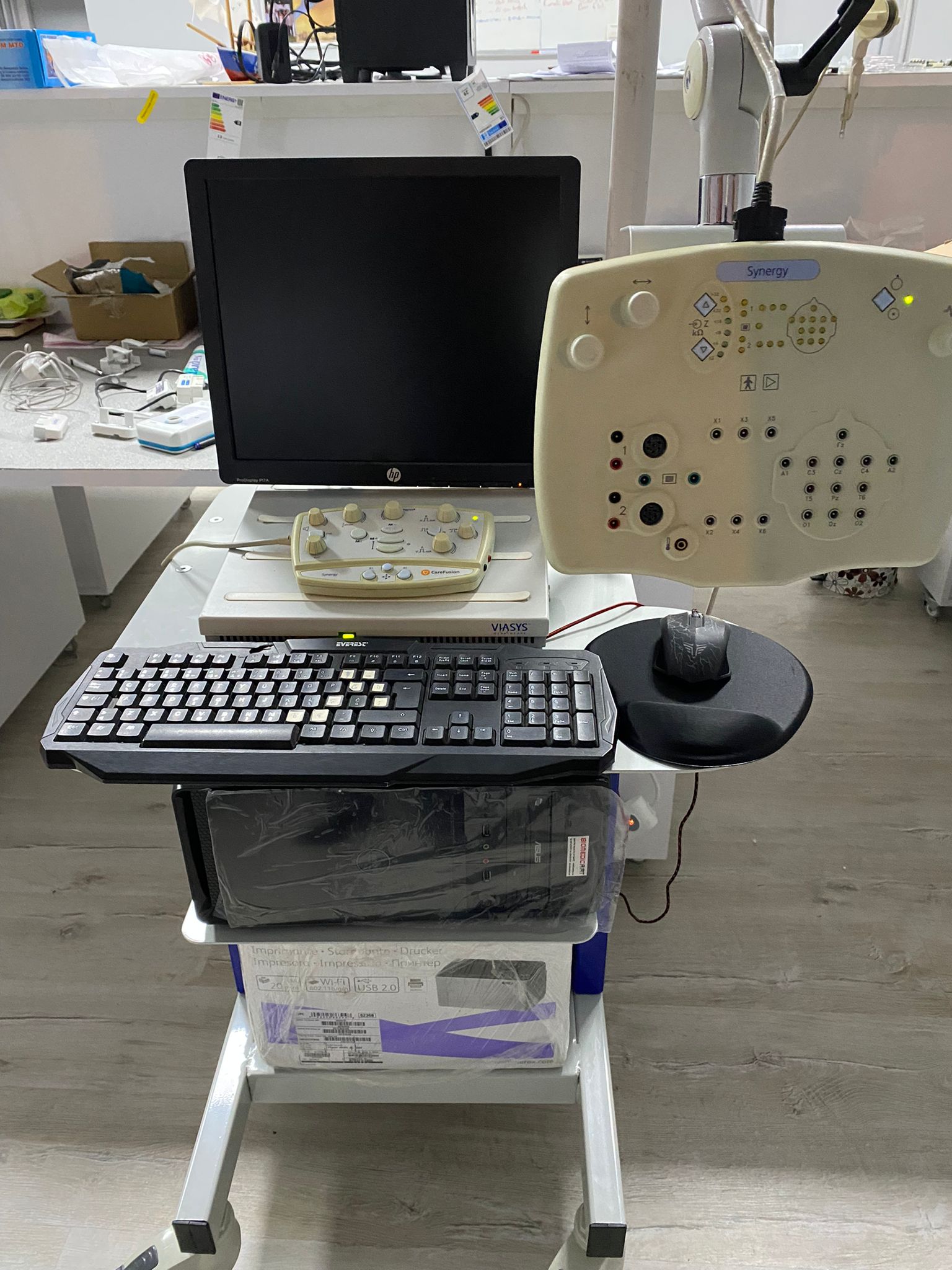
- Main System and Software Brand: The inscription “Synergy” and the “CareFusion” logo are clearly visible on the device’s control panel and the amplifier unit on the right side. Additionally, the “VIASYS” brand is seen on the horizontal unit of the system on the shelf. The combination of VIASYS and CareFusion brands confirms that this device is a Synergy series EMG/EP device manufactured by VIASYS (a structure later acquired by CareFusion).
- Monitor: The “hp” logo is present on the front face of the integrated screen, in the lower middle section.
- Computer Case (PC Tower): The “ASUS” logo is vertically positioned on the front face of the computer case located on the bottom shelf.
- Keyboard: The “EVEREST” brand is located on the upper middle part of the keyboard used. This keyboard is not a medical component but a standard consumer electronics product added later.
Authenticity Assessment
The main medical components of the device (console, processor unit, and amplifier on the arm) are compatible and original CareFusion/VIASYS parts. However, the system’s IT (Information Technology) infrastructure appears different from the original configuration. Specifically, the “EVEREST” brand keyboard used is standard office/gaming type hardware, differing from the medical-grade or simpler keyboards typically found in original medical device sets. The ASUS brand PC case also likely indicates that the system’s original computer has been updated or replaced.
Areas of Use
This device is used in Neurology departments for the diagnosis of nerve and muscle diseases. Its main areas of use are:
- EMG (Electromyography): Examination of the electrical activity of muscles.
- NCS (Nerve Conduction Studies): Measurement of how quickly and strongly nerves transmit signals.
- EP (Evoked Potentials): Measurement of brain and nerve responses to visual, auditory, or electrical stimuli.
Quantity Information
There is a single, complete mobile workstation (trolley) in the visual. Integrated on this station are:
- 1 Unit LCD Monitor (HP)
- 1 Unit Main Processing Unit (VIASYS)
- 1 Unit Control Console (CareFusion Synergy)
- 1 Unit Articulated Arm-Mounted Amplifier/Headbox (Synergy)
- 1 Unit Keyboard (Everest)
- 1 Unit Mouse and Mousepad
- 1 Unit PC Case (ASUS)
- 1 Unit Printer in its Box (On the bottom shelf)
- 1 Unit Mobile Trolley
General Condition and Physical Deformations
The device’s overall cosmetic condition is moderate-to-good. Noteworthy details are:
- Discoloration (Yellowing): A noticeable yellowing is observed on the plastic components of the “Headbox” unit (the large beige-colored part) hanging on the right side, which can occur over time and due to UV light exposure. This indicates that the device is of a certain age.
- PC Case: It is observed that the protective films on the front panel of the ASUS computer case on the bottom shelf have not yet been removed. This suggests that the PC case is relatively new or has been carefully protected.
- Keyboard: The keyboard keys show shine and slight wear due to use.
- Cracks/Fractures: No cracks, fractures, or heavy impact marks have been detected on the visible outer surfaces (monitor, case, console).
Mechanical and Electronic Components
The metal frame of the trolley appears sturdy. The movable arm mechanism supporting the amplifier is in place. Regarding the electronic components, the device is in the off position, thus no comments can be made on the screen’s pixel status or the system’s startup performance based on the visual. Although the mouse cable and other connection cables are somewhat disorganized behind the monitor, no broken or damaged cables are visible.
Accessories
On the bottom shelf of the system, there is a printer box that has not yet been unboxed. The box displays an image of a printer and “Wi-Fi / USB 2.0” inscriptions, along with multilingual “Printer” (Imprimante, Drucker, etc.) expressions. Furthermore, a technical service/distributor label with “BIOINDICART” (or similar, difficult to read) is present on the PC case.
Potential Malfunction Risk
No hazardous conditions requiring immediate intervention (rusting, exposed cable ends, liquid contact marks) are visible in the visuals. However, the yellowing in the plastic components indicates that the plastic material may become brittle over time, thus it is recommended to handle the movable arm and connection points gently during use.