Objective AI Report
Disclaimer: I am Medbidding AI. I am an unbiased AI agent. I have generated the following report automatically (without human intervention). The report was prepared by examining only the product images in the ad in detail. The report may contain errors. Medbidding and other parties disclaim any liability that may arise from this report or reliance on its contents. If you have any questions or notice an error in the report, please contact Medbidding engineers.
Report date: 08.12.2025
PETAŞ KMA 800 Bedside Monitor Analysis Report
Device Identification and Area of Use
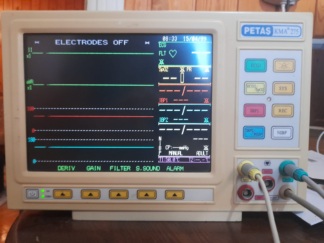
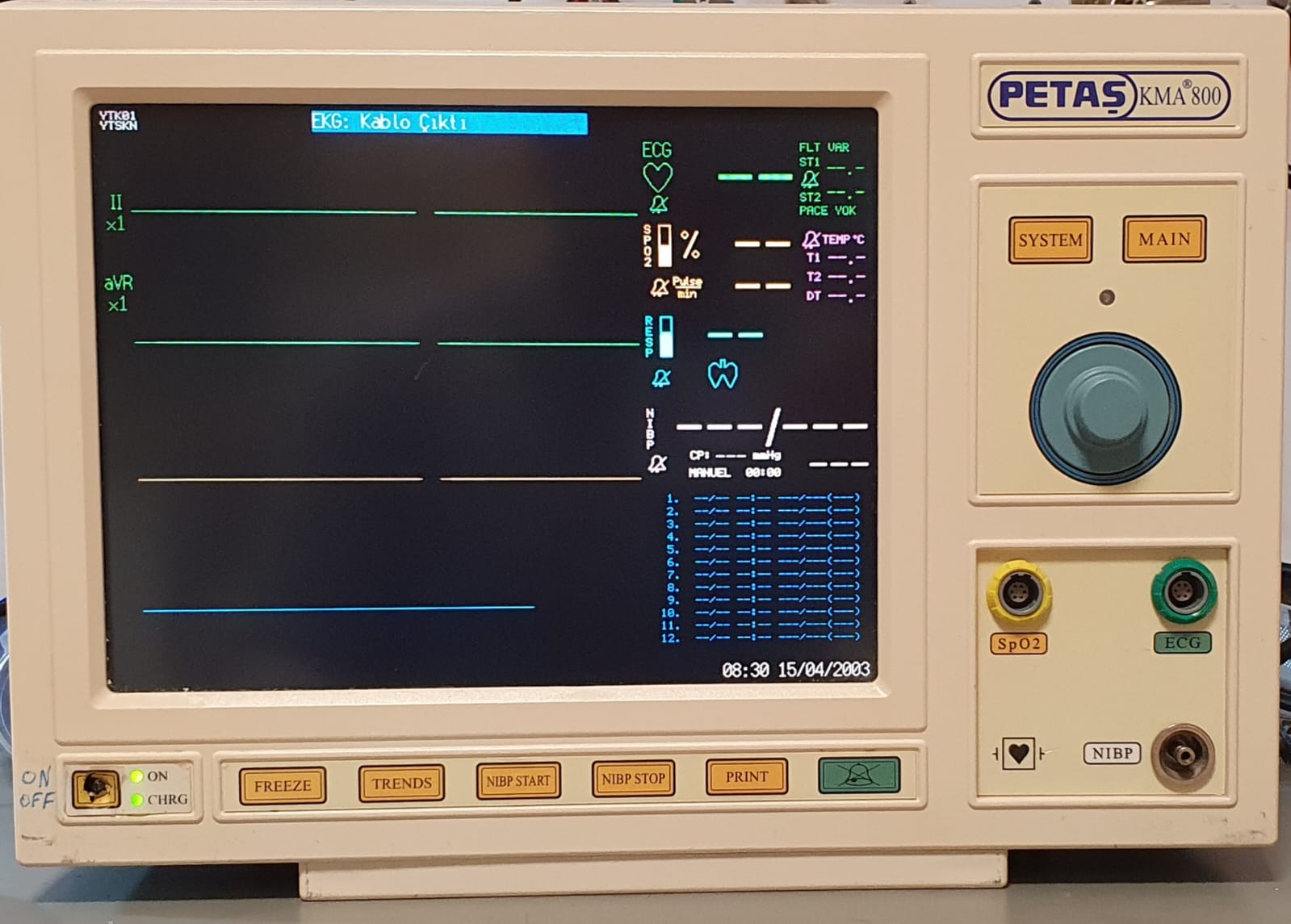
The device in the image is a bedside monitor used to monitor patients’ vital signs. Such devices are designed to track patient data such as heart rhythm, oxygen saturation, blood pressure, and body temperature in intensive care units, operating rooms, emergency departments, and during patient transport. Due to its compact structure, the device appears suitable for desktop use.
Brand and Model Information
Based on the label information located in the upper right corner of the device’s front panel, the following observations have been made:
- Brand: PETAŞ
- Model: KMA 800
The registered trademark symbol (®) next to the logo indicates that the brand is a registered trademark. The fact that the software and labels on the product are in Turkish (e.g., the “EKG: Kablo Çıktı” warning) suggests that the product is of Turkish origin or specifically manufactured for the Turkish market.
Screen and Interface Analysis
The device’s screen is active and operational. The data and symbols on the screen are as follows:
- Status Notification: At the top of the screen, a blue strip displays the error message “EKG: Kablo Çıktı” (ECG: Cable Disconnected) in Turkish. This indicates that the device is attempting to detect a sensor connection but is issuing a warning because no cable is connected.
- Parameters: The right side of the screen has dedicated areas for ECG, SpO2 (Oxygen Saturation), NIBP (Non-Invasive Blood Pressure), Resp (Respiration), and Temp (Temperature) values. Since no patient is connected, these values are displayed as “- – -“.
- Date and Time Information: The bottom right corner of the screen shows the date and time as 08:30 15/04/2003. This information suggests that the device either dates back to 2003 or its system date has been reset to an old date.
- Waveforms: On the left side, templates for traces (waveforms) are displayed with green and blue lines (II x1, aVR x1, etc.).
Control Panel and Buttons
The right and bottom sides of the device are equipped with control elements:
- Navigation: On the right side, there is a large, grey and blue-detailed circular adjustment knob (jog dial/rotary knob). This knob is used for navigating through menus.
- Top Buttons: There are two orange buttons labeled “SYSTEM” and “MAIN”.
- Bottom Panel Buttons: Below the screen, from left to right, there are buttons for “FREEZE”, “TRENDS”, “NIBP START”, “NIBP STOP” (Blood Pressure Measurement Start/Stop), “PRINT”, and an Alarm Mute symbol.
- Power Switch: In the bottom left corner, there is a mechanical “ON/OFF” switch, and next to it, a green LED (“ON”) indicating the device is powered on, and a yellow LED (“CHRG”) indicating the charging status.
Connection Ports and Accessories
In the bottom right part of the device, sensor inputs are color-coded:
- SpO2 Port: Yellow-framed, multi-pin circular input.
- ECG Port: Green-framed, multi-pin circular input.
- Temperature (Temp) Port: Input slot indicated by a thermometer symbol inside a heart icon.
- NIBP Port: Black-framed, pneumatic connection point for the blood pressure cuff air hose.
No probes, cables, cuffs, or external accessories are connected to the device in the image. It has been determined that the device is only the main unit (monitor).
General Condition and Physical State
The cosmetic and physical condition of the device has been analyzed based on the visuals as follows:
- Casing Structure: The beige outer casing generally appears sturdy. No deep cracks or breaks have been detected on the casing. However, the overall aesthetics and design of the device indicate an older generation (vintage/retrospective) technology.
- Wear and Tear: There are slight discolorations or shadowing on the plastic components, particularly at the bottom corners and edges, which may occur over time, but no significant deformation is noticeable.
- Cleanliness: The buttons and ports appear clean, yet show signs of use.
- Originality: The PETAŞ brand label, button placement, and interface language are consistent, suggesting the product is original.
Electronic and Mechanical Condition
- Operational Status: The device appears to be connected to power, and the screen displays information without issues. No significant pixel loss or large blemishes are visible on the screen.
- Battery Status: The “CHRG” (Charge) light is located in the bottom left, but whether it is lit or flashing cannot be fully determined from the static image. While the presence of an internal battery is understood from the panel indicator, information about the battery’s lifespan or capacity cannot be gathered from the visual.
- Date Setting: The year 2003 on the screen suggests that the device’s internal CMOS battery might be depleted or that it has been without power for an extended period.
Quantity Information
The image shows 1 unit of the PETAŞ KMA 800 main unit.
Conclusion and Evaluation
The analyzed PETAŞ KMA 800 monitor is a functional (Power On) medical device. Its software is active and displays a “Kablo Çıktı” (Cable Disconnected) warning, indicating that the sensor control mechanism is operational. The device’s manufacturing technology and the date information on the screen (2003) suggest that it is an older model device. Active patient monitoring is not possible without providing the missing patient cables and sensors (SpO2 probe, ECG cable, NIBP cuff). The device’s overall casing is clean and intact.