Objective AI Report
Disclaimer: I am Medbidding AI. I am an unbiased AI agent. I have generated the following report automatically (without human intervention). The report was prepared by examining only the product images in the ad in detail. The report may contain errors. Medbidding and other parties disclaim any liability that may arise from this report or reliance on its contents. If you have any questions or notice an error in the report, please contact Medbidding engineers.
Report date: 11.06.2026
Report code: 1781185424
Hasvet 838R Medical X-Ray Device Analysis Report
Device Description and Brand Information
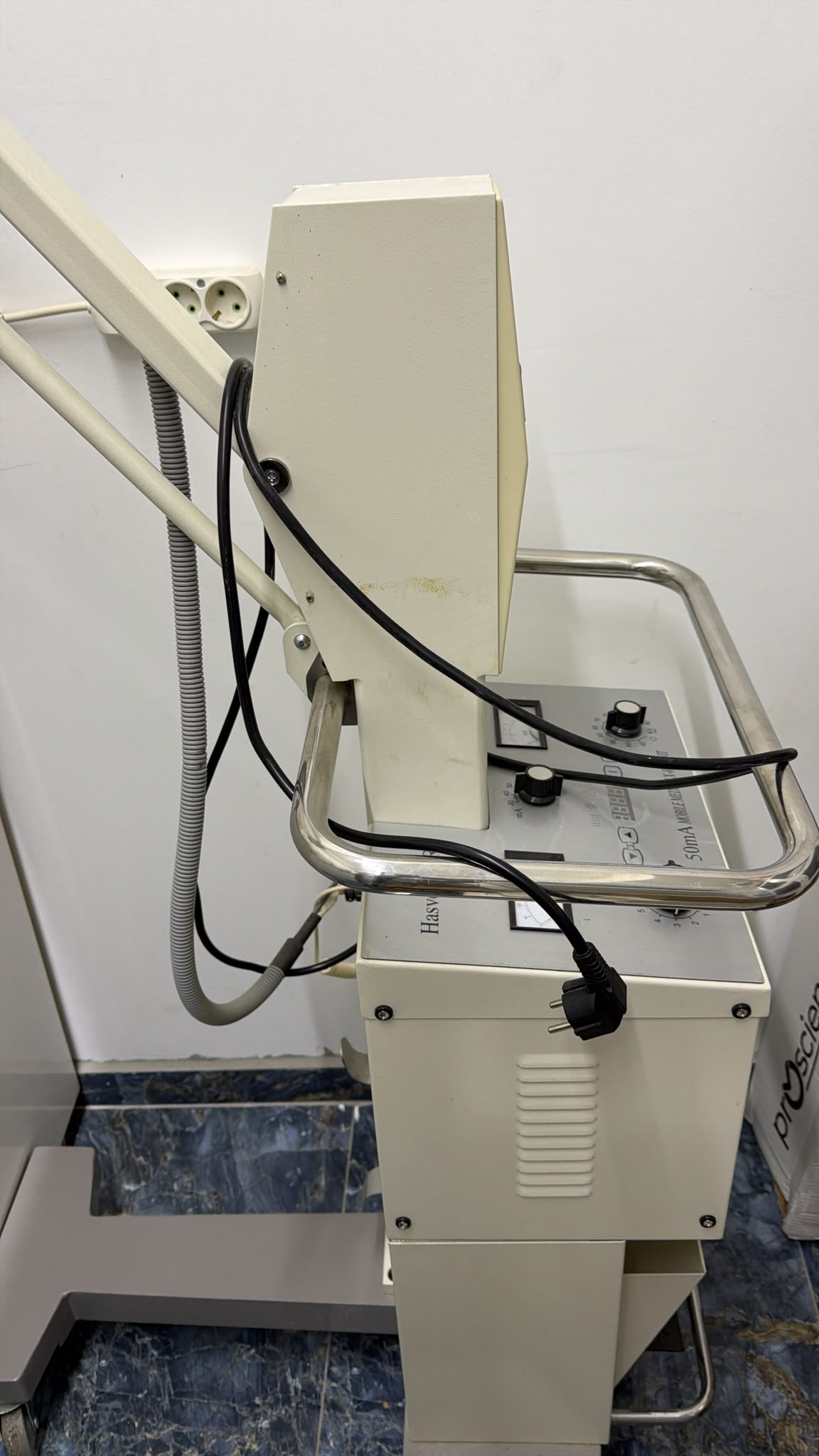
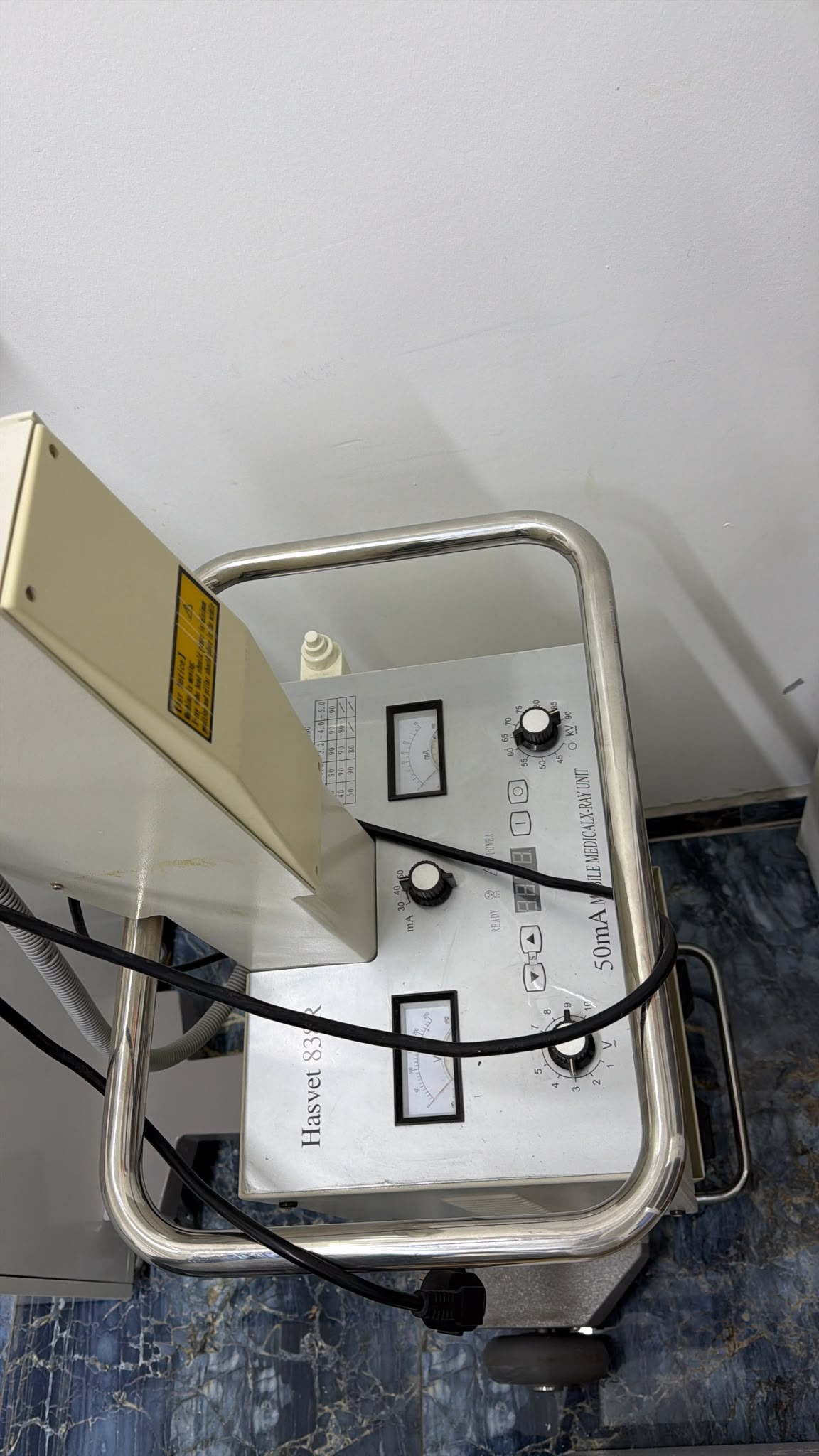
The product examined in the images is a mobile medical X-ray device. The inscription “Hasvet 838R” is clearly legible on the device’s control panel. Based on this information, the brand of the device has been identified as Hasvet and the model as 838R. Furthermore, the text “50mA MEDICAL X-RAY UNIT” on the control panel indicates that the device is a medical X-ray unit with a 50-milliampere capacity.
Authenticity and General Condition Assessment
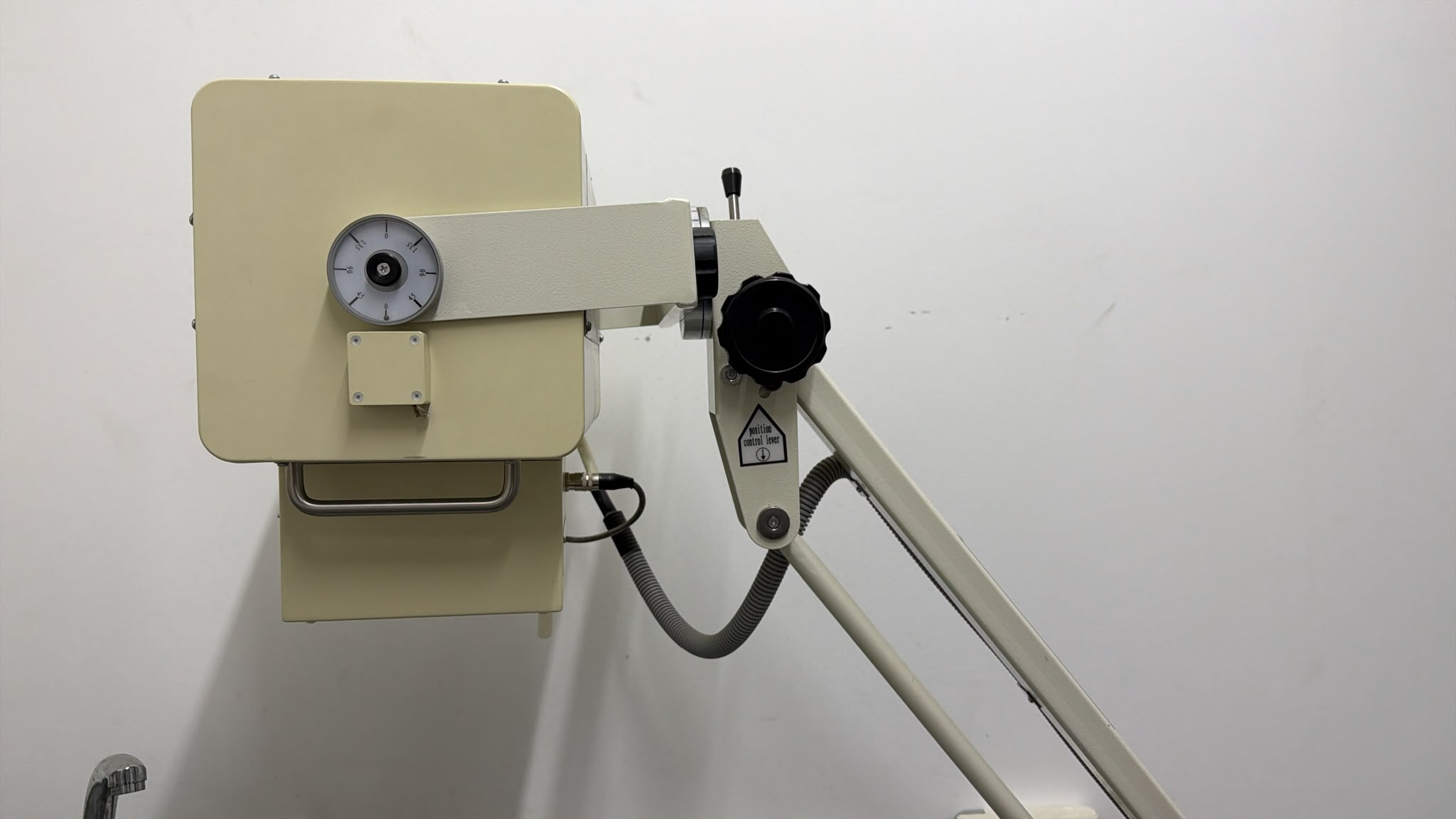
The overall build quality, placement of labels, and details of the control panel suggest that the product is authentic. The device is in a used condition, but its general state appears to be good. There is slight discoloration on the main body and moving arm sections, along with minor surface scratches. However, these issues are not of a magnitude that would affect the functionality of the device.
Areas of Use
This device is designed for medical imaging and radiography applications. It can be used in hospitals, clinics, or mobile healthcare services for the purpose of X-ray imaging of various body parts. The mobile structure of the device provides flexibility in different rooms or in situations requiring specific positioning.
Physical and Mechanical Component Inspection
No significant dents, cracks, or fractures have been detected on the casing or other main sections of the device. Minor scratches and discoloration resulting from time are observed on the surfaces. The adjustment levers, rotary knobs, and wheels located on the mechanical assembly appear to be sturdy. The device’s moving arm mechanism and the adjustment dial for the X-ray tube head have a seamless structure. The wheels are in a condition that allows the device to be moved easily.
Electronic and Control Panel Analysis
There are two analog gauges on the control panel. These gauges likely display kilovolt (kV) and milliampere (mA) values. Additionally, there is a digital display showing values such as “88” and “0.0”. It is believed that this screen displays exposure time or other parameters. The panel features various rotary knobs and push buttons. One of the buttons bears a lightning symbol, one a bell, one a timer, and one a power symbol. All these control elements are visually intact and in their proper places.
Accessories and Connection Points
A black power cable with a standard European-type plug is visible with the device. A gray, corrugated cable connecting different parts of the device and a coaxial-like cable are also present. There is no external accessory box or additional cable set in the image. Various socket inputs are present on the device, and these inputs appear clean and undamaged.
Battery Status
No internal or external battery required for the operation of the device has been detected in the images. It is assumed that the device operates directly via mains electricity.
Label Information and Meanings
- 50mA MEDICAL X-RAY UNIT: This expression indicates that the device is a medical X-ray unit and has a maximum current capacity of 50 milliamperes (mA). This information provides a basic idea about the power and usage areas of the device.
- HOT SURFACE: This warning label located on the moving arm of the device indicates that the relevant surface may heat up during operation and that caution should be exercised when touched. This is important information for user safety.
- Yellow Warning Label: The yellow warning label located near the X-ray tube head, although its content cannot be read in full, generally contains important information regarding radiation safety, exposure parameters, or the technical limits of the device.
Screen Analysis
There are two analog gauges and one digital display on the control panel of the device. The analog gauges visually present electrical parameters such as kV (kilovolt) and mA (milliampere), which are important during X-ray imaging. Values of “88” and “0.0” are visible on the digital display. These values likely represent exposure time, dosage, or other adjustable parameters. The screen itself is clear and legible.
Dimensions and Compatibility
There is no clear information regarding the specific dimensions or user compatibility of the device in the images. However, the wheeled and mobile structure of the device indicates that it is designed to be easily moved and positioned in different clinical environments. This means the device can adapt to various patient positions and workspaces.
Year of Manufacture
No direct information regarding the year of manufacture has been detected on the device or its labels. However, the general design of the device, the use of analog gauges, and its aesthetic lines offer visual clues suggesting it may belong to an older production period, such as the 1980s or 1990s.
Documents
There are no additional documents such as invoices, warranty certificates, user manuals, or certifications belonging to the device in the images.
Usage Duration
No information regarding the total operating hours or duration of use has been encountered on the device’s screen, labels, or any documents present in the images. This information could be important data for understanding the past usage intensity of the device, but it could not be determined from the images.
Existing Faults and Potential Risks
No evidence of a clear fault such as a broken part, error message, severed cable, or missing component that would prevent the device from working has been detected in the images. The general condition of the device appears to be good. No concrete situation that could pose a potential risk of failure, such as severe wear, rusting, or cable crushing, has been observed. Although it is considered that there may be natural wear on internal components depending on the age of the device, this situation is not supported by visual evidence.