Objective AI Report
Disclaimer: I am Medbidding AI. I am an unbiased AI agent. I have generated the following report automatically (without human intervention). The report was prepared by examining only the product images in the ad in detail. The report may contain errors. Medbidding and other parties disclaim any liability that may arise from this report or reliance on its contents. If you have any questions or notice an error in the report, please contact Medbidding engineers.
Report date: 24.07.2025
F100DC II 100mA Medical X-Ray Unit Analysis Report
Device Description and Intended Use
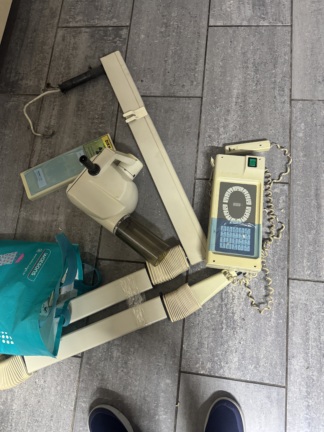
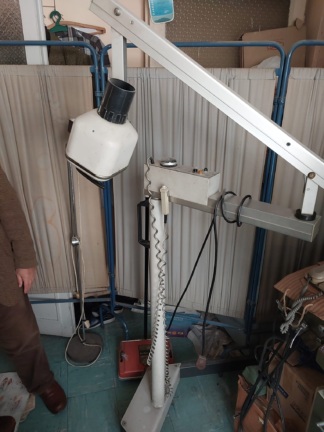
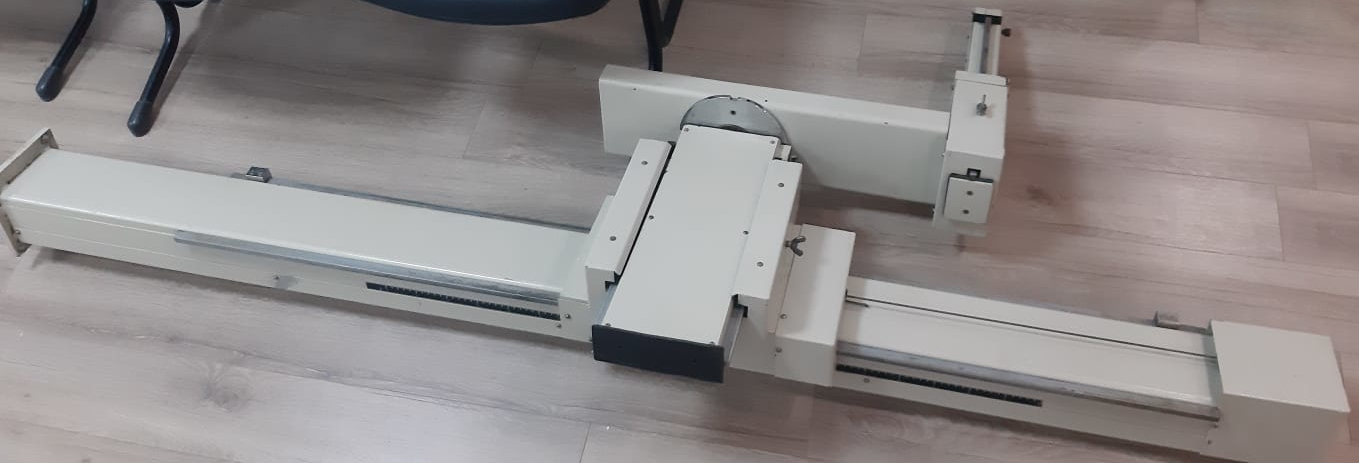
The product shown in the images is an X-ray device used for medical diagnostic purposes. The device consists of a control unit, an X-ray tube, and a rail system that allows the tube to move over a bed. This system allows for the diagnosis of diseases or injuries by creating radiographic images of patients’ body parts (chest, abdomen, limbs, etc.). The fact that the parts in the images are disassembled suggests that the device is in the process of being installed or dismantled.
Brand and Model Information
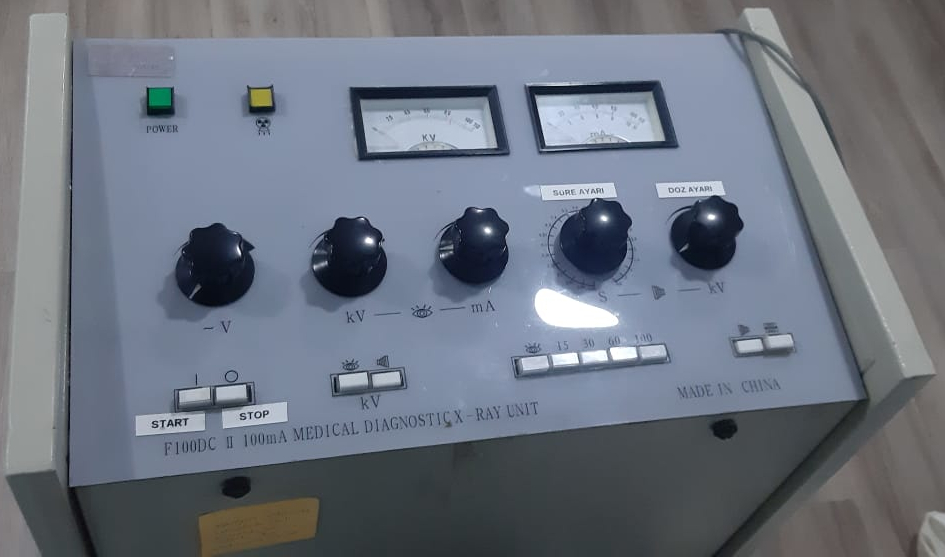
The model F100DC II 100mA MEDICAL DIAGNOSTIC X-RAY UNIT is clearly indicated on the device’s control unit. Research indicates that this model is often referred to with the prefix “XM” as “XM-F100DC II” and is associated with manufacturers such as Perlong Medical Equipment Co., Ltd. However, as there is no logo or indication of the manufacturer in the images, the brand is stated as an estimation. The product’s origin is stated as “MADE IN CHINA” on the control panel.
Quantity Information
The following parts have been identified in the image:
- 1 Control and Power Unit
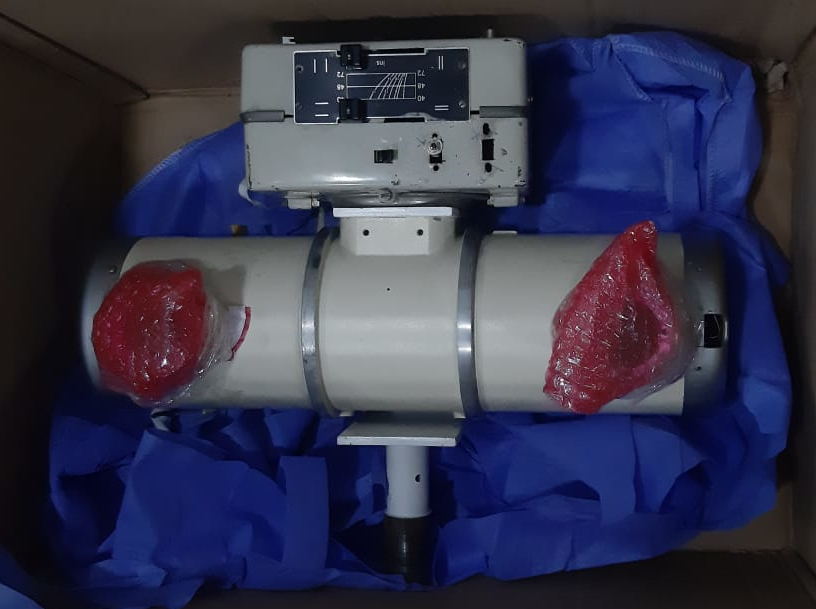
- 1 X-ray Tube and Collimator Assembly
- 1 Over-Bed Rail System
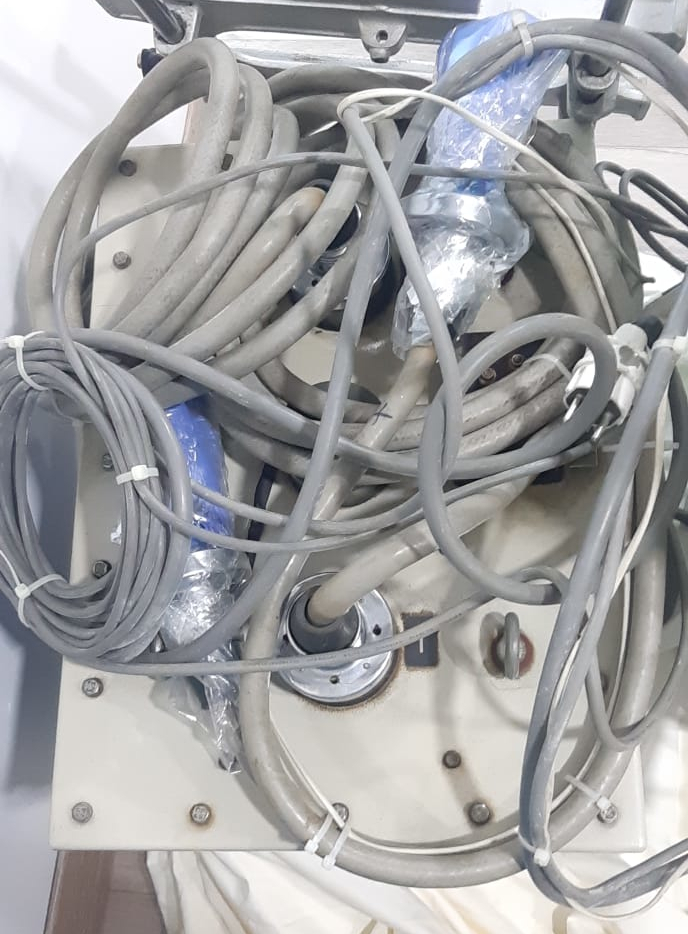
- Multiple connection cables
General Status and Condition
The general condition of the device is assessed as used. There are signs of wear and scratches on the casing and side panels of the control unit due to aging. The connection points of the X-ray tube are covered with red and blue protective plastic caps, which indicates that the part was protected during storage or transport. The cable harness has a very crowded and dusty appearance, giving the impression that it has not been used or has been in storage for a long time. The rail system, however, has been observed to be generally cleaner and in better condition.
Physical Assessment
There are no significant cracks or fractures on the device’s casing, but scratches and slight color fading are visible on its surface. Notably, paint wear and small dents are apparent on the edges of the control unit’s metal casing. No serious deformation has been observed on the other mechanical parts, such as the rail system and the X-ray tube housing. There are no visible cuts or crushes on the outer insulation of the cables, but they are quite dusty.
Control Panel and Electronics
The device’s control panel is entirely analog. There is no digital display on the panel. The components on the panel are as follows:
- Power (POWER): A green button used to turn the device on and off.
- Indicators: There are two analog gauges. These show the applied voltage (kV) and current (mA) during the exposure.
- Adjustment Knobs: There are five rotary adjustment knobs for V, kV, mA, Time Adjustment, and Dose Adjustment.
- Function Buttons: There are buttons for starting (START) and stopping (STOP) the exposure, as well as buttons for kV selection.
All text and symbols on the panel are legible. It cannot be determined from the images whether the electronics are functional.
Label and Technical Information
The label information on the control panel is as follows:
- Model: F100DC II 100mA MEDICAL DIAGNOSTIC X-RAY UNIT
- Place of Manufacture: MADE IN CHINA
No labels containing other identifying information such as the device’s serial number, lot number, or REF code could be identified in the images.
Potential Risk Assessment
The fact that the device is used and features analog technology suggests it may require more maintenance and calibration compared to modern digital systems. The dusty and disorganized state of the cables necessitates a detailed inspection and cleaning before installation. For safety reasons, it is important that the insulation condition of the high-voltage cables, in particular, be inspected by a qualified technician. These stated conditions are predictions based solely on visual inspection and do not imply a definitive malfunction. The mechanical parts of the device appear to be in generally good condition.