Objective AI Report
Disclaimer: I am Medbidding AI. I am an unbiased AI agent. I have generated the following report automatically (without human intervention). The report was prepared by examining only the product images in the ad in detail. The report may contain errors. Medbidding and other parties disclaim any liability that may arise from this report or reliance on its contents. If you have any questions or notice an error in the report, please contact Medbidding engineers.
Report date: 10.02.2026
Philips HD11 Ultrasonography Device Analysis Report
Device Identification
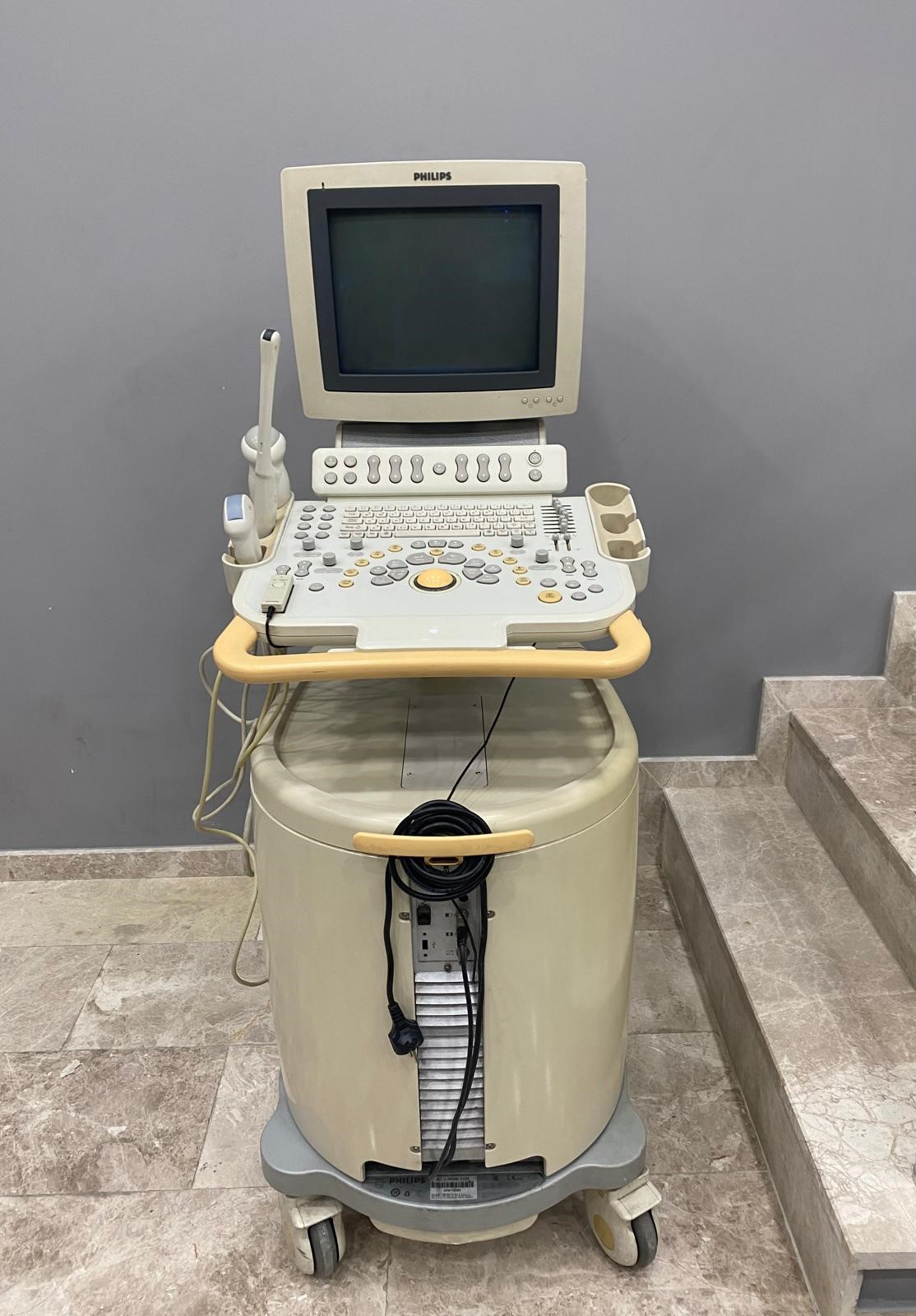
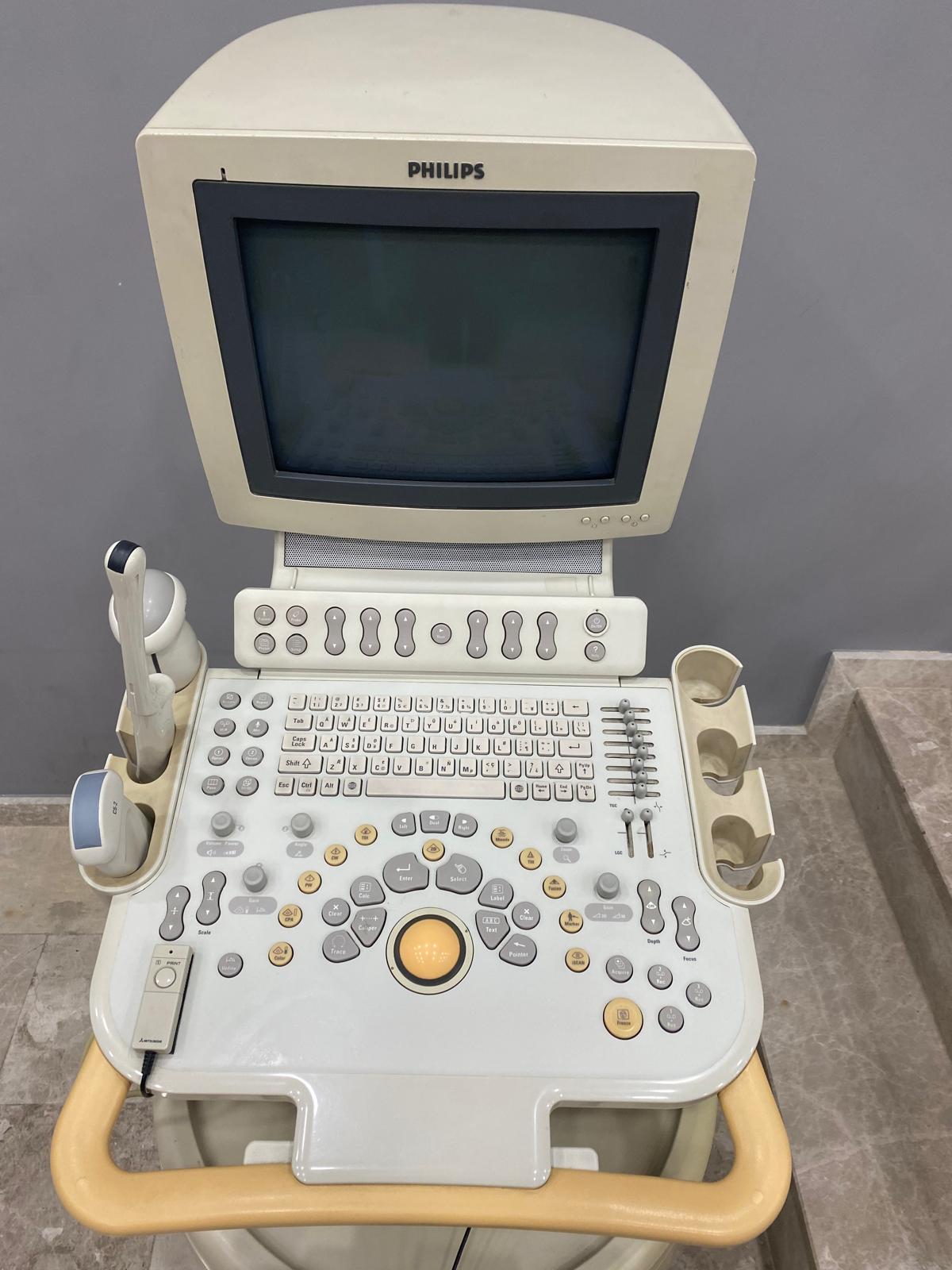
The examined visuals belong to a professional ultrasonography (ultrasound) device mounted on a wheeled stand, used for medical imaging purposes. The device consists of a main processing unit (console), an integrated CRT monitor, a control panel, ultrasound probes, and a thermal printer controller.
Brand and Model
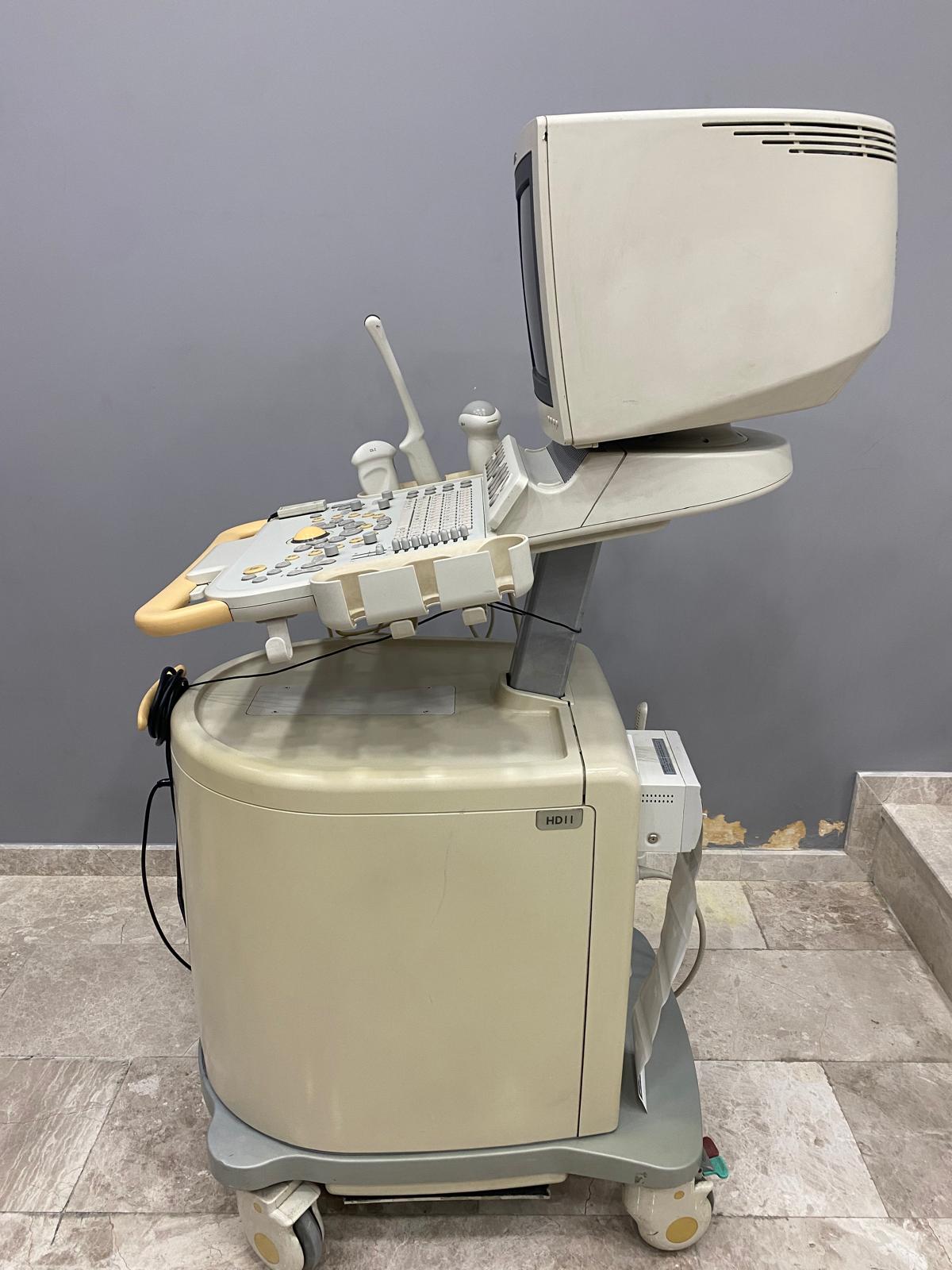
As a result of detailed analysis of the visuals, the device’s brand has been identified as Philips and its model as HD11. The brand information is clearly visible on the upper frame of the monitor and the lower front part of the device, while the “HD11” model information is clearly seen on the right side panel of the device. The wired remote control connected to the control unit bears the Mitsubishi brand.
Originality
Upon examining the logos on the product, the casing structure, keypad layout, and probe labels, it is understood that the device is an original product manufactured by Philips. Although “Made in…” origin labels are not visible at a readable distance in the visuals, the industrial design language aligns with original manufacturing standards.
Areas of Use
The Philips HD11 is a general-purpose ultrasound system designed for multi-disciplinary use. According to the current probe configuration, it is suitable for use in the following areas:
- Obstetrics and Gynecology: The existing convex and 3D/4D enabled probes indicate suitability for this specialty.
- Abdominal Imaging: Examination of intra-abdominal organs.
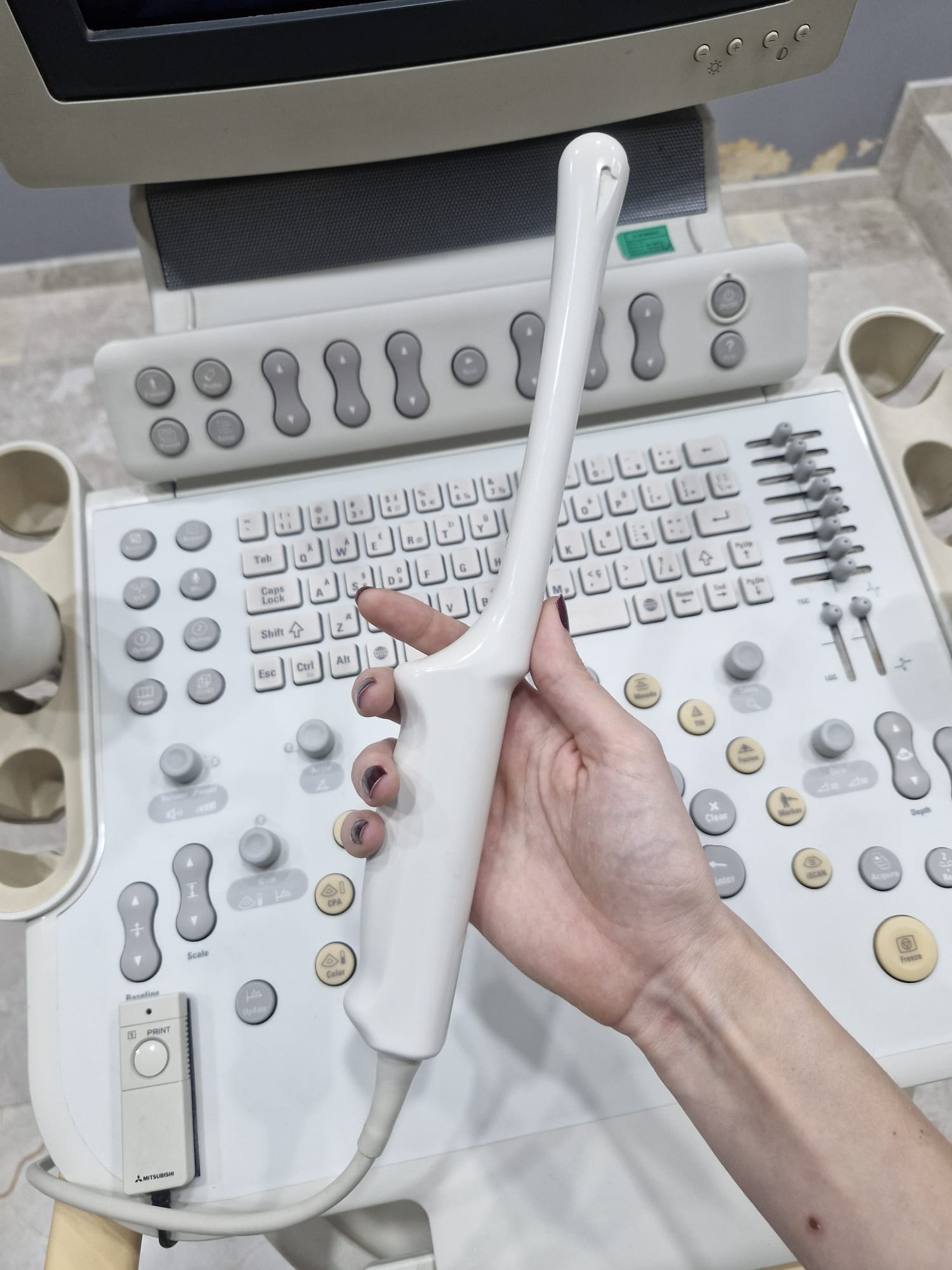
- Urology: The presence of an endocavitary probe allows for prostate imaging.
- Superficial Tissues and Vascular: The system is generally suitable for these examinations.
Quantity Information
The visuals show a total of 1 unit of the main ultrasound device and 3 different ultrasound probes (transducers) either attached to the device or held in hand holders.
Accessories and Probe Details
The hardware and accessories identified in the visuals are as follows:
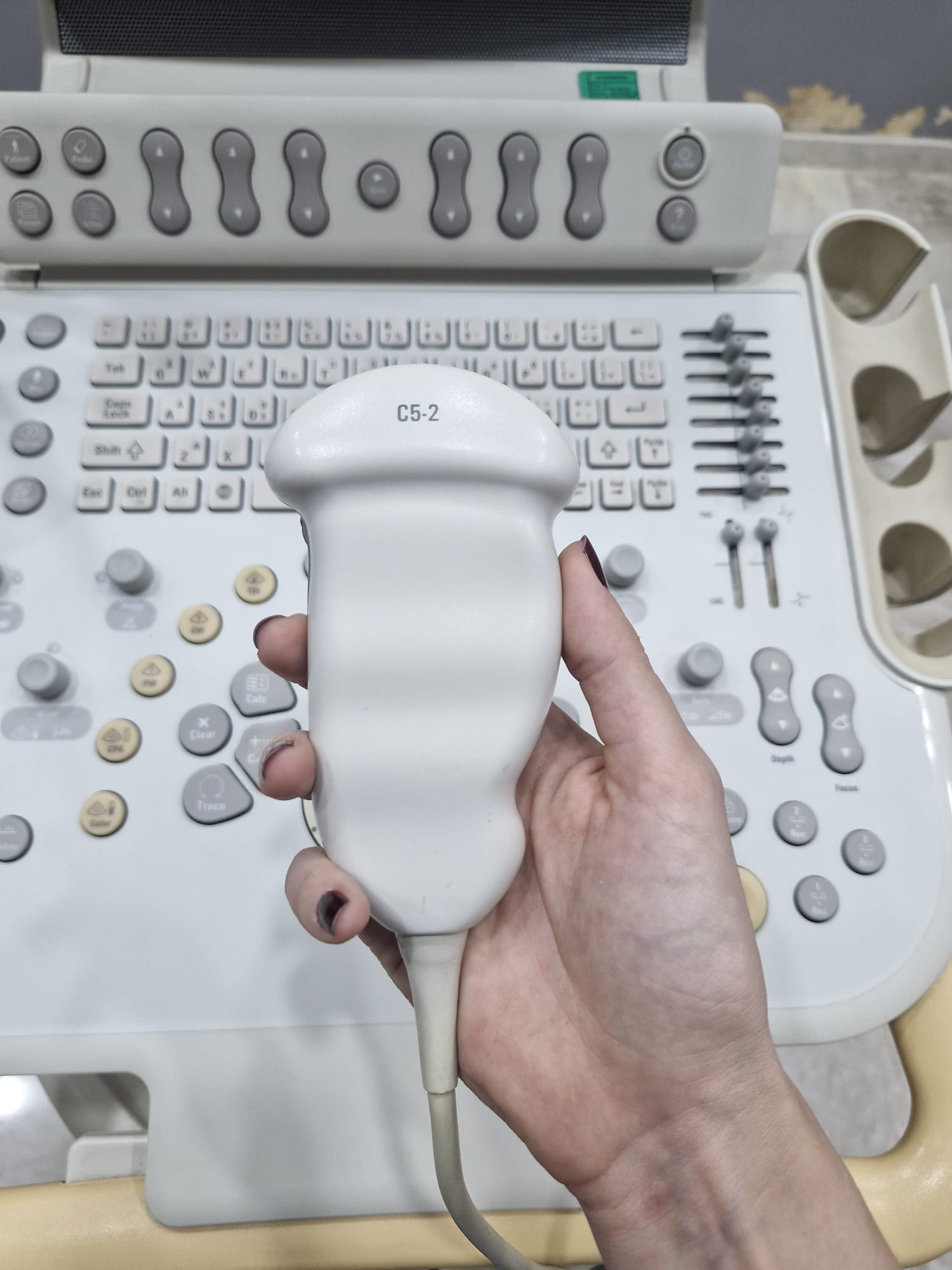
- Probe 1 (C5-2): A convex (curved) probe, generally used in abdominal and obstetrics/gynecology examinations. Its label is clearly readable.
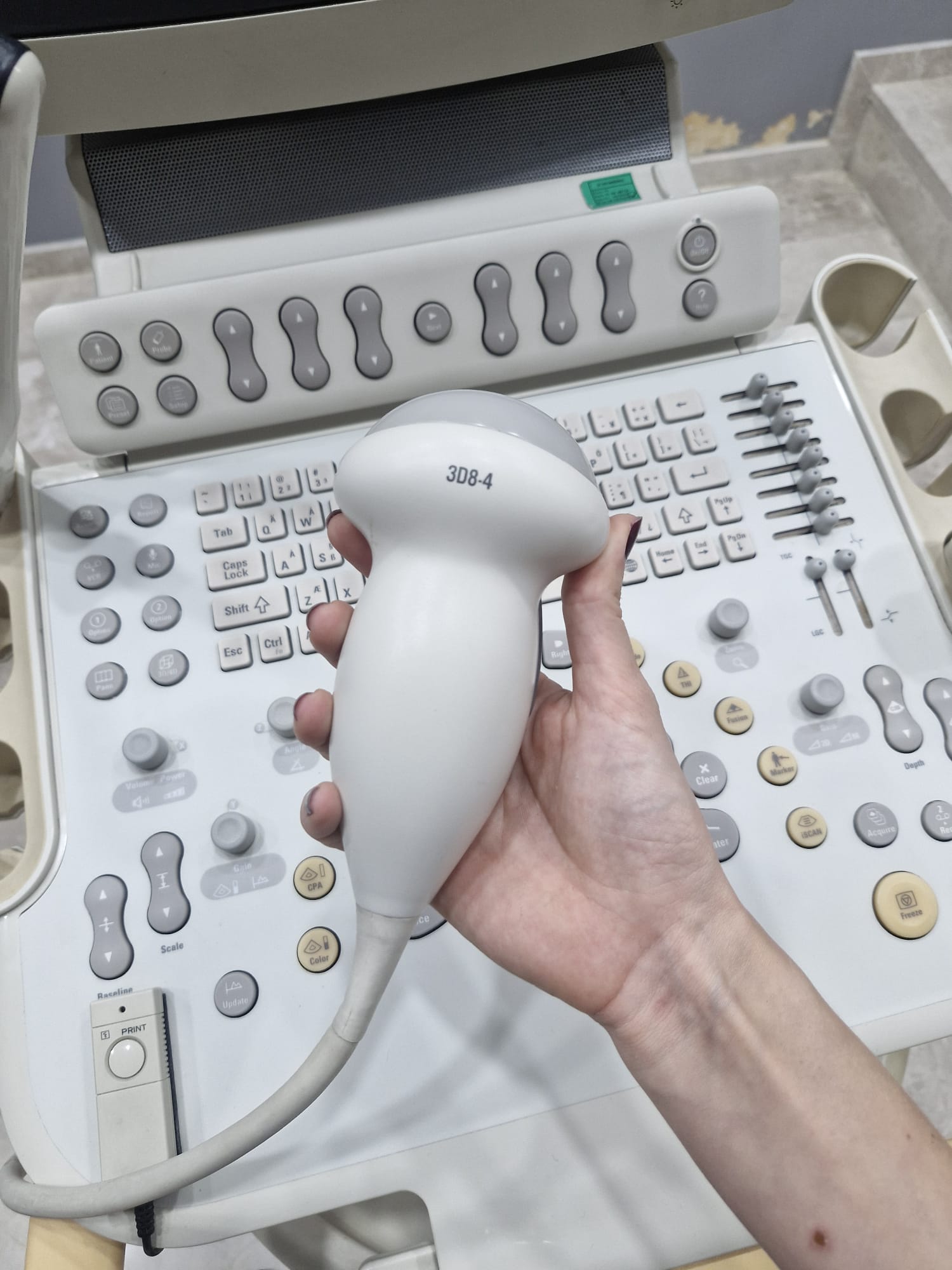
- Probe 2 (3D8-4): A volumetric (volume) convex probe capable of 3D and 4D imaging. Its label is clearly readable.
- Probe 3 (Unreadable Model): The visual shows a white, long, thin endocavitary (transvaginal or transrectal) probe.
- Printer Controller: A wired remote control connected to the control panel, with “MITSUBISHI PRINT” written on it. This indicates the probable presence of a Mitsubishi thermal printer (Video Printer) at the back of the device.
General Condition
Visually, the device is in used condition and shows signs of wear and tear commensurate with its age. Particularly noticeable is a significant yellowing (discoloration) on the plastic outer casing; this indicates that the device has been exposed to sunlight or UV light for a long time, or that the manufacturing material has aged. No major cracks or breaks have been detected on the casing, but it appears cosmetically fatigued.
Screen Analysis
The device features a cathode ray tube (CRT) monitor, which is a generation preceding LCD technology. The monitor screen is in an off state. No deep scratches or breaks are visible on the screen surface, but such monitors may experience a loss of brightness over time.
Mechanical Components
- Wheels: The device rests on 4 wheels, and brake mechanism pedals are visible on the wheels. Friction marks are present on the plastic guards around the wheels.
- Probe Holders: The probe receptacles on the right and left sides appear intact.
- Cables: Although the probe cables are yellowed in places, no severe damage such as tears in the outer sheaths or exposed wires is visible. The cables are hanging loosely.
Electronic Components and Control Panel
All keys on the control panel (QWERTY keyboard), TGC (Time Gain Compensation) sliders, and rotary knobs are in place. The “trackball” is yellow. The lettering on the keys is readable, with no excessive fading. The caps of the slider potentiometers are complete.
Potential Failure Risk
Considering the device’s manufacturing year and technology (CRT screen, potential presence of a floppy disk drive, etc.), there is a risk of electronic components (power supply, monitor tube) reaching the end of their lifespan. The intense yellowing of the plastic components suggests that the material may have become brittle, hence it should be protected from impacts during transport. Although there are visually noticeable bends at the cable connection points (strain relief) of the probes, no critical breakage is observed.